 In this area
The Kuala Lumpur issue
Bangsar, Kuala Lumpur: where KL eats, drinks and lingers
A leafy, low-rise KL neighbourhood where banana-leaf lunches, polished brunch plates and serious cocktails spill across the Telawi shophouses from day to night.
By Aisyah RahmanShopping KL, market stall to concept store
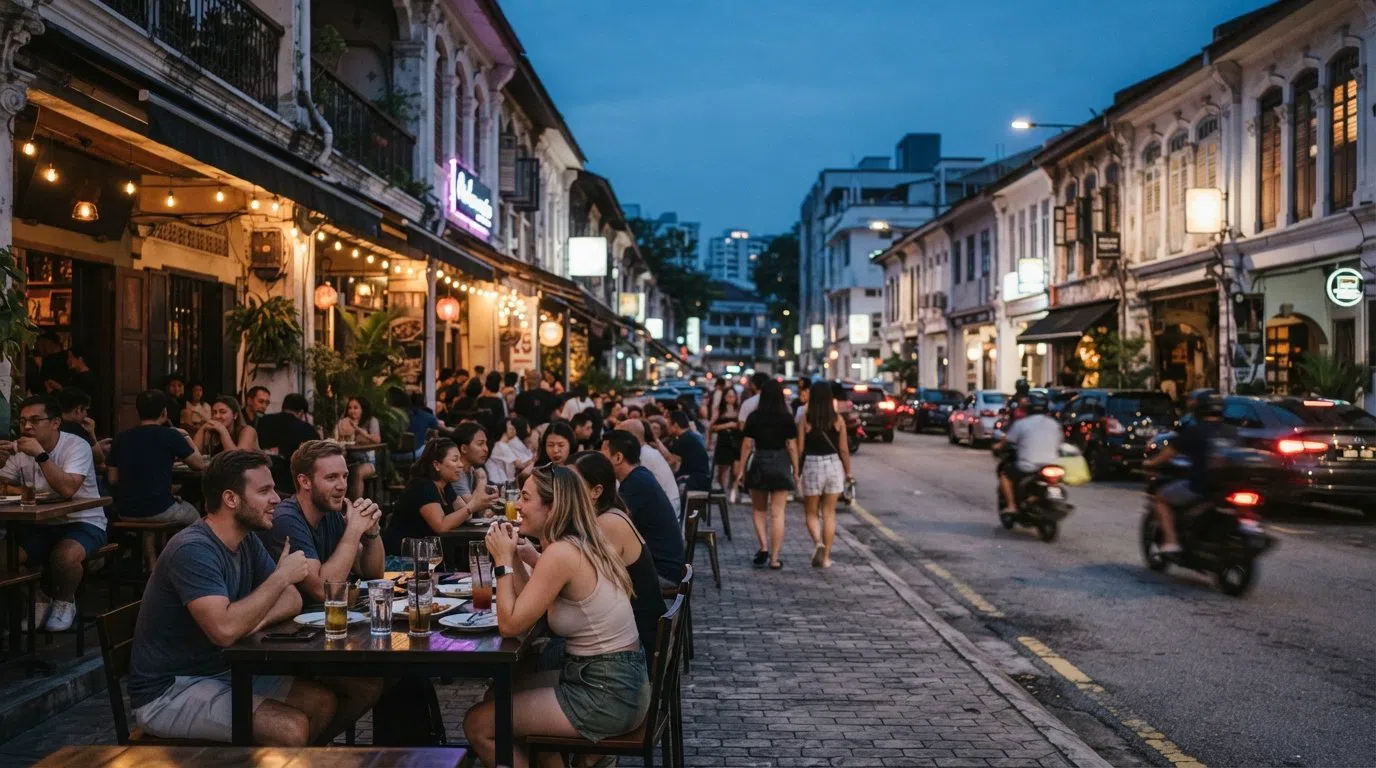
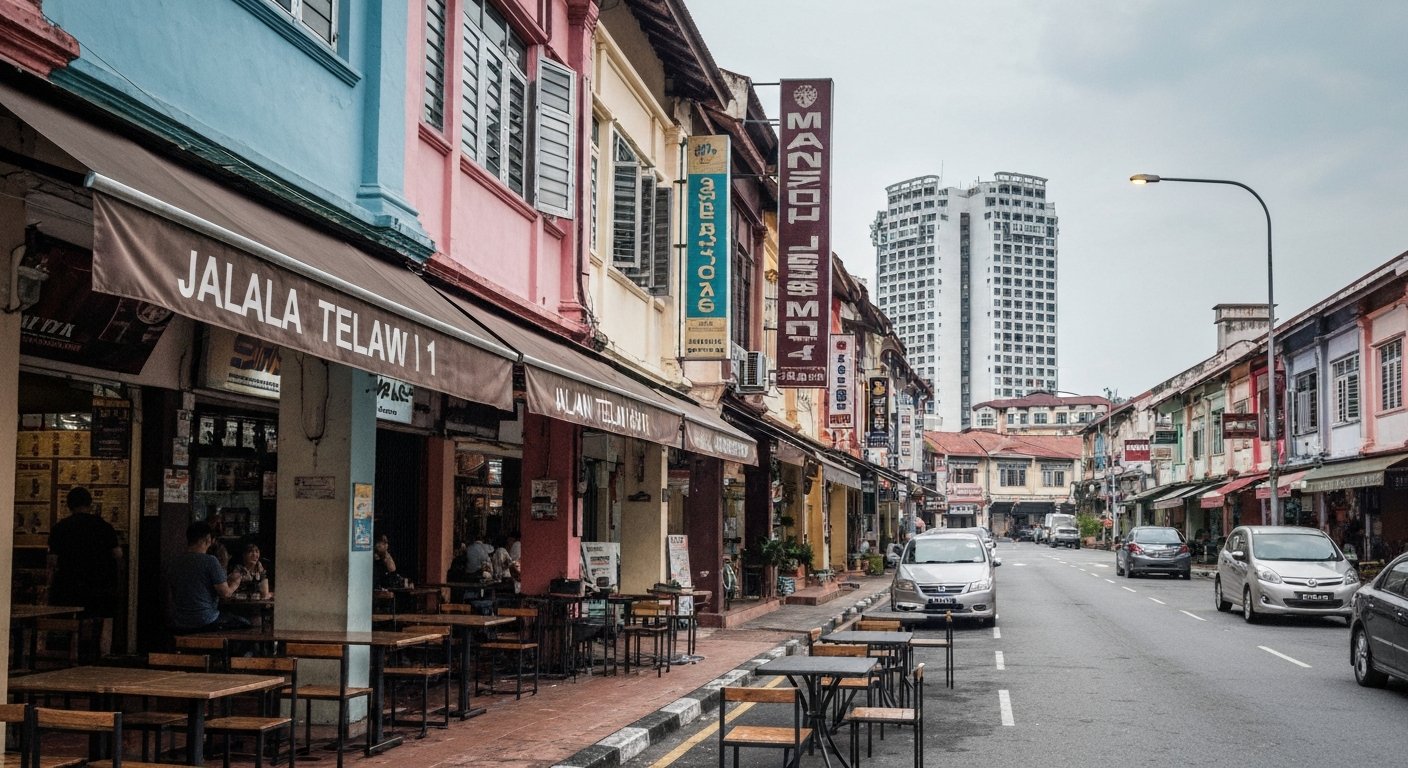
Cross town from the tower-tourist crush and Bangsar changes the tempo immediately. The streets flatten into a low-rise grid, the shophouses tighten around Jalan Telawi 1 through 5, and the whole place starts speaking in appetites: coffee before noon, banana leaf at lunch, cocktails after dark. Bangsar Baru is the bit everyone means when they say Bangsar, and it feels like a neighbourhood that has already decided what kind of life it wants — leafy, polished, a little smug about its own taste, and absolutely devoted to eating well.
What Bangsar is known for
Bangsar’s reputation is built on the fact that KL’s dining trends land here early and stay long enough to become habit. The Telawi streets are the engine room: a five-street shophouse grid dense with cafes, restaurants and bars, the sort of place where brunch and natural wine feel less like imported ideas and more like local common sense. It is one of those rare KL districts where the day and night economies are equally strong, and the crowd shifts with them — weekday professionals, returning expats, food-obsessed locals, and the weekend set that arrives hungry.
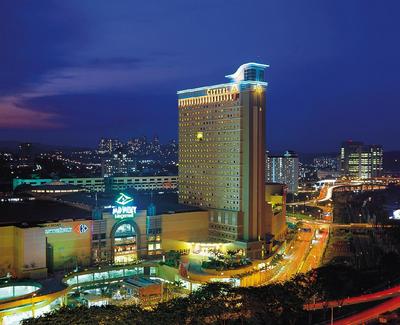
What makes Bangsar feel distinct is the way the polish never quite erases the residential calm around it. Step off the strip and the mood softens into bungalows, embassies, expat apartments and quiet lanes. The neighbourhood is affluent without being theatrical; self-consciously lifestyle-driven, yes, but in a way that has matured into its own rhythm. Two malls anchor the ends of the story — Bangsar Village I and II on Jalan Telawi 1, and Bangsar Shopping Centre out on Jalan Maarof — yet the real pulse remains at street level, in the shophouse cafes, the mamak corners that run to midnight, and the bars stacked above them.
There’s also a useful contrast here between old Bangsar and new Bangsar. The shiny strip gets the headlines, but the older Lucky Garden pocket still holds a daily wet market and hawker stalls that predate the polish. On Sundays, the whole place flips again for the Bangsar pasar malam beside Bangsar Village, and suddenly the neighbourhood that spends the week looking like a polished dining district is selling ikan bakar, satay, fruit and flowers in the cooling evening air. That layering — market, mall, shophouse, bar terrace — is what Bangsar does best.
Plan your Kuala Lumpur trip
Live prices from our booking partners.
Guests & rooms
Free cancellation on many rooms. We may earn a commission when you book.
Where to eat & drink
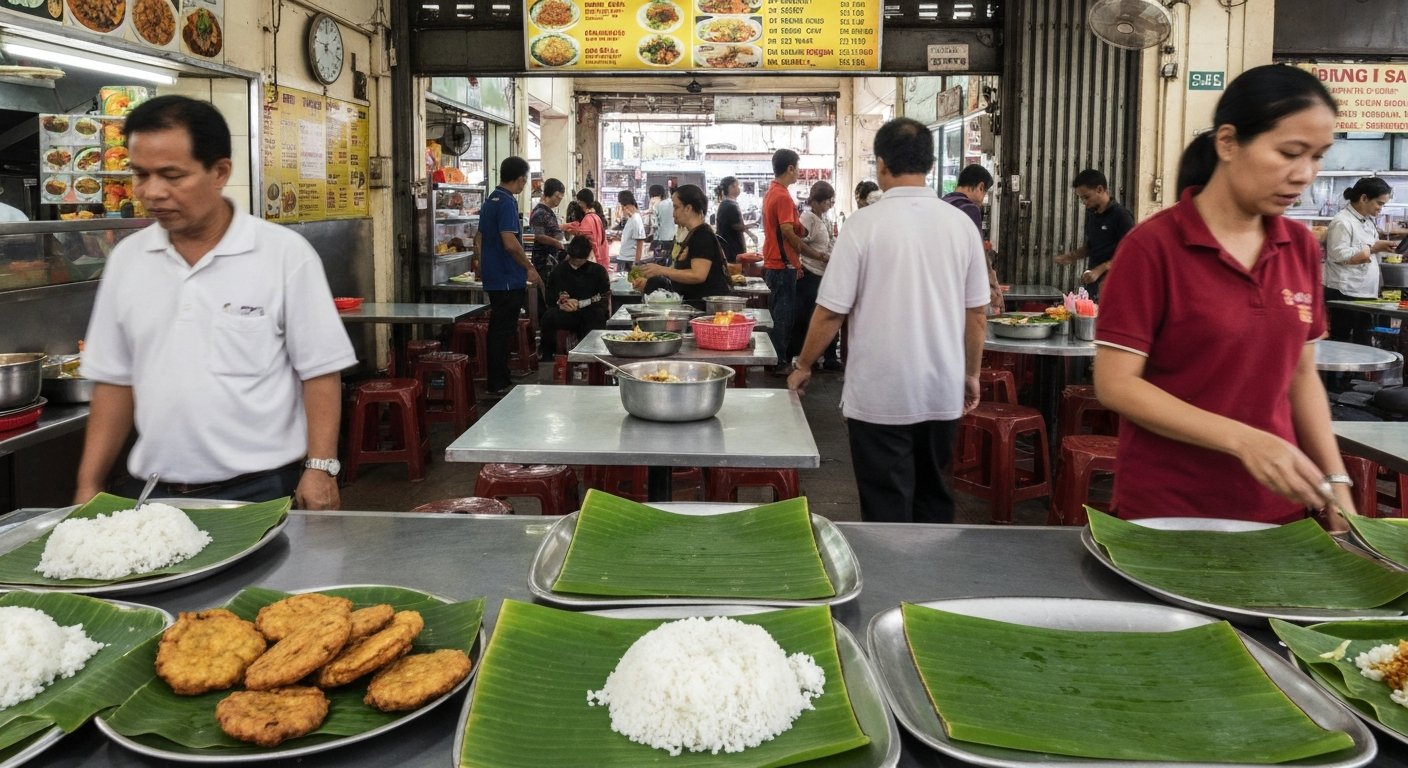
If Bangsar has a religion, it is lunch. Start with the banana leaf, because that is how locals do it. Sri Nirwana Maju on Jalan Telawi 3 is the institution everyone points you toward, and for once the reputation is deserved without asterisks. It is a no-frills place with standing-room energy when busy, the kind of room where the rhythm is fast and the trays keep coming. The banana-leaf rice sits at around RM9.50, refills of rice and curry included, and the fried bitter gourd is the thing people mention with a little extra enthusiasm, as if they are letting you in on a neighbourhood secret that is not secret at all.
A few doors over, Devi’s Corner at 14 Jalan Telawi 4 carries Bangsar through every hour after that. By day, it does banana-leaf lunches upstairs in the aircon; by night, it becomes the round-the-clock mamak that keeps the strip from ever really going home. Maggi goreng, roti, crab curry — the whole comforting, fluorescent-lit vocabulary of late KL is here. If Bangsar’s cocktail bars are the polished face of the district, Devi’s Corner is its essential after-hours conscience.
For a more expansive Indian meal, Fierce Curry House on Jalan Telawi 2 is the place to steer toward when you want range and a dum biryani that has earned its own following. Bangsar is full of restaurants that know how to look the part, but the better ones are still the ones that understand appetite first.
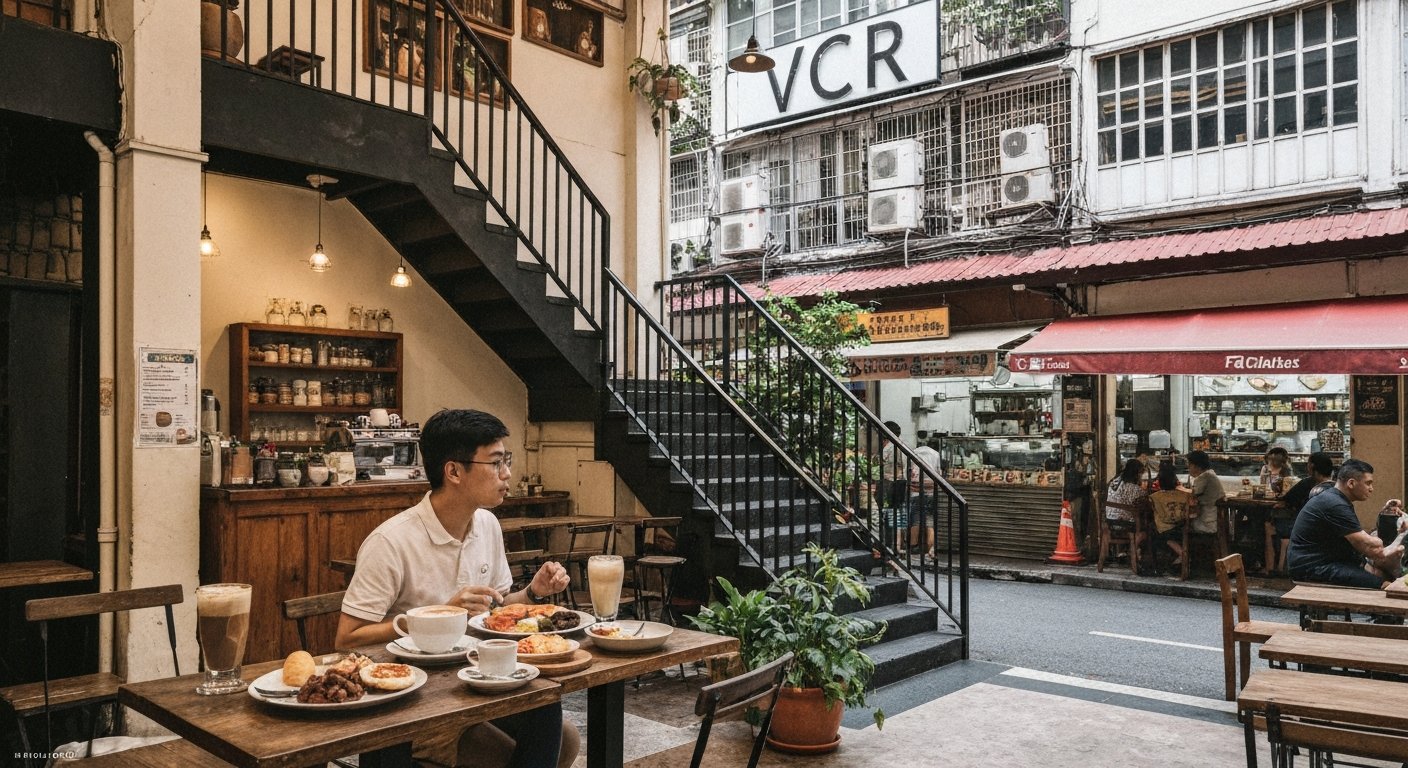
Then there is the brunch class, the reason many people first started saying Bangsar with a little more interest. VCR at 31 Jalan Telawi 3 is a multi-floor shophouse cafe doing precise brunch plates and specialty coffee, and it has the right kind of energy for a neighbourhood that likes its mornings a little curated. Antipodean on Jalan Telawi 2 is the old reliable Aussie-style stalwart, where competition-grade baristas and a hearty big breakfast keep the brunch crowd honest. Yeast Bistronomy at 24 Jalan Telawi 2 splits the difference between bakery and bistro, with croissants, tarts, artisan bread and an all-day French menu that makes it easy to linger longer than planned.
The other cluster worth knowing sits over at APW Bangsar on Jalan Riong, where the old printing-factory energy has been turned into a day-long food and coffee compound. Breakfast Thieves brings Melbourne-meets-Asia brunch into the former industrial shell, Pulp by PPP Coffee runs a serious micro-roastery and coffee bar, and Proof Pizza + Wine handles wood-fired pizza with a focused wine list. You can spend a whole weekend moving between these tables and never feel like you’ve repeated yourself. That, in Bangsar, counts as a perfectly good plan.
Going out
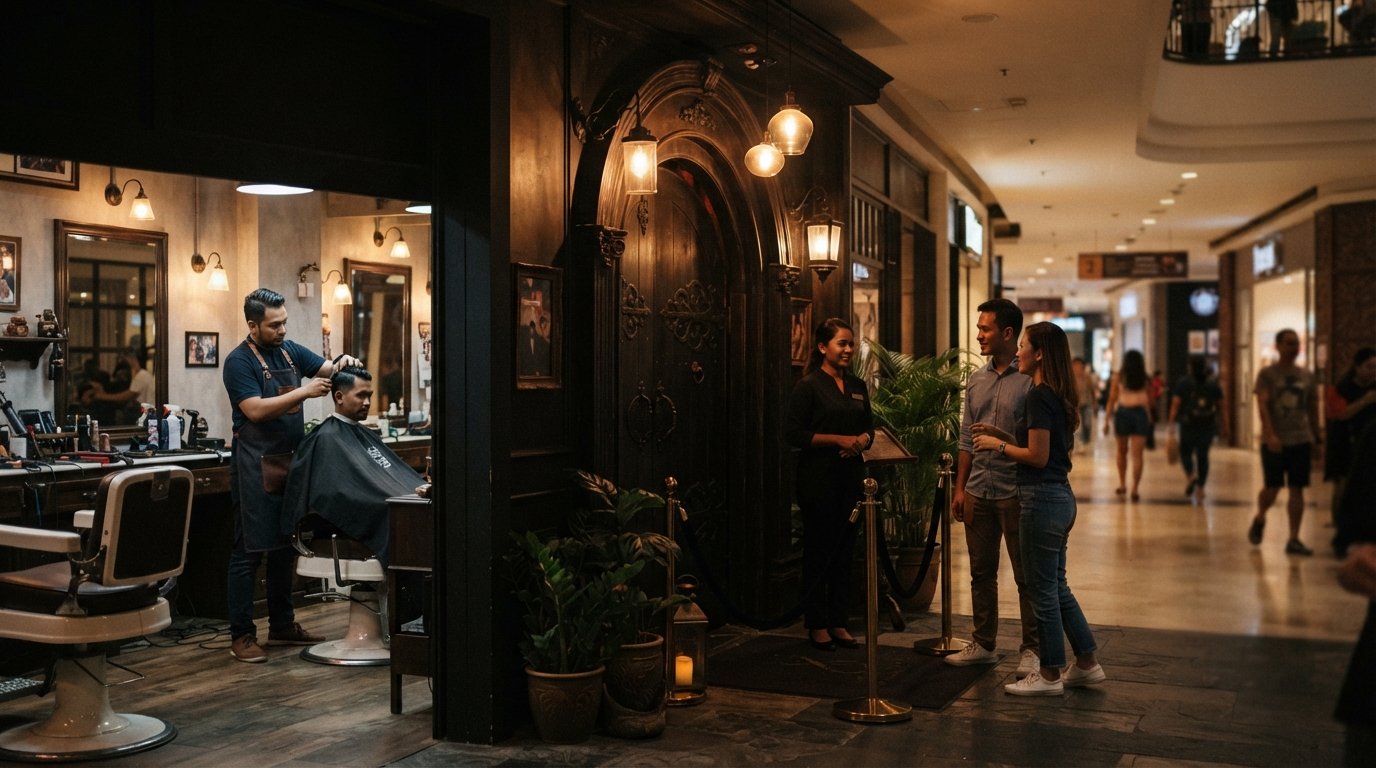
Bangsar’s night is not about clubs. It is about drinking well, and then maybe having a second thought about whether you should have booked a Grab earlier. The headline act is Three X Co, hidden behind a working barbershop inside Bangsar Shopping Centre on Jalan Maarof. It is one of those places that understands the pleasure of a good reveal, and once you find it, the room shifts into a chinoiserie-flushed speakeasy mood with cocktails led by head bartender Amanda Wan. The bar ranked No. 15 on Asia’s 50 Best Bars 2025, but the thing that sticks with you is the way it leans into Southeast Asian flavours — pandan, gula Melaka and the like — without turning them into gimmickry.
For a different sort of precision, Coley at 8 Jalan Kemuja is tiny, intense and proudly classic in its cocktail grammar. Named for Ada “Coley” Coleman, the Savoy legend behind the Hanky-Panky, it has the feel of a room that knows exactly what it is doing and does not need to raise its voice. It was a former Asia’s 50 Best entrant, but the better reason to go is simpler: it is a proper cocktail bar in a neighbourhood that actually uses its cocktail bars.
If you want a view with your drink, Mantra Rooftop Bar atop Bangsar Village II on Jalan Telawi 1 gives you the skyline from a tropical-modern deck with daybeds and cabanas. It is the more expansive, breezier side of Bangsar nightlife, especially at sunset, when the city begins to glow a little and the bar’s Southeast Asian small plates make sense of the whole scene. There is a dress code after 9pm, which feels entirely in character for Bangsar: relaxed, but not careless.
And when the bars close, Bangsar’s night does not end so much as it folds back into itself. Everyone seems to drift toward Devi’s Corner and the Telawi mamak corners for roti, teh tarik and grilled fish under fluorescent light. That late-night return is part of the neighbourhood’s charm. It knows how to dress up, but it also knows where to land.
Things to do / what to see
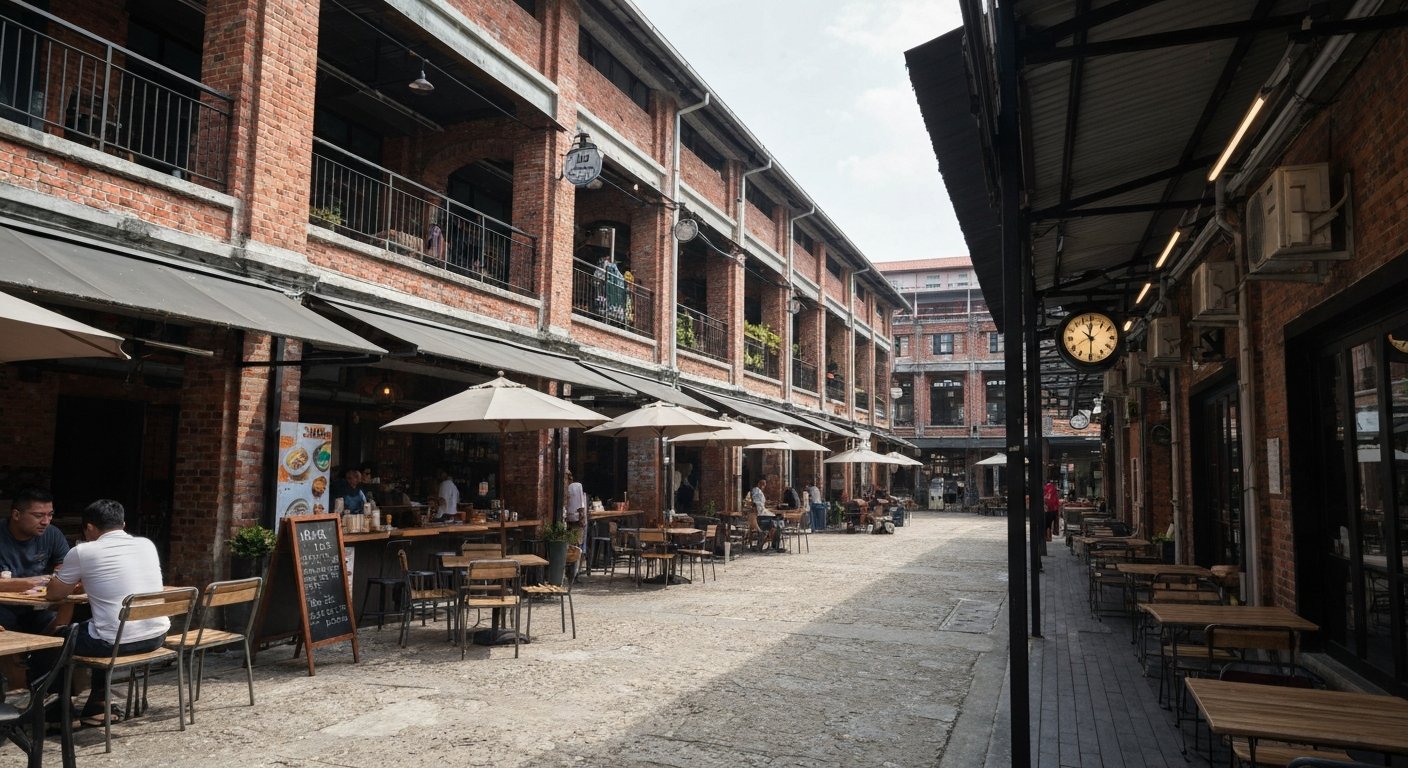
Bangsar is not a sightseeing neighbourhood, and that is exactly why it works. The “doing” here is less about monuments and more about movement: eating, drinking, browsing, and letting the day stretch in the right direction. The most rewarding place to begin is APW Bangsar on Jalan Riong, a 1950s-founded printing works reborn as a creative compound with cafes, bars, co-working, a micro-roastery and regular weekend markets, art bazaars and food festivals. It is the closest Bangsar gets to a cultural anchor, and it has the right amount of rough edges left in the structure to keep the place from feeling over-designed.
Come for coffee, stay for the pop-up, and then wander. Bangsar rewards a slow drift more than a checklist. The Telawi streets are best taken as a sequence rather than a destination: one cafe sliding into another, one terrace opening into a bar, one shophouse block giving way to a quieter residential lane. That shift — from polished commercial core to leafy calm — is the neighbourhood’s real architecture.
Up in Lucky Garden, the pace changes again. This older pocket holds a daily wet market and old-school hawker and kopitiam stalls, and it is one of the best reminders that Bangsar was a lived-in place long before it became a lifestyle shorthand. There is something grounding about seeing that side of the neighbourhood after the gloss of the Telawi strip. It keeps Bangsar honest.
On a Sunday, the pasar malam beside Bangsar Village becomes the evening’s main event. It is the kind of Malaysian night market that makes sense of the neighbourhood’s appetite: fresh produce, seafood, flowers, ikan bakar, satay, fruit and cheap local eats, all arriving just as the heat drops and the crowd thickens. If you are the sort of traveller who likes a neighbourhood to show its working, this is where Bangsar does it.
Don’t miss in Bangsar
APW Bangsar creative space
Jalan Telawi dining strip
Local art galleries
Shopping & markets
Shopping in Bangsar splits neatly between the malls and the market, which feels right for a neighbourhood that likes its pleasures organised but not too tidy. Bangsar Village I and II on Jalan Telawi 1 are the trendy twin boutique malls, connected by a sky-bridge and home to around 70 specialty stores, fashion and lifestyle shops, a supermarket and a strong run of cafes and restaurants. They are not just shopping centres; they are the everyday retail heart of the strip, the place where errands and espresso blur into the same outing.
Out on Jalan Maarof, Bangsar Shopping Centre (BSC) is the more upmarket, expat-leaning option, with a gourmet grocer, specialty stores and a cluster of cafes and bars. It is also where Three X Co hides, which feels exactly right for a mall that understands the value of a good surprise.
But the better browse is the Bangsar pasar malam, which takes over the streets beside Bangsar Village from mid-afternoon into the late evening on Sundays. This is the neighbourhood at its most tactile: produce, seafood, flowers, grilled snacks, fruit, and the practical bustle of people buying dinner rather than browsing for the sake of it. Hit it after dark once the heat drops and the crowds arrive. The mood is still lively, but it has that lovely Malaysian market looseness that makes time feel less rigid.
For a quieter, more everyday scene, the Lucky Garden wet market up the hill trades daily and shows the working, pre-gentrification side of the neighbourhood. Between that, the polished malls, and the creative-market pop-ups at APW, Bangsar covers a remarkable range of retail moods without ever needing luxury flagships to prove the point.
Where to stay in Bangsar
Bangsar has always been more residential than hotel district, which is part of its appeal. The accommodation landscape runs to serviced apartments, boutique stays and a handful of newer hotels rather than a dense tower zone, so it suits repeat visitors who want a local base more than a sightseeing command centre. If you are the kind of traveller who plans the day around where to eat, this neighbourhood makes excellent sense.
The sweet spot is close to Bangsar Baru and the Telawi streets. Stay within walking distance of the strip and you can brunch, drink and eat your way through the neighbourhood on foot, only reaching for a Grab when you need to leave it. The blocks around Bangsar Village place you right in the action, though that comes with a little more night-time noise. The quieter residential lanes toward Lucky Garden and off Jalan Maarof trade some walkability for calm, which may be exactly what you want after a late dinner and one too many cocktails.
Prices feel mid-to-upper for KL, and that is because you are paying for the neighbourhood rather than for five-star towers. Light sleepers should note that the strip’s bar and mamak noise runs late on weekends. If you want the Petronas Towers on your doorstep, base in KLCC instead. If you want to live like a local foodie for a few days, Bangsar is the sharper choice.
Hotels in Bangsar
Our best-rated stays in this neighbourhood. Prices are approximate “from” rates — confirmed at the provider when you continue. We may earn a commission if you book through our partners — at no extra cost to you.
In this area In this area
 In this area
 In this area
 In this area
 In this area
 In this area
Bangsar
The Majestic Hotel Kuala Lumpur, Autograph Collection
8.8· 4,312 reviews
approx. from£167 / nightSee prices
 In this area
 In this area
Bangsar
Palette KL Sentral Station Formerly Scott Hotel
7.6· 1,634 reviews
approx. from£18 / nightSee prices
 In this area
 In this area
 In this area
Getting around
Bangsar is walkable in patches, especially around the Telawi grid and the malls, but it is still a hilly, spread-out neighbourhood, and KL’s heat plus the afternoon downpours make ride-hailing the default for anything beyond a couple of blocks. Grab is cheap and everywhere; keep the app on. That is not a cop-out here, just the practical way the neighbourhood works.
The nearest rail is Bangsar LRT station on the Kelana Jaya Line, elevated over Jalan Bangsar. It links you quickly to KL Sentral — one stop away — and then onward to KLCC and the city centre. The catch is that the station sits about a kilometre, or a 10–15 minute walk, from the Telawi dining core, so most people grab a short ride between the two rather than sweat it. From KL Sentral, the KLIA Ekspres reaches Kuala Lumpur International Airport in about 30 minutes; a direct taxi or Grab to the airport runs roughly 45–60 minutes depending on traffic. The city centre and KLCC are a 10–15 minute Grab in normal traffic.
Bangsar is safe and affluent, with the usual big-city care late at night and a little attention required on traffic and uneven pavements along the hilly lanes. It is not the neighbourhood for trying to do everything on public transport. It is the neighbourhood for choosing your table well, walking between a few good ones, and letting the rest of KL come to you by car.
Gallery
Bangsar in pictures
Bangsar — your questions
Is Bangsar a good area to stay in Kuala Lumpur?
Yes, especially for repeat visitors and food-and-drink travellers who want a local base rather than the tourist core. Bangsar is safe, leafy and strong on brunch, coffee and cocktails, and it is one LRT stop or a short Grab from KL Sentral and about 10–15 minutes from the Petronas Towers. The trade-offs are fewer hotels, a mid-to-upper price feel, and a rail station that is a hot walk from the Telawi strip.
What is Bangsar known for?
Food and drink, above all. Bangsar is KL’s brunch and specialty-coffee neighbourhood, with the Telawi shophouse strip in Bangsar Baru as its centre. It is also known for Sri Nirwana Maju’s Michelin Bib Gourmand banana-leaf rice, the cocktail scene at places like Three X Co, the APW Bangsar creative compound and the Sunday night market beside Bangsar Village.
How do I get from Bangsar to the Petronas Towers or KLCC?
The easiest way is a Grab, which usually takes about 10–15 minutes in normal traffic. By rail, go to Bangsar LRT station on the Kelana Jaya Line, ride one stop to KL Sentral, then continue toward KLCC. Grab is usually simpler for short hops, especially in the heat.
What is the best time to visit Bangsar?
Late morning to evening works best. Bangsar really comes alive around brunch, lunch and after work, while Sunday evening is especially good for the pasar malam beside Bangsar Village. If you want cocktails, go later; if you want the market, go after dark once the heat drops.