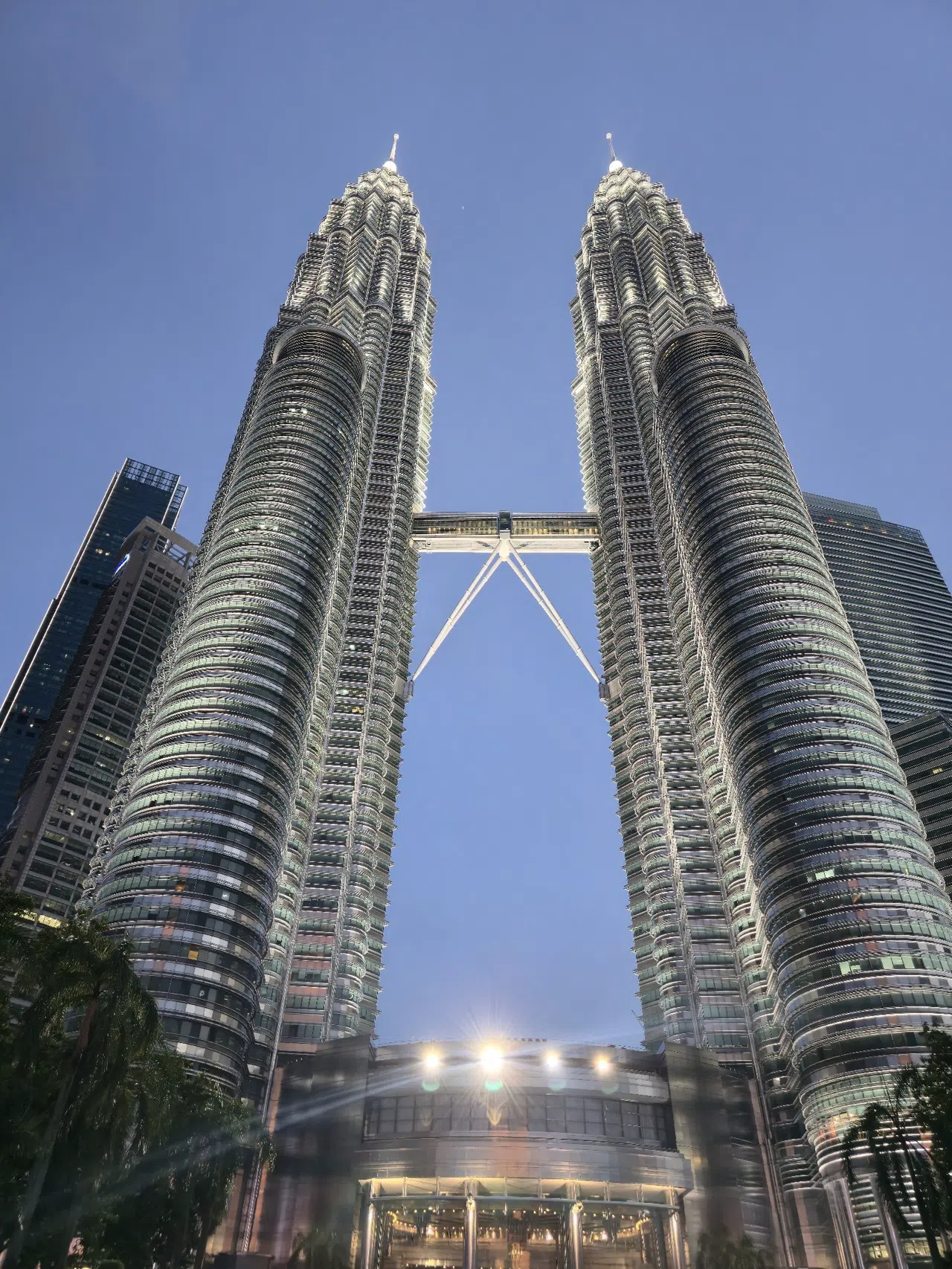

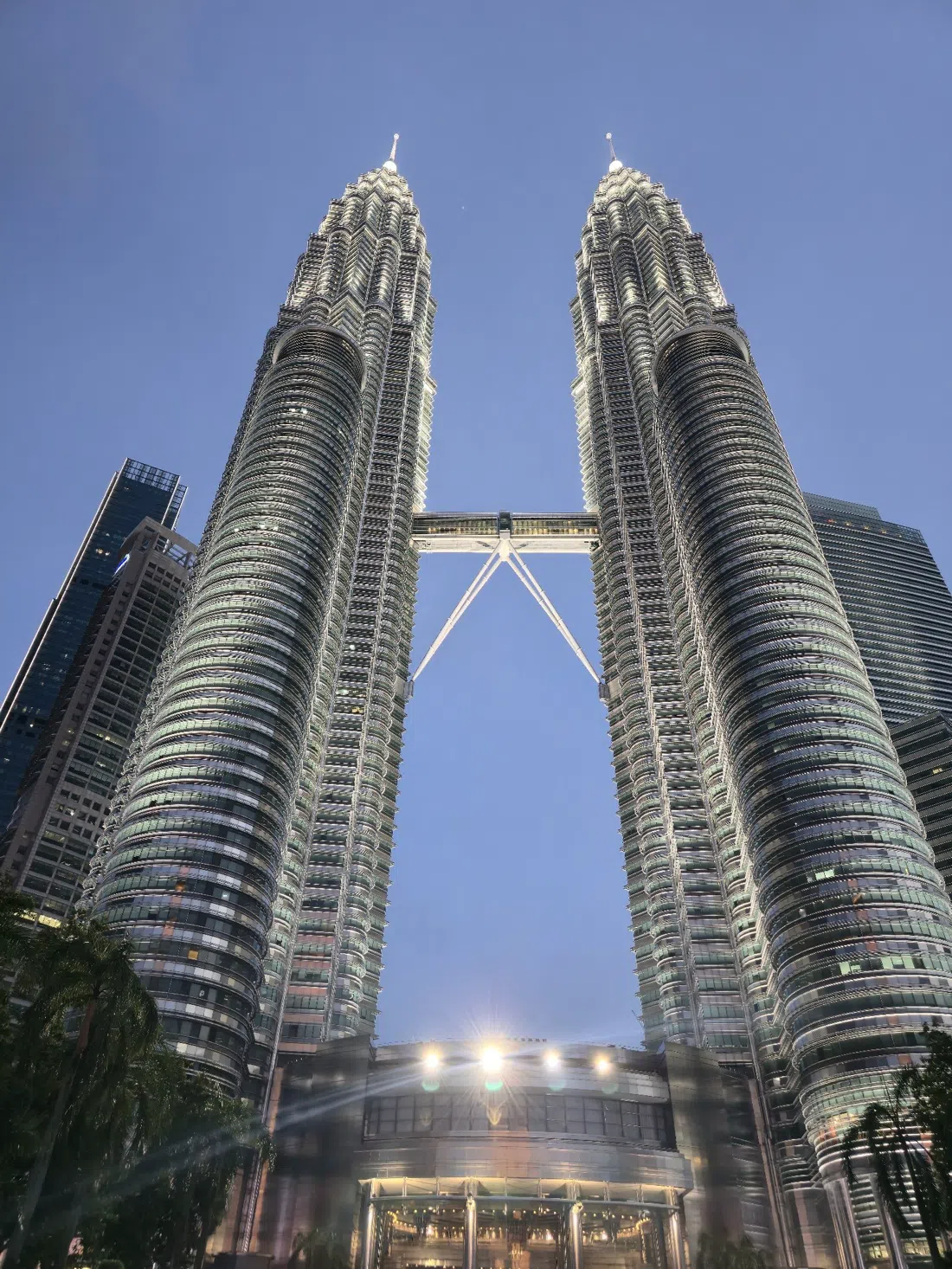
The towers change colour three times in about forty minutes. Silver while the sun is still on them, then a short warm bronze as it drops behind the haze on the western edge of the valley, then the floodlit white that everyone came for, at which point the park below fills with people holding phones above their heads to clear the rail. September is a kind month for working that sequence, because the storms arrive on something close to a schedule and the cloud they leave behind gives you a sky with texture in it instead of a flat white glare.
Where the towers actually stand
Kuala Lumpur City Centre (KLCC, signed as both centre and center depending on which developer put the sign up) is a compact precinct built on the old Selangor Turf Club racecourse. The park at its heart was the last major commission of the Brazilian landscape architect Roberto Burle Marx, which is why it reads as designed landscape and not leftover space between towers. For a photographer, almost everything worth shooting sits inside a twenty-minute walk. The two exceptions, the hill with the old forest on it and the village on the other side of the river, are a short ride or a bridge crossing away.
Worth saying early, because it saves people money: the photograph most visitors actually want is of the Twin Towers, not from them. Being inside the building removes the building from the frame. That does not make the tower visit worthless, but it does mean you should decide what you are buying before you buy it.
The free ground around the park
KLCC Park & Lake Symphony (KLCC, directly at the foot of the towers) is the best free vantage point in the city and the one that produces the classic reflection frame. It is open public space with no door policy, and photo groups set up tripods along the esplanade as a matter of routine. The light-and-sound fountain runs at 8:00, 8:30, 9:00, 9:30 and 10:00pm every night, and the rail fills solid in the minutes before each of those. The reflection is cleanest between shows, once the water has settled, so the working pattern is to shoot the still water at 8:20, let the 8:30 show have the crowd, then shoot again at 8:50.
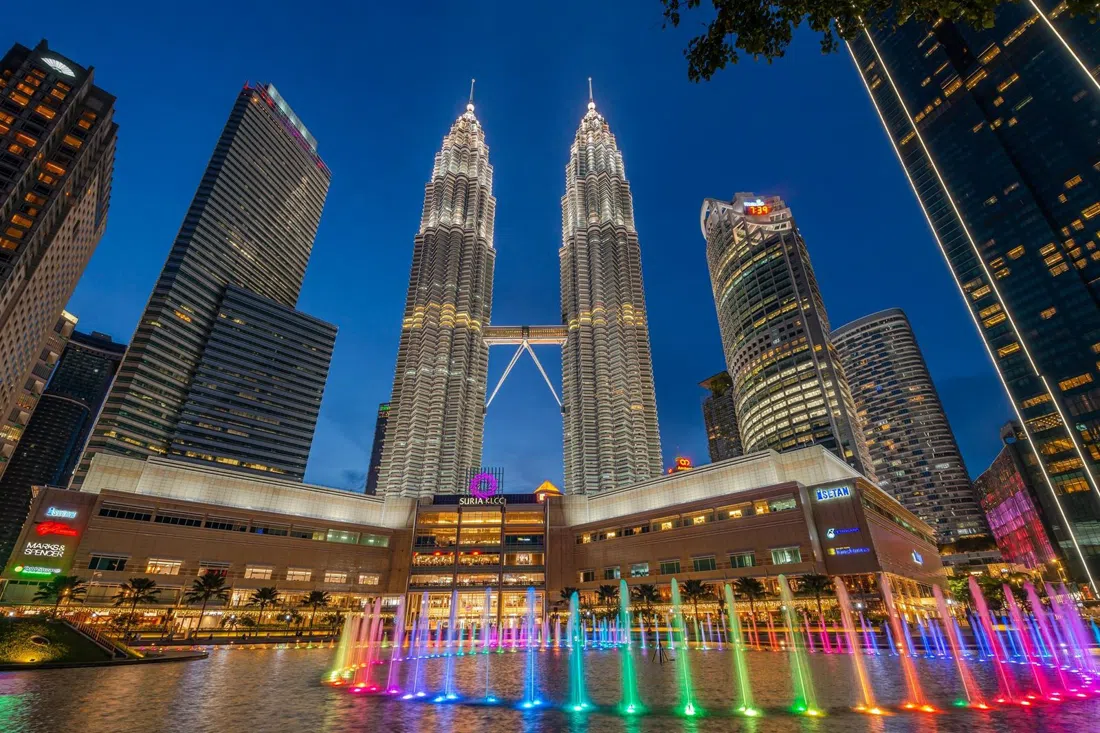
Suria KLCC (KLCC, in the podium beneath the towers) is infrastructure rather than a sight, and I list it as such. It is the air-conditioned reset between shoots, the ticket counters for the towers and the science centre are inside, and the upper balconies give you a clean wide-angle straight up the tower legs when the outside light has gone useless. Free to enter, open roughly 10am to 10pm, and every guided group in the precinct uses it as a meeting point.

Ombak KLCC (KLCC, closing the ring on the park's far side) opened on 21 August 2026 and is the new thing this season. It completes the ring of buildings around the park, so it gives you an elevated angle on the towers that no previous visitor had. Entry is free and mall-scale, so groups are fine, but the rooftop sky garden is where everyone goes at sunset and it gets dense. One correction to what you may have read: Galeri PETRONAS is here only as a phased ground-floor preview, and the full four-level gallery is not due until the end of 2027. Come for the roof, not for the art.

Going up, and whether you should
PETRONAS Twin Towers Skybridge & Observation Deck (KLCC) costs MYR 100 for an adult and MYR 43 for a child for the Skybridge plus the Observation Deck, or MYR 80 for an adult on the Skybridge alone. Entry is by timed slot in fixed batches, the tower runs Tuesday to Sunday from 9am to 9pm, and it is closed on Mondays. Buy the slot online. The counter does sell out, and private and guided operators block-book in advance, which is why a walk-up group rarely gets consecutive times and ends up split across the evening. If you are travelling as four or six people, book together or accept that you will be waiting in the mall for each other.
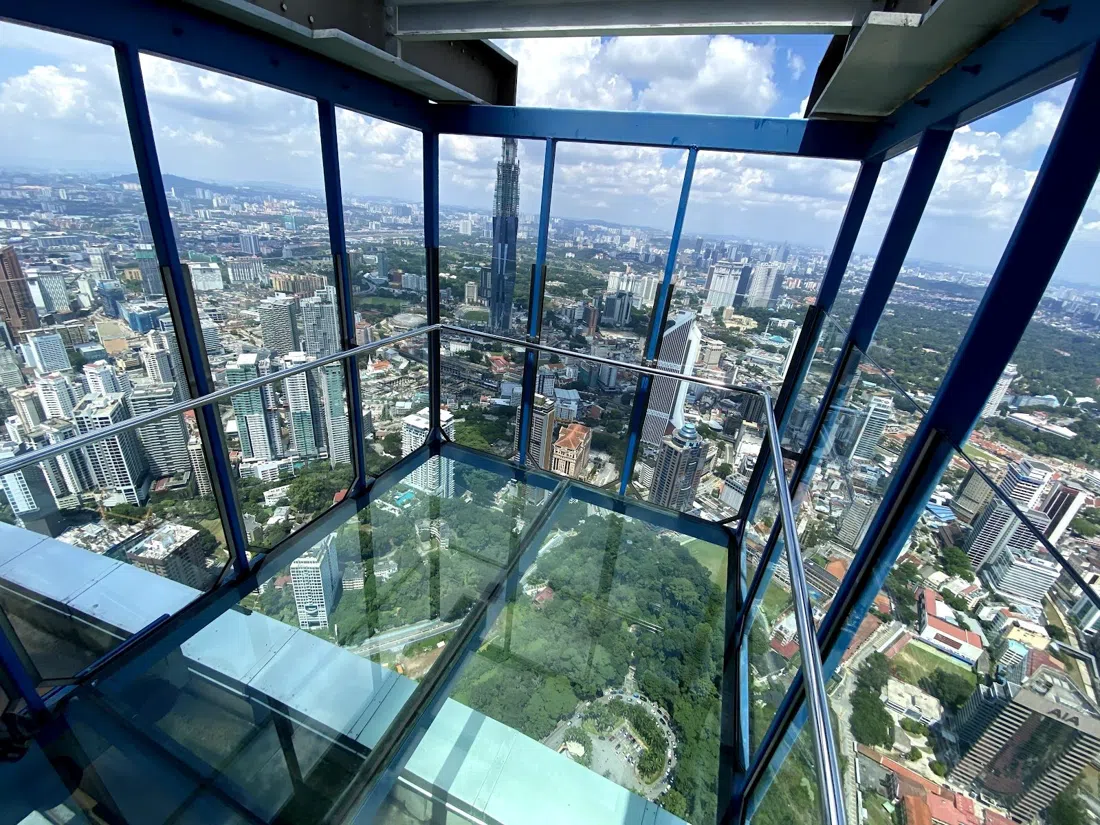
Menara Kuala Lumpur (KL Tower) Sky Deck & Sky Box (Bukit Nanas, on the hill west of KLCC) is the one I would spend the money on if I could only spend it once. This is where you photograph the Twin Towers from above with the whole city stacked behind them, which is a materially better picture than anything you get from inside the towers themselves. The Observation Deck is MYR 33 for a non-Malaysian; the Sky Deck with the Sky Box glass floor is MYR 78. The Sky Box takes one small party at a time, with a queue and a short slot each, so a group should expect to wait and then be hurried. Evening and weekend slots go first. The tower runs roughly 9am to 10pm.
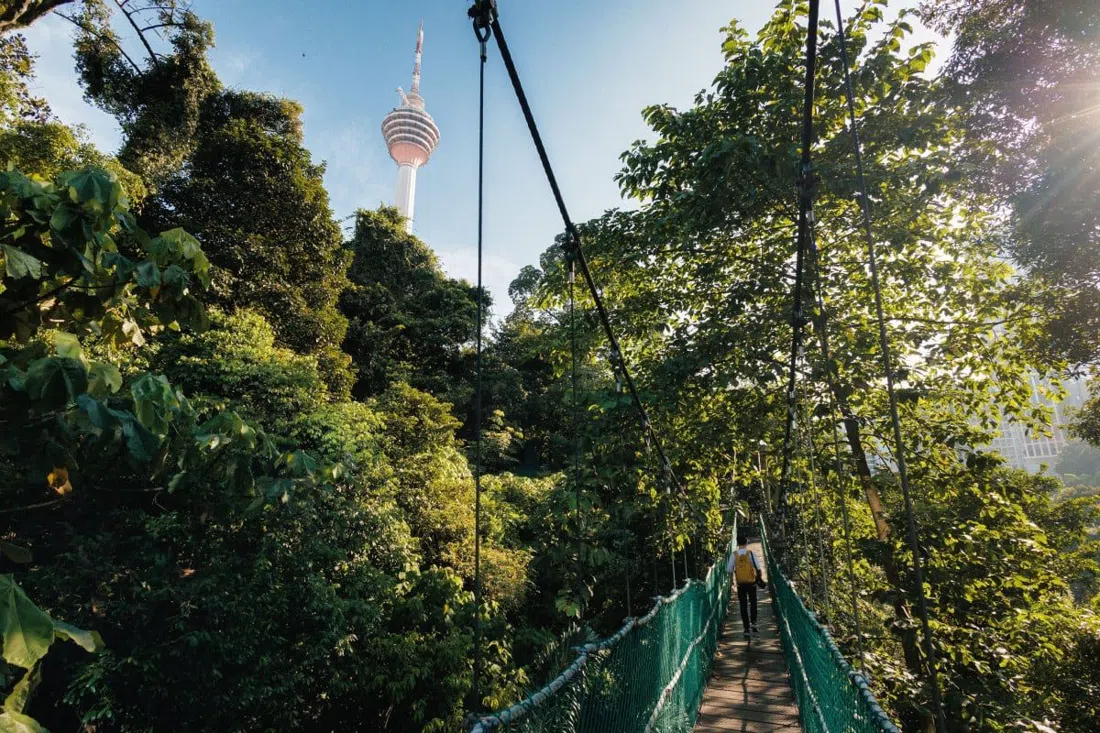
KL Forest Eco Park (Bukit Nanas Forest Reserve) (Bukit Nanas, a short walk downhill from the tower) gives you the jungle-framed skyline: towers seen through dipterocarp canopy, a frame you cannot get anywhere else in the region. It is MYR 40 for a non-Malaysian and MYR 10 with a MyKad. The canopy walkway runs roughly 9.30am to 4pm, it is narrow and one-way with a limit on people per span, and it shuts on Mondays, on public holidays and in bad weather. Confirm on the day before you climb the hill in the heat.
Rooftop bars and what each one really costs you
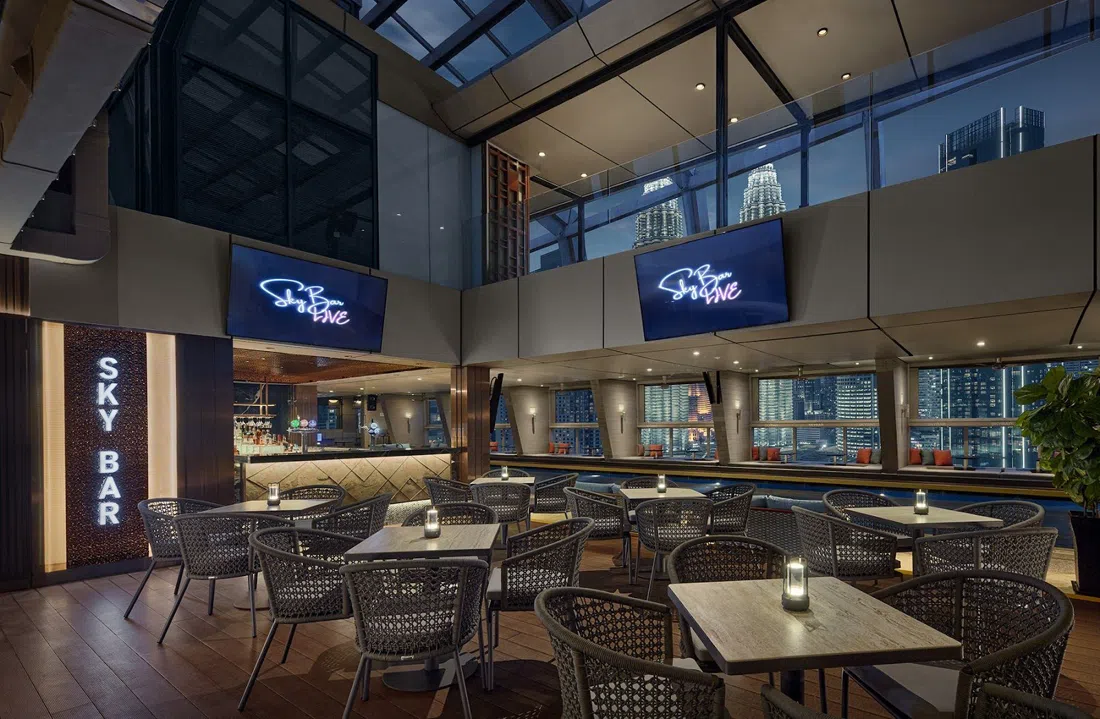
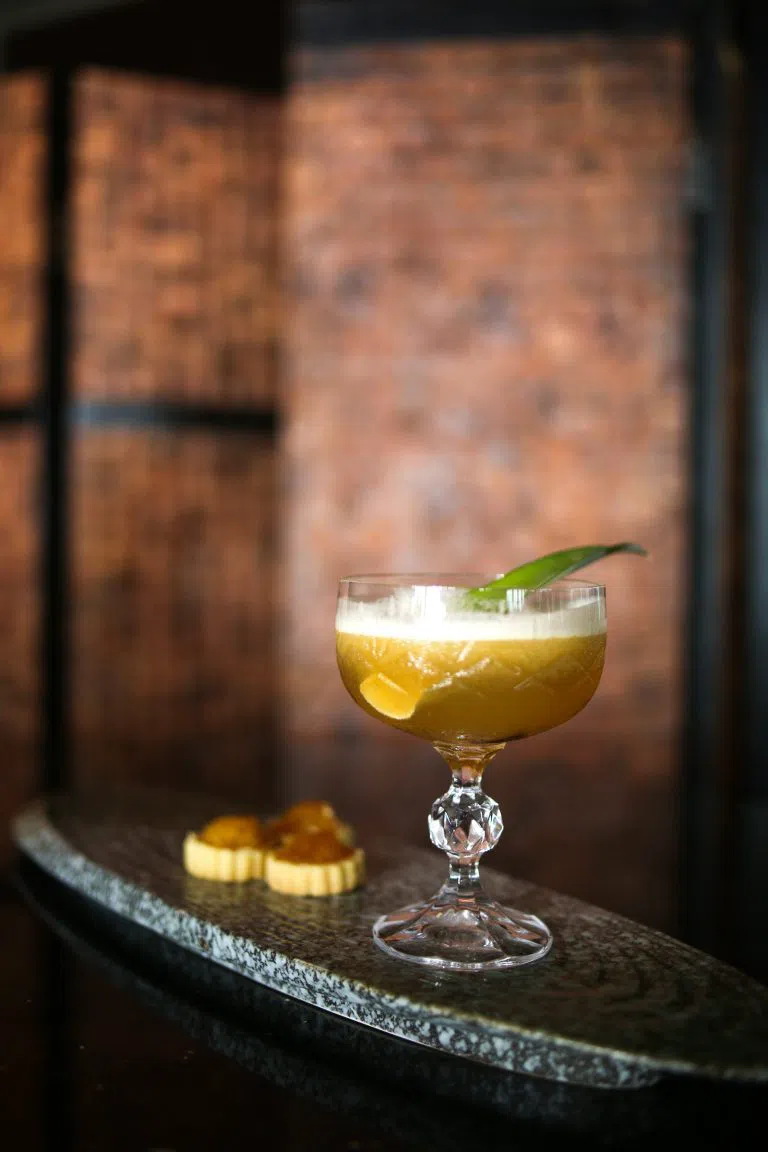
SkyBar at Traders Hotel Kuala Lumpur (KLCC, across the park from the towers) relaunched in early 2026 and remains the closest unobstructed head-on view of both towers from indoors. There is no entry fee; cocktails run roughly MYR 45 to 75. Shoot through the glass with your lens hood pressed flat against it to kill reflections. The window-side pool cabanas are the contested seats, so reserve or arrive in late afternoon, and understand that the pool deck composition is the one everyone else is queuing for too.
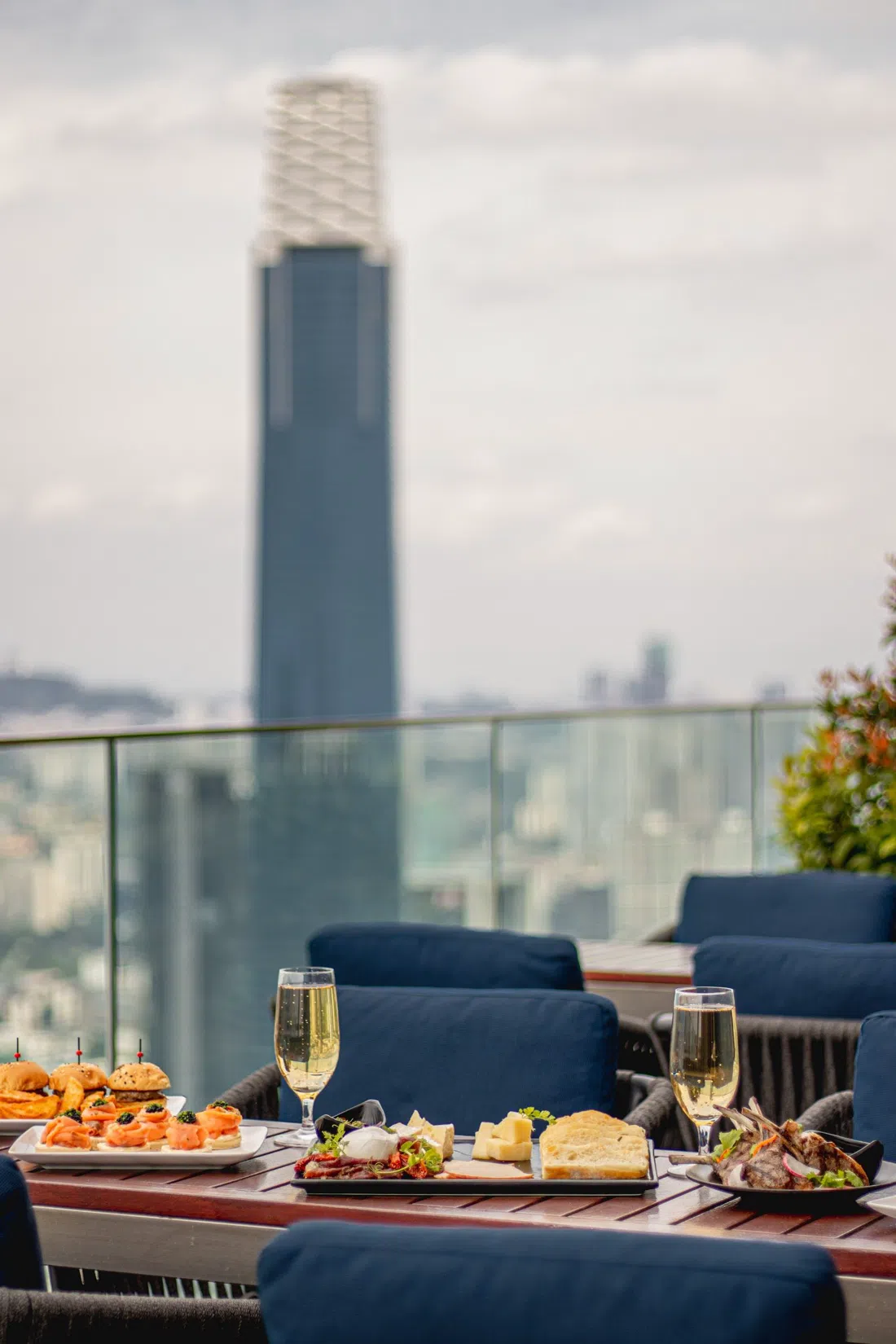
Vertigo & Vertigo TOO at Banyan Tree Kuala Lumpur (Jalan Conlay, between KLCC and the shopping strip) is the one rooftop that puts the Twin Towers and Menara Kuala Lumpur in a single composition instead of making you choose between them. That is a real editorial advantage if you are building a set. It opens from 6pm daily, so you get blue hour but never the golden-hour side light. Cocktails are roughly MYR 50 to 80, smart-casual is expected, groups are fine, and you should reserve for sunset.
Marini's on 57 (KLCC, facing the towers head-on) is the nearest thing to shooting the towers from their own altitude. Price the trade-offs honestly: the door is strictly smart-casual with no shorts, no flip-flops and no headwear, the rooftop bar is 21 and over, cocktails are MYR 60 to 90, and a window table carries a minimum spend of around MYR 300++ per person. The rooftop bar only runs on Friday and Saturday, so if this is the frame you want, build the trip around those two nights rather than hoping.
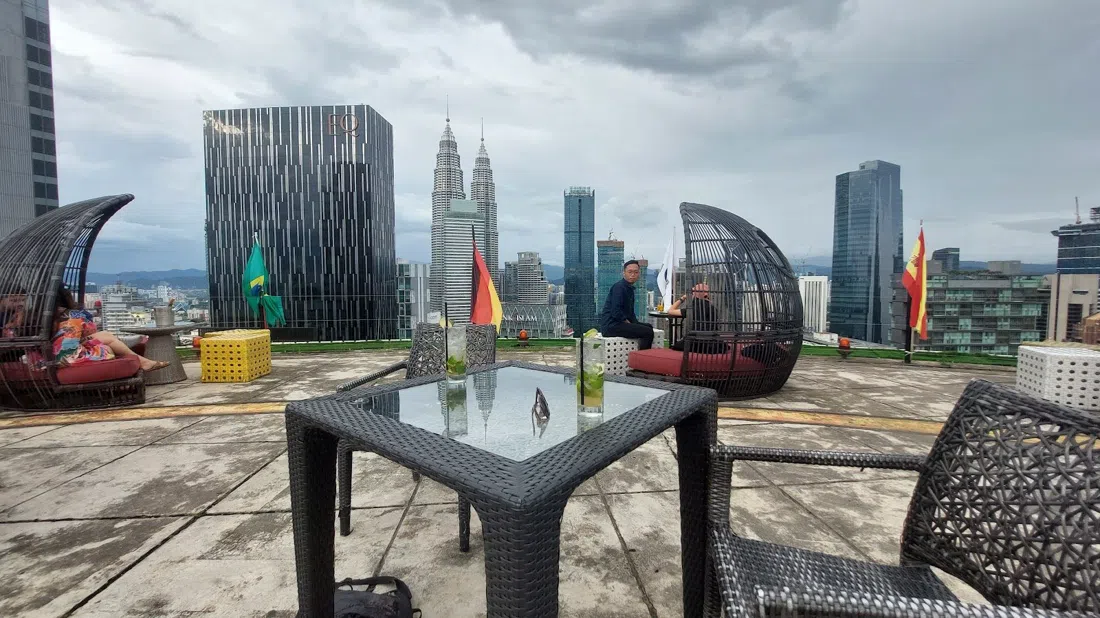
Heli Lounge Bar (Helipad KL) (Jalan Sultan Ismail) is a working helipad that becomes a bar, and it photographs unlike anywhere else in the city because the platform is rail-free and 360 degrees. Reckon on around MYR 100 per person including drinks; from Thursday to Saturday after 9pm there is roughly a MYR 100 minimum spend per head, while at other times a drink buys pad access. Reserve for sunset. Take the warnings seriously too: no safety barrier means no safety barrier, the pad closes in rain, and it is a bad idea with small children.
The bridge, the village and breakfast
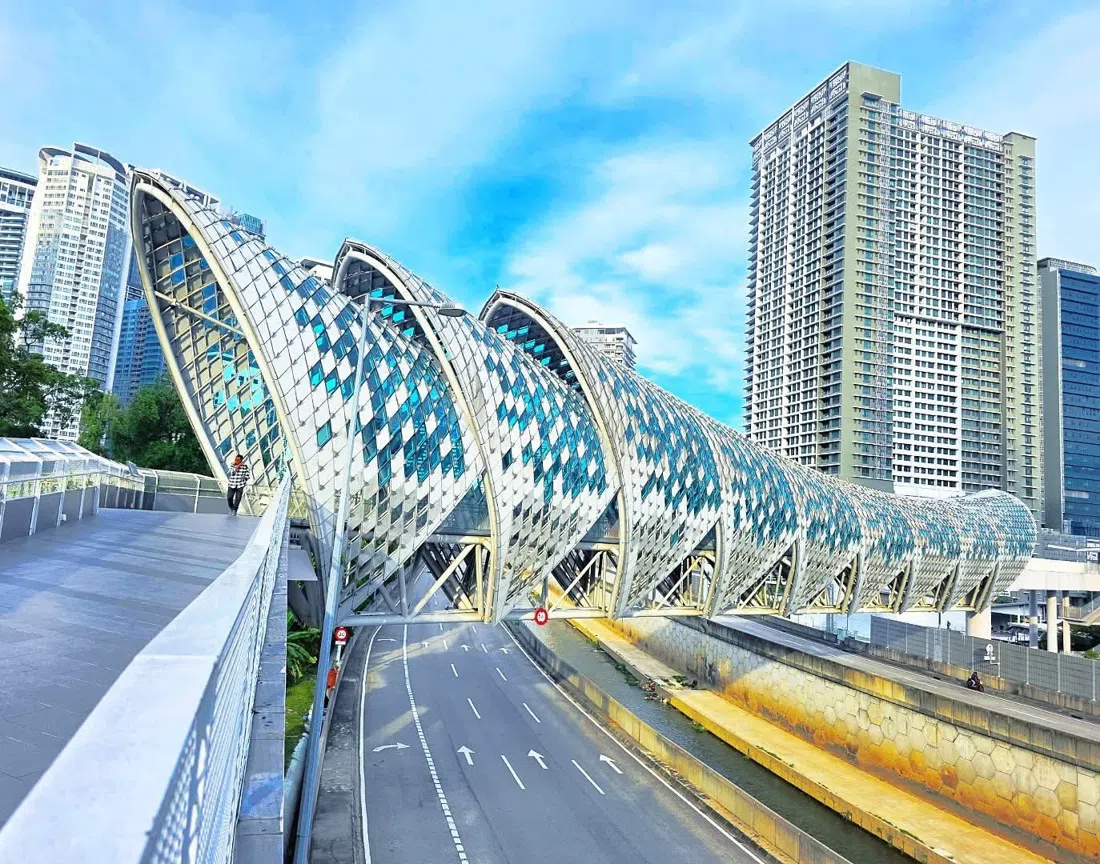
Saloma Link (Pintasan Saloma) (linking KLCC to Kampung Baru) carries the most-shot night composition in the city, and it is free and open from 5am to 1am, closing at midnight on Sundays and public holidays. The bridge's own LEDs cycle through colours, so shoot a sequence rather than a single frame and pick the one where the tube colour is not fighting the towers' white. It is narrow. A big tripod group here blocks people walking home, so work tight and move.
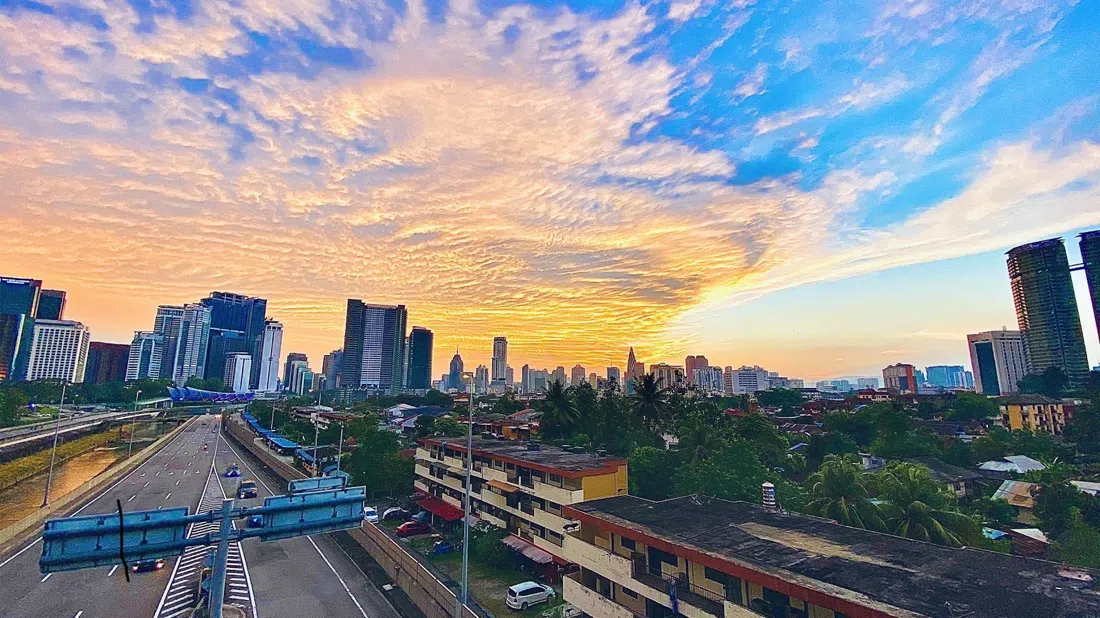
Kampung Baru (Kampung Baru, ten minutes on foot from KLCC across the bridge) gives you the old-against-new frame: timber Malay houses with the glass towers stacked behind them. It is a residential village, so keep the group small as a courtesy (the lanes are tight) and ask before photographing anyone or shooting into a doorway. Morning light here is better than evening, and the place is calmer then too.
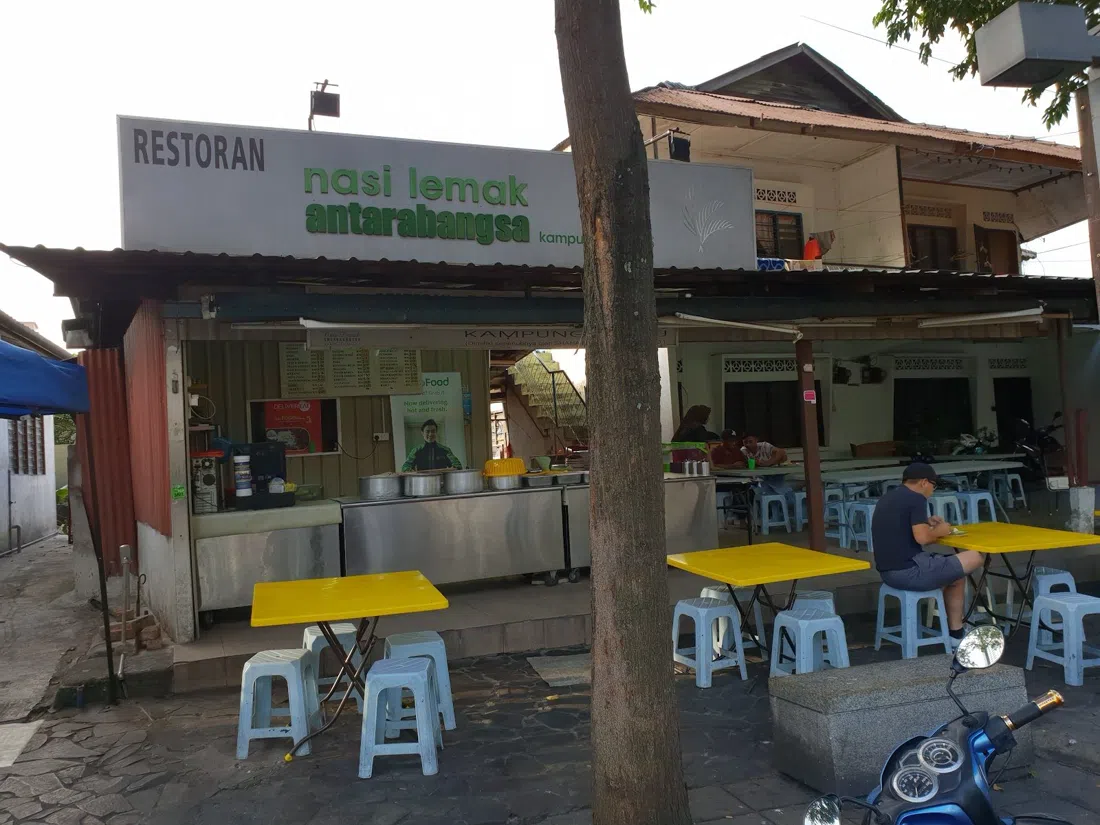
Nasi Lemak Pak Aji (Kampung Baru, on Jalan Raja Muda Musa) is the natural breakfast before a sunrise village walk, and it is under MYR 20 a head. Use the current name. This is the old Nasi Lemak Antarabangsa reborn under new management, and older articles and signage will confuse you. It is small and cramped from 7 to 9am and again from 9pm to midnight, so either come off-peak or split your group across tables.
When the storm arrives
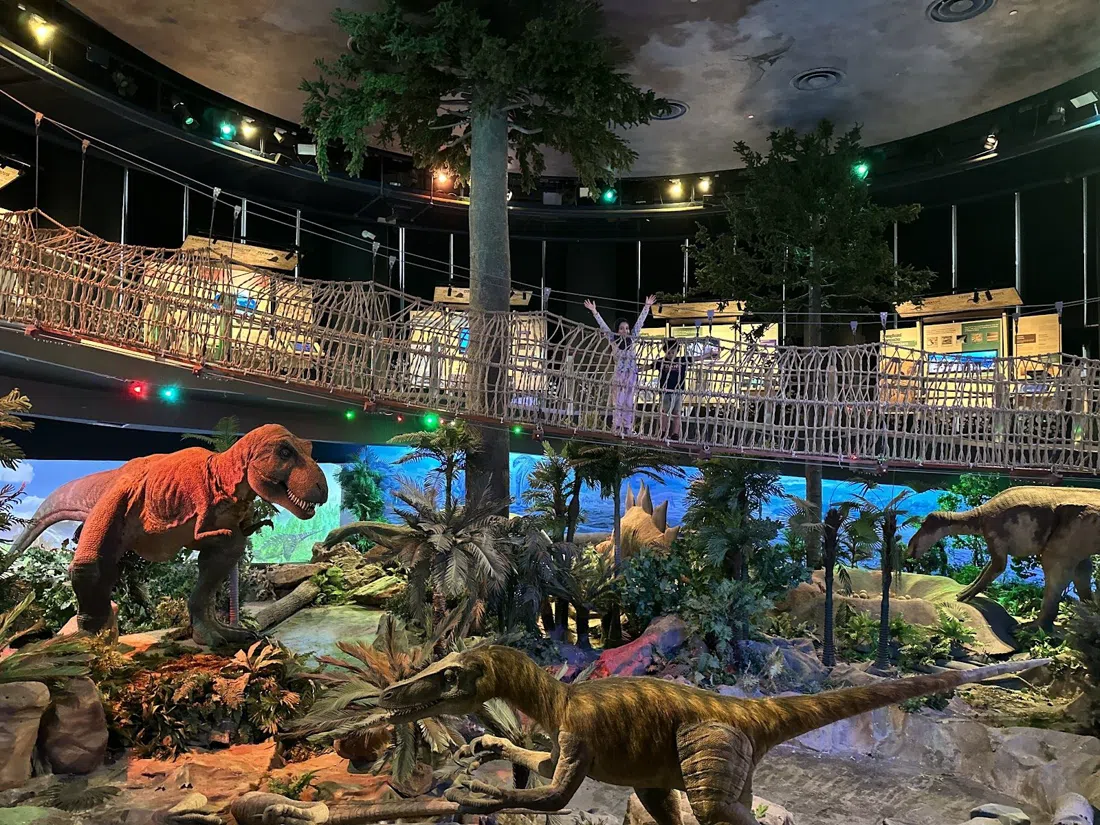
It will, most afternoons. Petrosains, The Discovery Centre (inside Suria KLCC) starts from about MYR 23 per person and is built for school and family groups, with group rates and advance slots. Its hours are short, roughly 9.30am to 5.30pm, so it works as a plan you execute before the storm rather than a shelter you duck into afterwards.
Aquaria KLCC (KLCC, under the convention centre) is the strongest low-light interior subject in the precinct and a proper two-hour rain plan, at about MYR 45 to 75 per person. Flash is discouraged for the animals, so bring your fastest lens and expect to work wide open; the tunnel walkway keeps moving, which makes tripods impractical. It opens at 10am on weekdays and 9am at weekends.

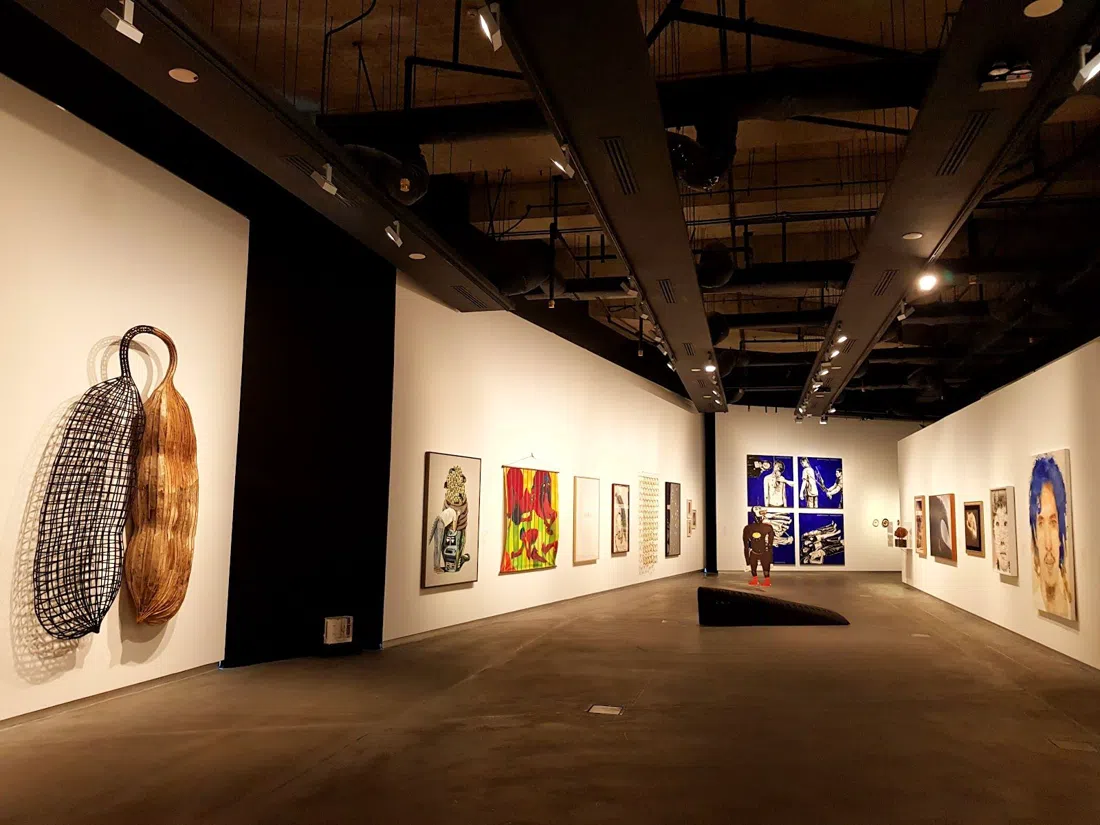
ILHAM Gallery (Jalan Binjai, ten minutes from the towers) is free, air-conditioned and a good Malaysian modern-art gallery rather than a place to kill an hour. It runs Tuesday to Saturday 11am to 7pm and Sunday 11am to 5pm, and closes on Mondays and public holidays. Photography policy changes with the exhibition, so ask at the desk before you lift a camera.
How long the whole thing takes
Two evenings and one early morning covers the precinct properly. Evening one is the park, the fountain gaps and the bridge. Evening two is a rooftop, booked. The morning is Kampung Baru with breakfast first, finishing before the heat at about 10am. Add a half-day for the hill, the tower deck and the forest canopy, and you have a complete set.
A guided option exists and is attached to this page as a separate card rather than being something I will sell you in prose. The case for it is narrow but honest: full-day private photography circuits here run seven days a week, start from about 107 USD per person, and the best-rated one holds 4.9 out of 5 from 445 reviews. What you are buying is a driver between the hill, the park and the village in September heat, plus someone else handling the timed tower slot. If you are confident with a map and comfortable in humidity, you do not need it.
Best time to go in September 2026
Sunset lands around 7.15pm through the month, give or take a few minutes, because the city sits close enough to the equator that the hour barely moves across the year. Blue hour is short and it is the good one: roughly 7.25 to 7.50pm, when the sky still holds colour and the tower floodlights are already on. That window overlaps almost nothing else, so decide in advance which single location gets it.
September brings convective storms, typically mid to late afternoon, usually clearing within an hour or two. Plan the indoor items for 2 to 5pm and the outdoor frames either side. The cleared air afterwards is the best shooting condition you will get all day.
Avoid Mondays entirely. The Twin Towers are closed, the canopy walk is closed, and the gallery is closed, which makes a Monday here a wasted day for everything except the park and the bridge. Friday and Saturday are the rooftop nights, because that is when the highest bar runs and when the helipad carries its late minimum spend. Note also that 16 September, Malaysia Day, is a public holiday: expect holiday closures and holiday crowds, and expect the bridge to shut at midnight rather than 1am.
Is the precinct worth a dedicated photography trip? Yes, with one caveat. The free ground-level positions produce better pictures than most of the paid ones, and the paid altitude that earns its price is the hill, not the towers. Budget accordingly.
Getting around, paying and budgeting
The Kelana Jaya LRT line runs directly into the basement of the mall at KLCC station, which is the simplest arrival for anyone staying in the city centre or around the shopping strip. Ampang Park station serves the gallery side, and Kampung Baru has its own station if you would rather not walk back across the bridge in the dark. Free city shuttle buses loop the centre, and ride-hailing is cheap, reliable and worth it in the hour after a storm. Most visitors base themselves either in the KLCC ring itself or a few stops away; the Kuala Lumpur hotel search will show you what each side of the park actually costs on your dates.
Cards work everywhere in the malls, hotels and rooftop bars. Kampung Baru, the hawker stops and the small stalls run on cash or local QR payment, so carry small notes. A day that uses only the park, the bridge, the village and the new rooftop garden costs you nothing but breakfast. Add the tower deck on the hill at MYR 78, the Skybridge and Observation Deck at MYR 100, one rooftop cocktail at MYR 50 to 80, and you are at a realistic MYR 250 to 300 for a full photographic day, before the minimum-spend venues.
Bring a fast lens, something that takes a small travel tripod, and a cloth for the humidity that will fog your glass the second you step out of air conditioning. For everything outside this precinct, where to eat properly and which districts reward a second day, the wider Kuala Lumpur guide picks up where this leaves off.