The Kuala Lumpur issue
Beyond the 272 Steps: Batu Caves, Its Temples and the Waterfall Locals Actually Go To
A calm, honest half-day plan for Batu Caves — the cathedral cave, the quieter caverns the coaches skip, a banana-leaf lunch worth the trip, and the green Kuala Lumpur keeps for itself.

By Lena BrandtThe city between the towers
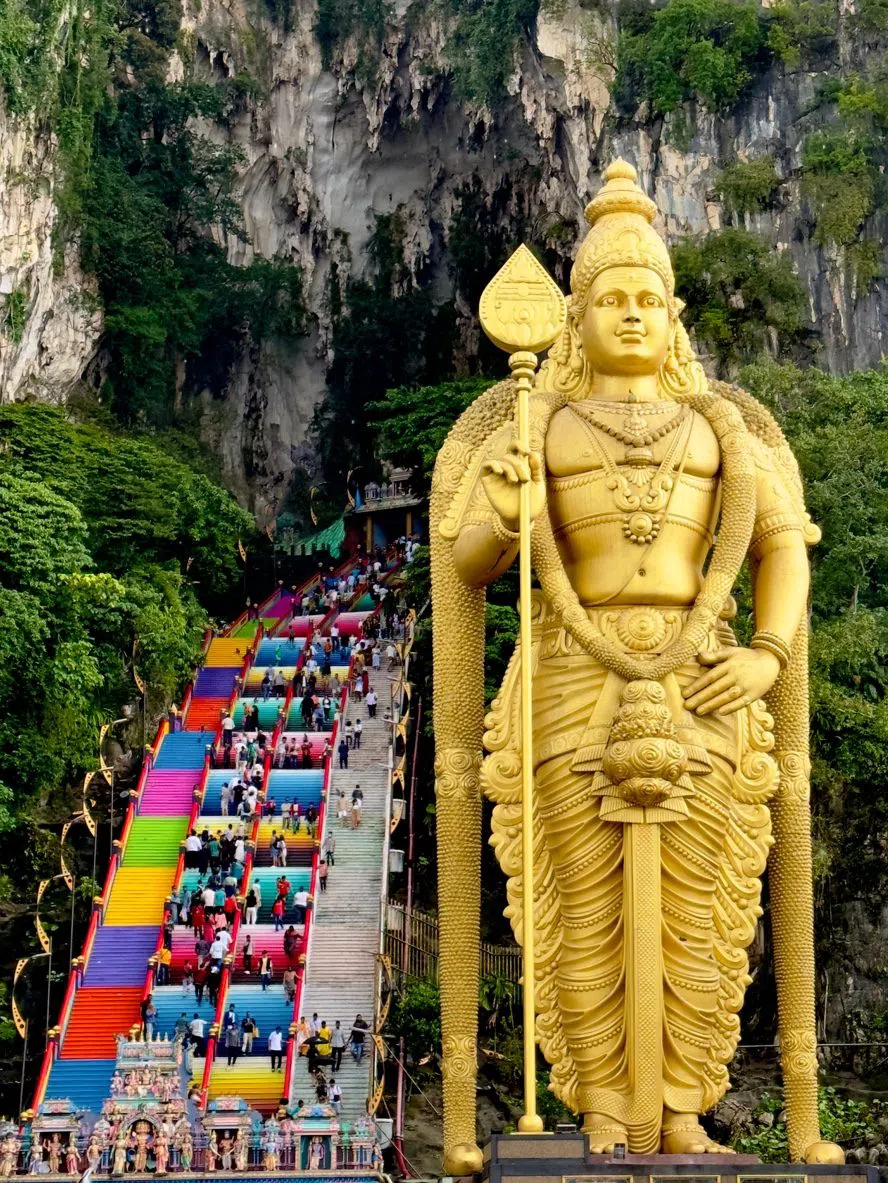
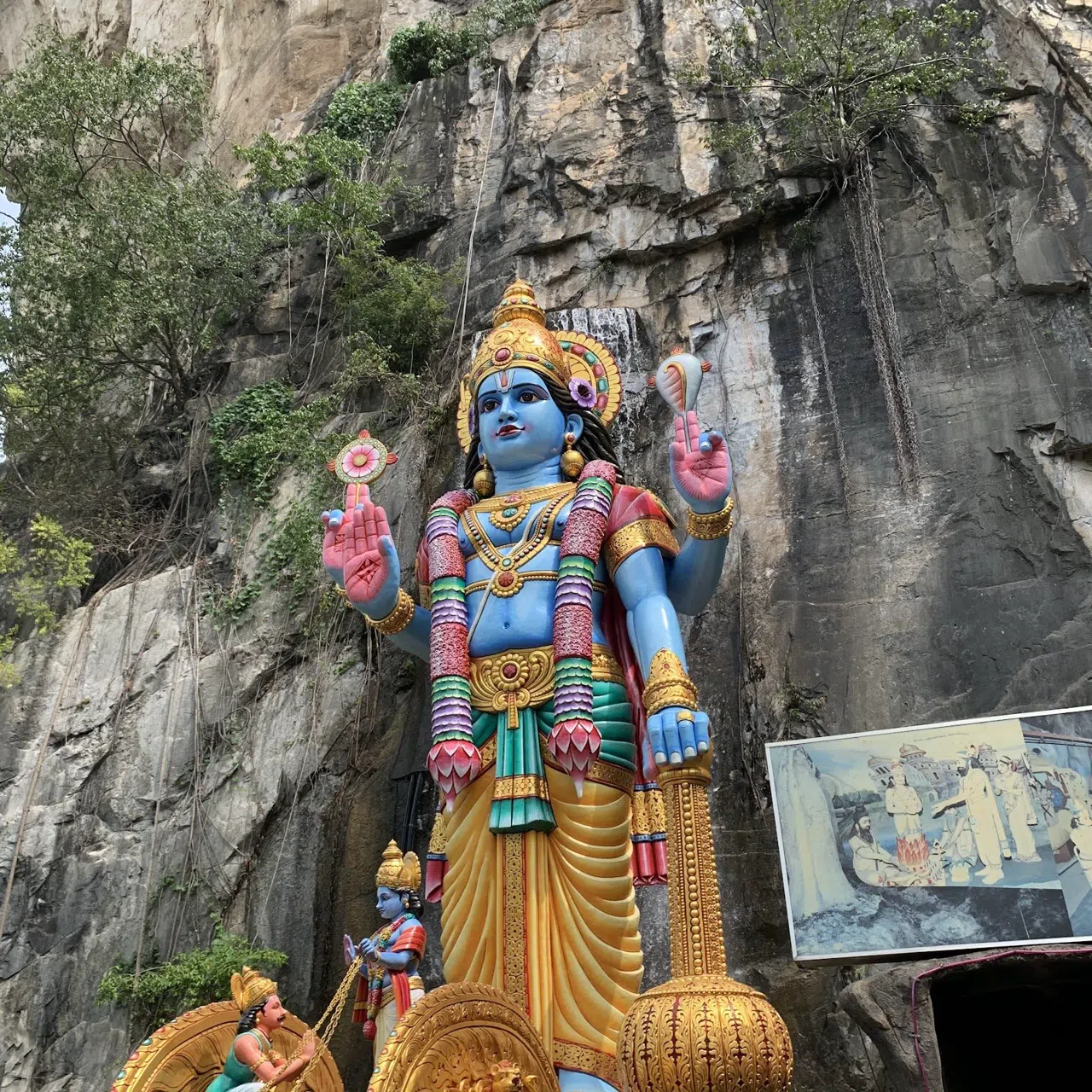
The 272 steps are the photograph everyone takes home, and I understand the pull — a rainbow staircase climbing to a limestone cathedral, a gilded giant standing guard at the foot, monkeys working the crowd for whatever falls out of an open bag. But arrive early, look past the selfie queue, and you find what the coaches roll straight past: a warren of caves beyond the famous one, a proper climbing wall, a South Indian lunch worth the journey on its own, and — if you're willing to travel a little further out of town — the jungle Kuala Lumpur quietly keeps for itself. This is how I'd spend the day, in the order I'd actually do it.
Start at the top: the Temple Cave
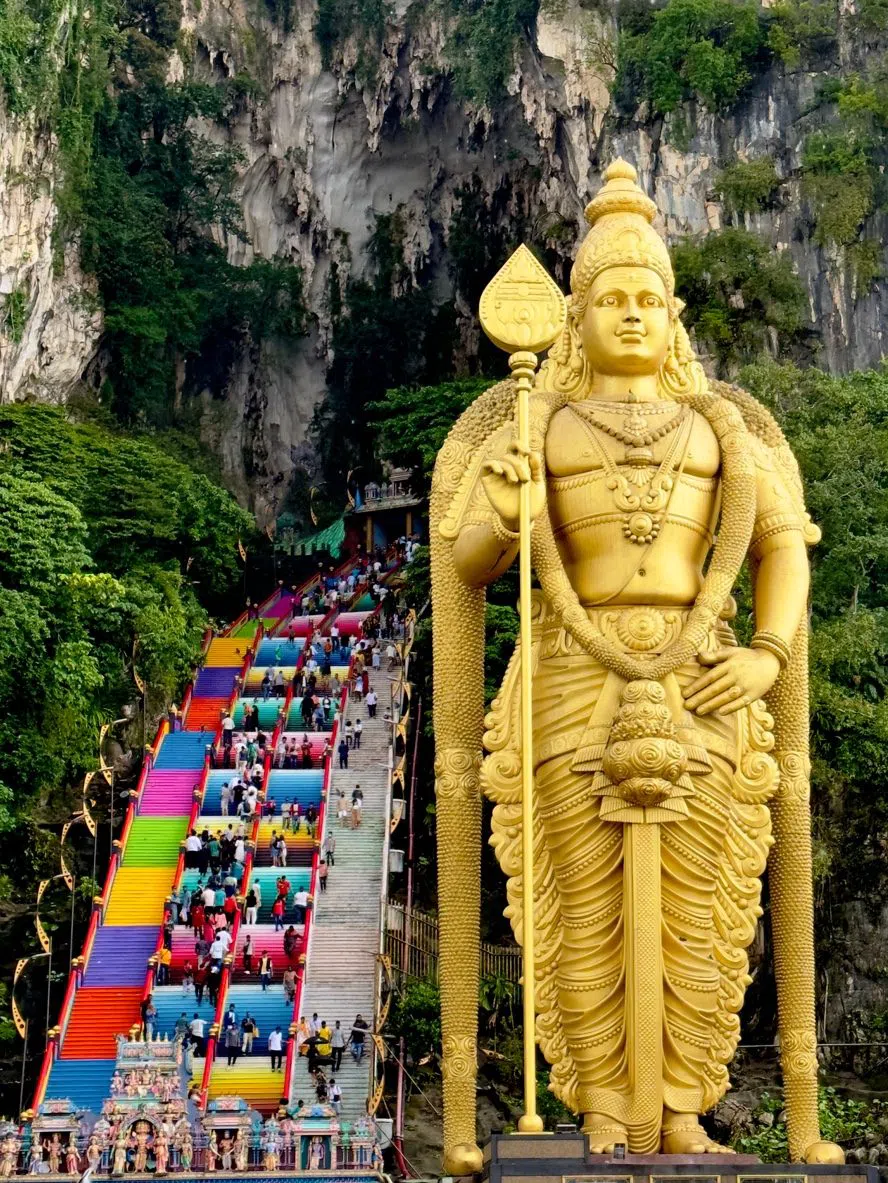
Get here for opening. Batu Caves Temple Cave (Batu Caves, about 13km north of central Kuala Lumpur) is the headline, and there is no arguing with it — the limestone here is something like 400 million years old, and the main chamber, sometimes called Cathedral Cave, opens into a vaulted space with sky punching through the roof and shrines tucked into the rock. The Tamil merchant K. Thamboosamy Pillai dedicated it to Lord Murugan in the 1890s, and every year at Thaipusam (late January or February) the site draws well over a million pilgrims. Access is free and there's no booking; the cave absorbs tour groups and coaches all day long, which is precisely why I'd climb those 272 steps before the first buses arrive.
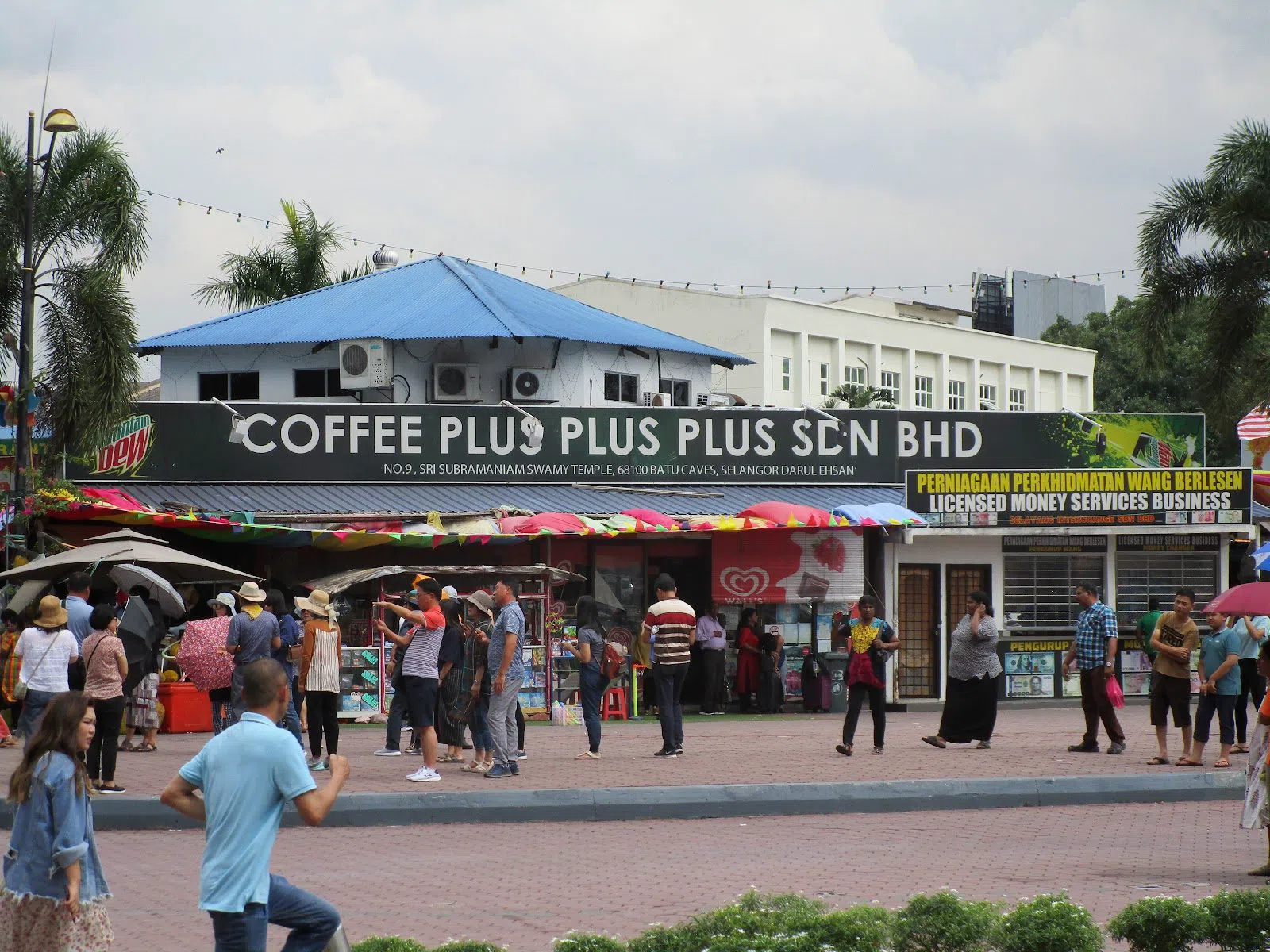
A few honest practicalities. This is an active place of worship, so shoulders and knees should be covered — a scarf or a light layer does the job, and sarongs are available near the base if you've turned up in shorts. There are donation boxes inside rather than a ticket booth; give what you like. And the monkeys are not a photo op so much as a logistics problem: keep water bottles, sunglasses and snacks zipped away, because they will help themselves. At the foot of the stairs, the Sri Subramaniar Swamy Temple is worth a slow walk before you start climbing — the colour and detail reward a few unhurried minutes.
Who does it suit? Everyone, honestly — solo travellers, couples, families, big groups. The only real filter is the staircase and the midday heat, so front-load it.
Plan your Kuala Lumpur trip
Live prices from our booking partners.
Free cancellation on many rooms. We may earn a commission when you book.
The quieter caves most people skip
Here's the part I most want UK readers to hear: the Temple Cave is not the only cave, and the other two are where the crowds thin out.
Ramayana Cave (Batu Caves, a short walk to the left of the main staircase) is my best-value tip of the whole site. It's a ticketed walk-in at around RM5 a head, it's absolutely fine for groups, and it's dramatically quieter than the main cave. Inside, dioramas tell the story of the Ramayana along a winding path lit in that theatrical, slightly camp way that either charms you or doesn't — but you'll often have whole stretches of it to yourself, which after the crush at the top feels like a small luxury. If you only add one thing, add this.
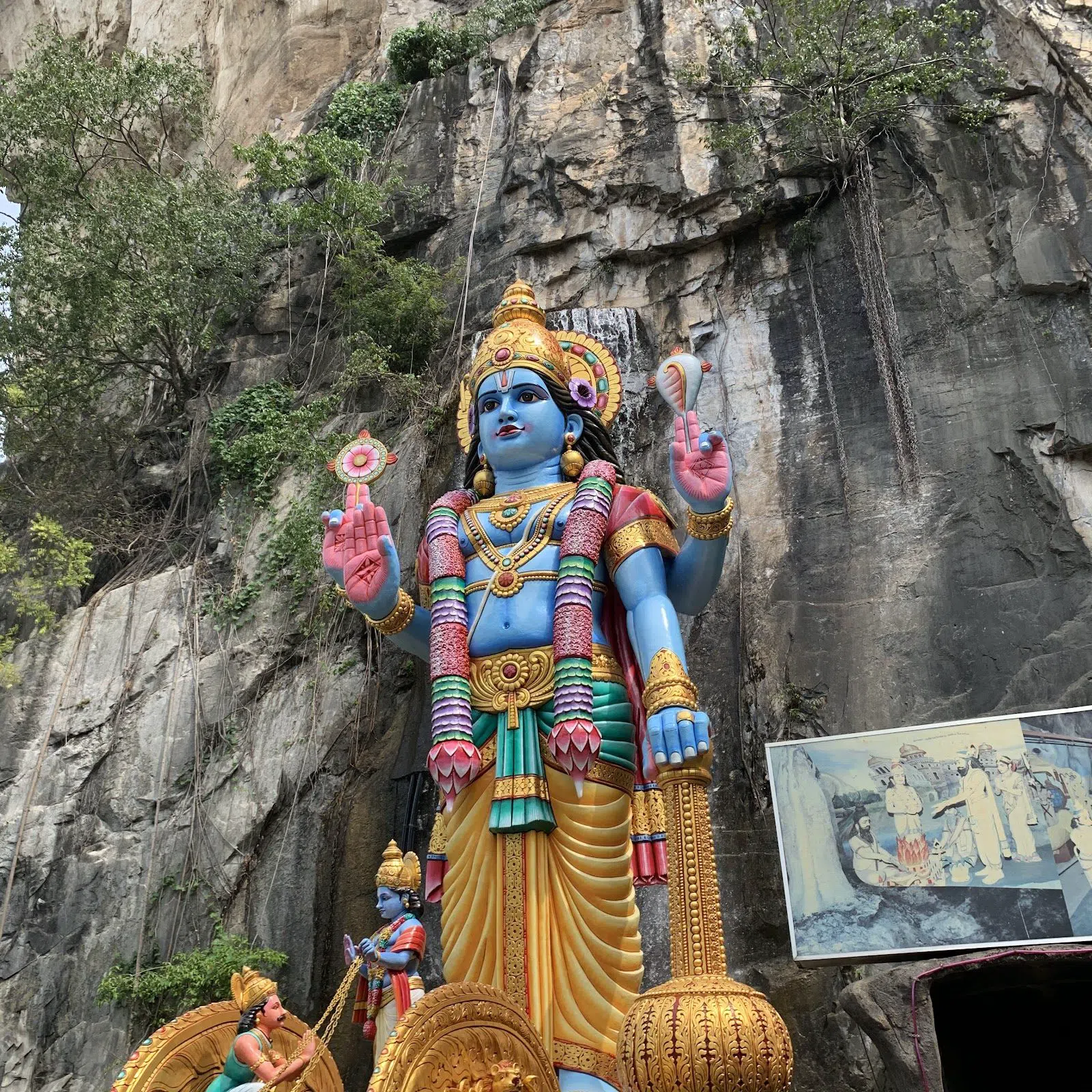
Cave Villa (Batu Caves, near the base) I'll flag rather than sell. It's a ticketed walk-in — roughly RM15 for foreign visitors, RM7 on a MyKad — and it's group-friendly, with a couple of decorated caverns and a gallery complex. But it also keeps caged reptiles and birds on site, and the animal-welfare conditions have drawn real criticism. I'd rather you decide with your eyes open than find out at the turnstile: if that sits badly with you, give it a miss and put the time into Ramayana Cave instead.
Onto the limestone: climbing at Batu Caves
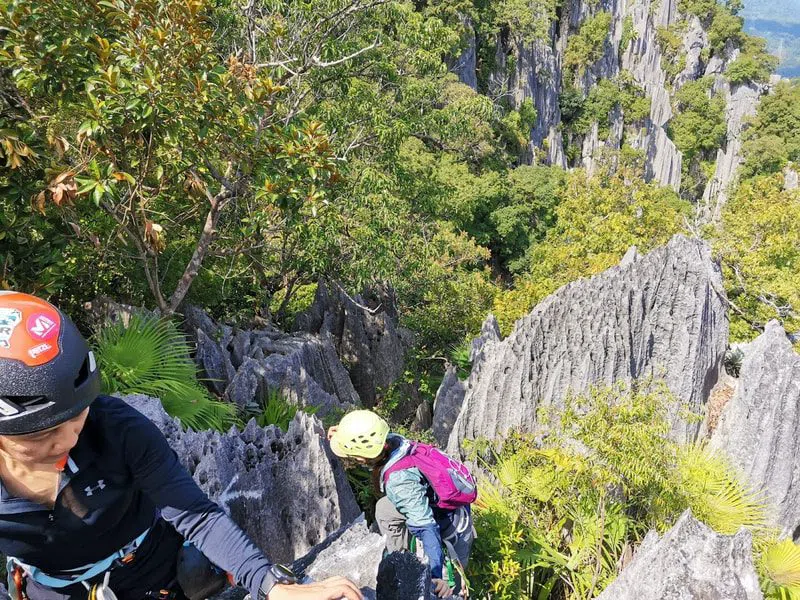
Not many visitors realise the cliffs that hold the caves are also one of the best sport-climbing spots in the country, with 160-plus bolted routes threaded up the karst. You do not want to freelance this. The sensible, kit-included way onto the rock is MIR Adventures (Batu Caves, at the Damai Wall), which runs guided sessions with certified guides and top-ropes rigged in advance. Reckon on around RM250 and up per person for a half-day, and book ahead. Beginners and groups are genuinely welcome — this is a good active shout for a UK group that wants to do something rather than just photograph it. One clarifying note, because the local names confuse people: the nearby Nyamuk crag is the same climbing area, so you book the operator, not the wall. If you're pairing this with the caves, climb in the cooler morning and see the shrines afterwards.
Lunch right by the caves
Don't eat at the tourist stalls if you can help it — the good food is a two-minute walk away, and it's cheap. My default is Restoran Chetty Nadu Batu Caves (Batu Caves), a South Indian canteen doing banana-leaf meals: rice, a rotating cast of vegetable sides, sambar and rasam, ladled out fast and eaten with your right hand (or a spoon, nobody minds). It's a walk-in with quick service that seats groups without fuss, open 7am to 10pm daily, and a full banana-leaf spread runs about RM12–18. It's not a secret and it's not fancy; it's just genuinely good, genuinely local, and a fraction of what you'd pay for something worse nearer the steps.

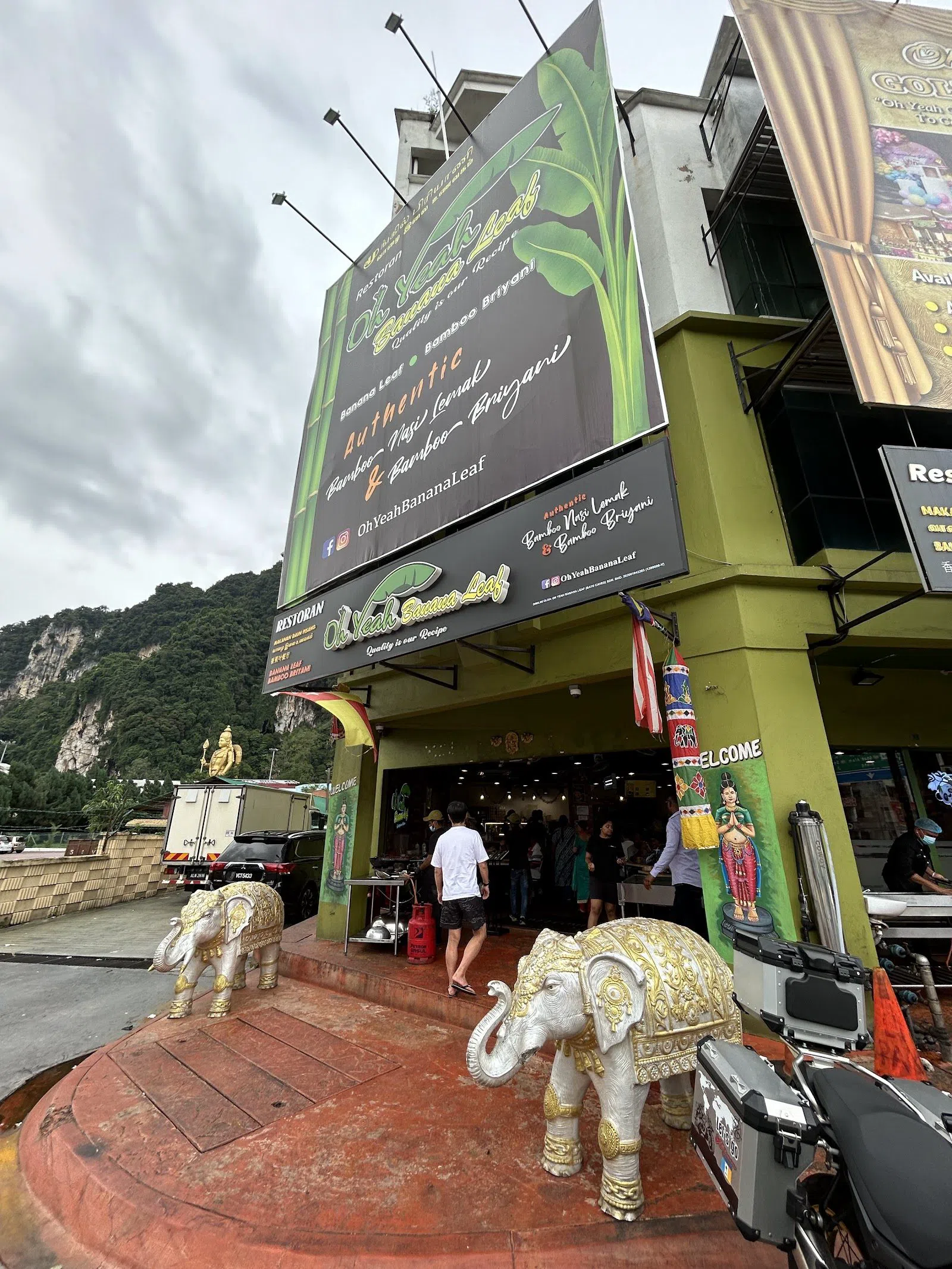
For a mixed group, Oh Yeah Banana Leaf Batu Caves (Batu Caves) is the useful alternative — also walk-in and group-friendly, but with strong vegetarian and vegan options that the more meat-forward canteens don't fully cover. Between the two you can feed vegans, vegetarians and everyone else within a few doors of each other, which matters more than it sounds when you're herding a group in the heat.
Making a proper day of it: pairings nearby
Batu Caves plus one more stop is the classic half-day, and there are a few pairings I'd actually stand behind rather than the generic shopping-mall detour most tours default to.
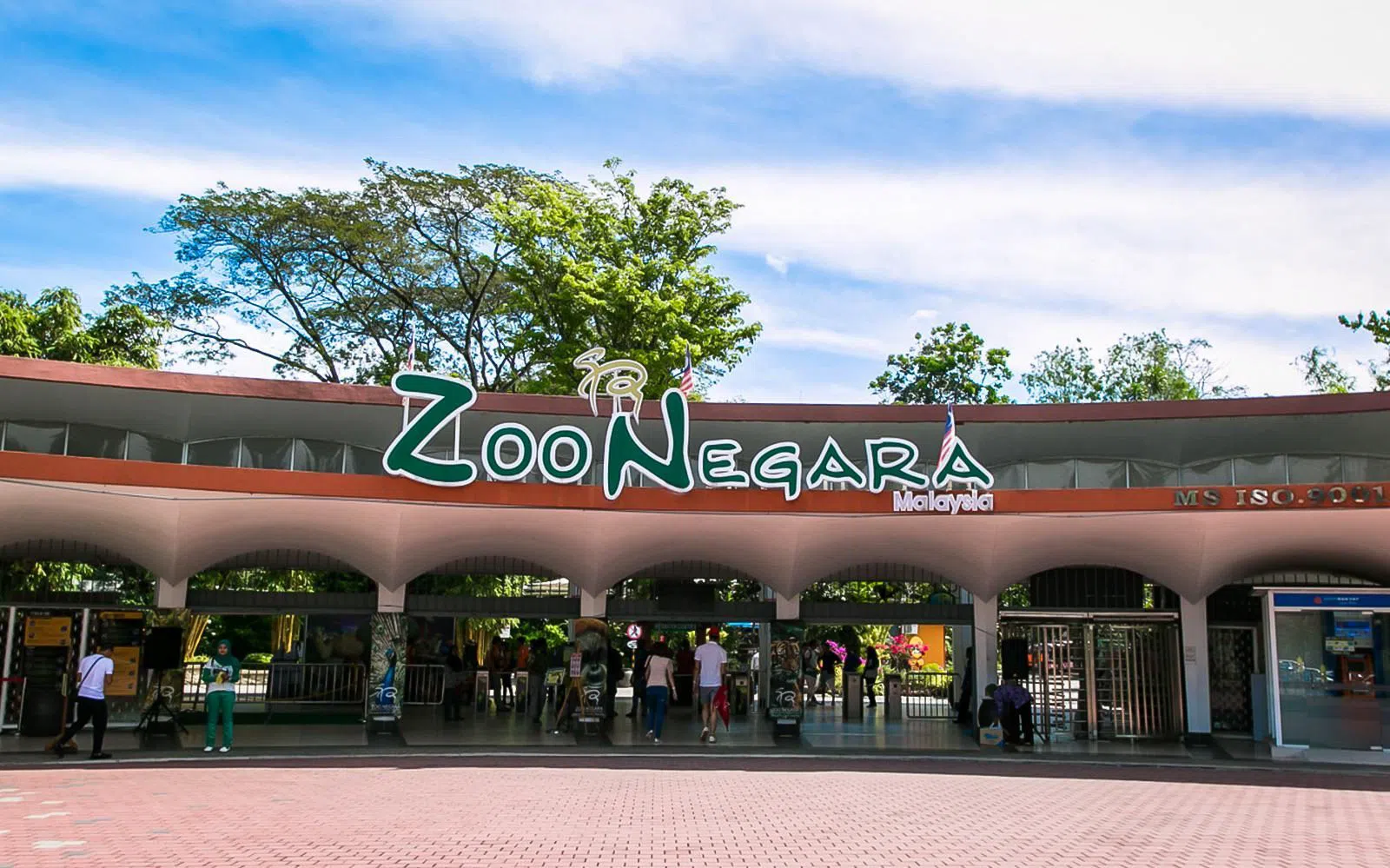
For families, the strongest add-on is Zoo Negara (a short hop east toward Ampang), the National Zoo and its Giant Panda Conservation Centre. It's a major coach-and-group destination with guided and feeding add-ons, entry is around RM90 for an adult (panda viewing costs extra), and the refreshed panda centre reopened in January 2026 — which makes it a strong, low-effort pairing with the caves if you've got children in tow. It's a big site, so give it real time rather than an hour.

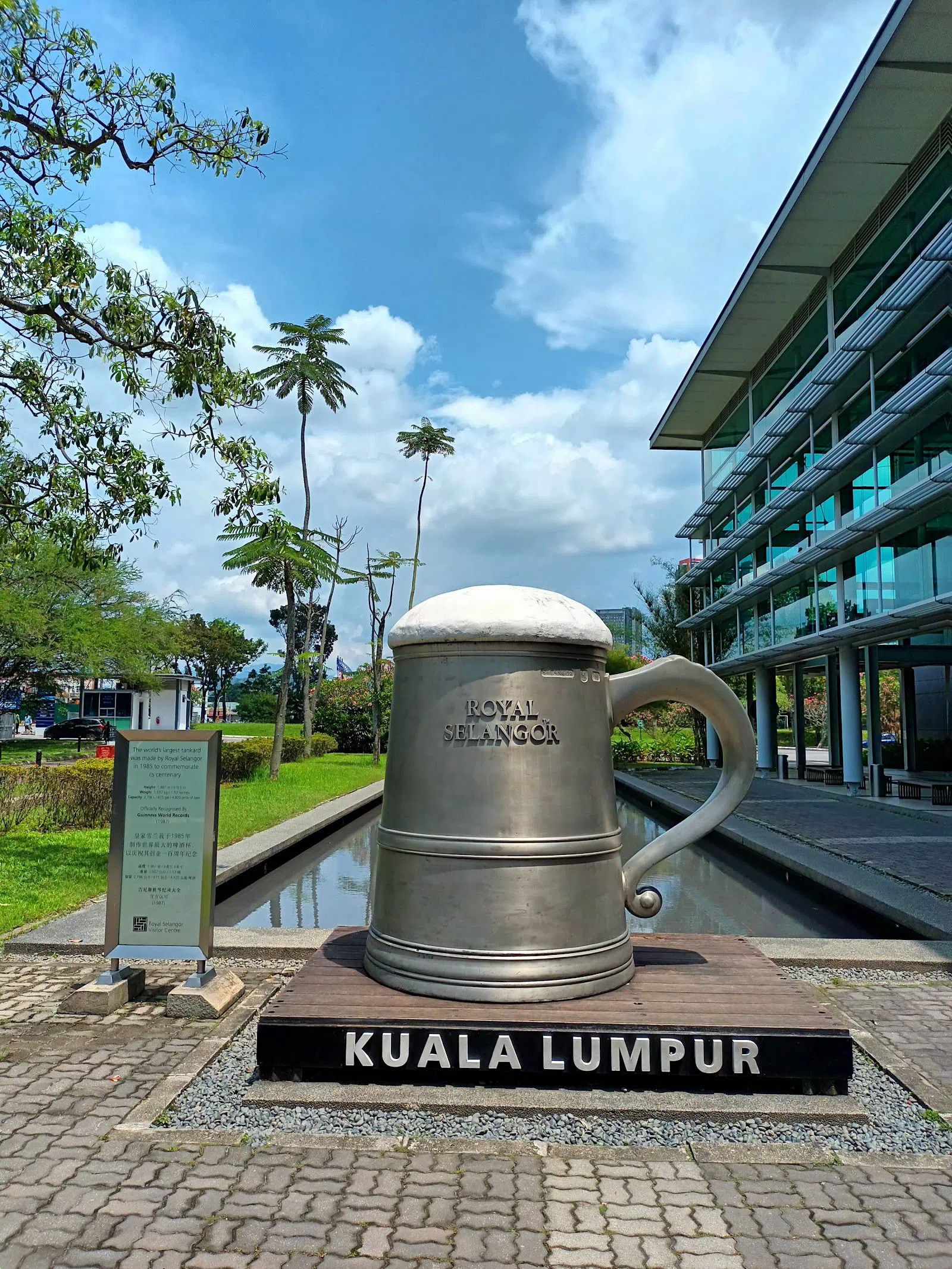
If you'd rather make something with your hands, two nearby stops earn their place. Royal Selangor Visitor Centre (Setapak) is the classic half-day partner — free guided tours in English run daily, and the 'School of Hard Knocks' pewter-smithing workshops are bookable for groups from around RM70, where you hammer out your own little dish and take it home. It's hands-on, it's properly group-friendly, and it beats a generic souvenir stop hollow. In a similar spirit, Jadi Batek Gallery is the reputable batik stop most KL tours already use — free daily demonstrations in English, with DIY and team-building batik classes you can book for groups and paint-your-own pieces from about RM35. Both are the real thing rather than a hard-sell showroom, which is exactly why I list them.
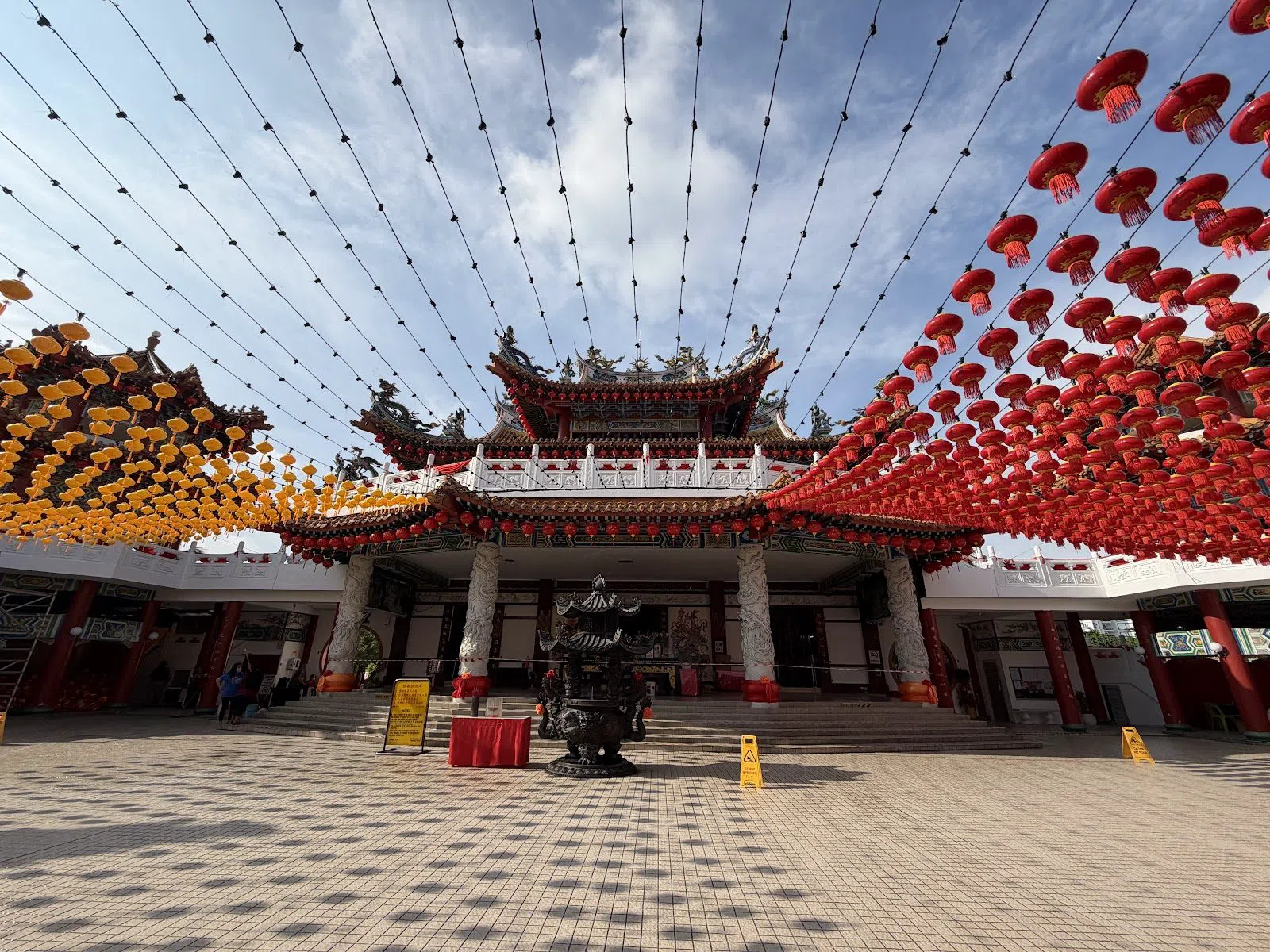
For contrast of a different kind, Thean Hou Temple is the temple most Batu Caves half-day tours bolt on, and rightly so. It's free, needs no booking, and comfortably absorbs tour groups — but more to the point, its tiered Chinese temple architecture, all red lanterns and dragon-wound columns, is a striking counterpoint to the Hindu caves you spent the morning in. Seeing the two in a single day tells you more about Kuala Lumpur than either does alone.
The green Kuala Lumpur keeps for itself
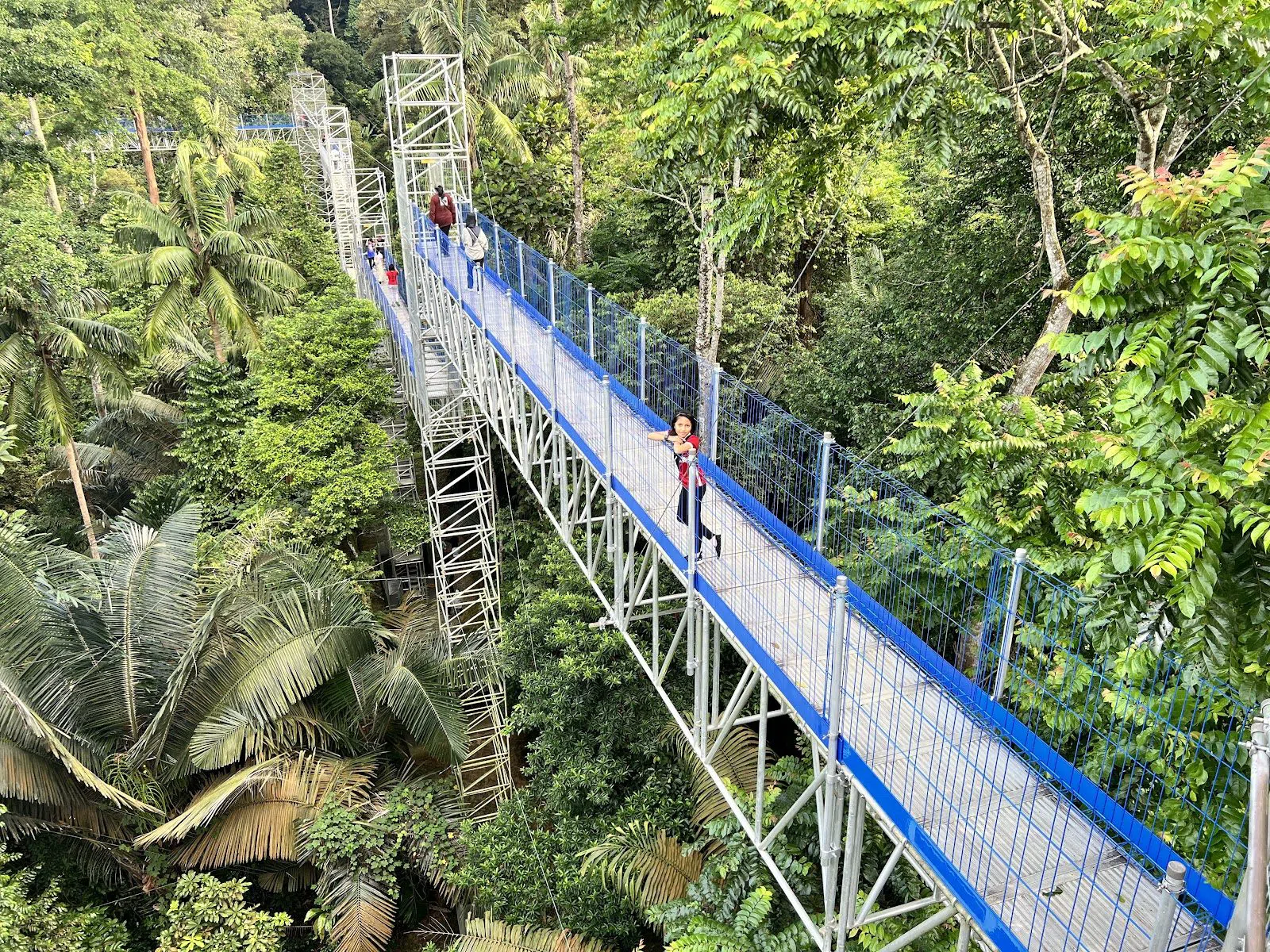
Which brings me to the waterfall in the title — and to a confession. The honest answer to "where do locals actually go" isn't a single hidden cascade you can put a pin in; it's the forest reserve on the western edge of the city that Kuala Lumpur treats as its back garden. FRIM Forest SkyWalk (Kepong, west of town) is the way in: a jungle-in-the-city half-day of trails, towering old research plantings and a canopy walkway strung through the treetops, where the streams and the shade are the whole point after a sweaty morning on limestone. This is where KL comes to breathe on a weekend, and it feels a world away from the coaches.
There is one rule you must not ignore. The SkyWalk reopened as a guide-only experience — one FRIM guide takes a group of up to about ten people, at roughly RM250 for the group — and you have to pre-book. Turn up on spec and you'll be turned away at the gate, which is a miserable way to end a day, so lock the guide in before you travel. For active readers who've already done the caves, it's the pairing I'd choose over another temple: the quiet, the green and the genuinely local feel are worth the trek out to Kepong.
The practical bit: transport, cash, timing and budget
Getting there. The easy win is the train. The KTM Komuter line runs straight to Batu Caves station, which is the terminus — you step off almost at the foot of the steps, no taxi haggling required. It's cheap, it's frequent enough, and it sidesteps the coach car parks entirely. For the outlying pairings — Zoo Negara toward Ampang in the east, FRIM out at Kepong in the west — you'll want a Grab (the local ride app); distances are real and public transport gets fiddly. If you're basing yourself in the city, start your day with the Kuala Lumpur hotel search and pick something near a train line to make the Komuter run painless.
Cash. Bring ringgit and, specifically, small notes. Cave entries, donation boxes, banana-leaf lunches and the odd sarong hire are all cash-friendly and often cash-only, and nobody at a RM5 cave ticket wants to break a RM100 note first thing in the morning.
Timing. Go early — arrive for opening to beat both the coaches and the midday heat, which on the exposed staircase is no joke. Aim to be climbing by 8am, lunching by noon, and doing your paired stop through the hotter afternoon. One date to check: if you're travelling in late January or February, look up Thaipusam before you go. It's an extraordinary thing to witness, but the crowds run into the millions and a casual sightseeing visit becomes a very different day out.
Budget. The caves themselves cost almost nothing — the Temple Cave is free, Ramayana Cave about RM5, Cave Villa around RM15 — so a bare-bones morning plus a banana-leaf lunch comes in under RM30 a head. It's the optional extras that add up: a guided climb or the FRIM SkyWalk sits around RM250, Zoo Negara about RM90, the craft workshops from RM70. Pick one splurge, keep the rest simple, and you've got a full, honest day for very little.
For everything else — where to base yourself, how the neighbourhoods fit together, and what else is worth your time in the city — the wider Kuala Lumpur guide picks up where this leaves off.
Before you go
Do I need to book Batu Caves in advance?
No. The main Temple Cave and Sri Subramaniar Swamy Temple are free with no booking and open to all, including large groups. You only pay for add-ons: Ramayana Cave (around RM5) and Cave Villa (around RM15 for foreign visitors). Guided climbing with MIR Adventures and the FRIM Forest SkyWalk do need pre-booking.
What's the dress code, and are the monkeys a problem?
It's an active Hindu temple, so cover shoulders and knees — a scarf or light layer is enough, and sarongs are available near the base. The monkeys along the staircase will grab water bottles, sunglasses, snacks or anything from an open bag, so keep everything zipped away.
How do I get to Batu Caves from central Kuala Lumpur?
Take the KTM Komuter train — Batu Caves is the terminus, so you step off almost at the foot of the 272 steps, no taxi haggling needed. It's about 13km north of the city. For the further-out pairings like Zoo Negara or FRIM in Kepong, a Grab ride is easier than public transport.
Is there a real waterfall at Batu Caves?
Not a signposted one at the caves themselves. The honest local answer is the FRIM forest reserve out in Kepong, on the western edge of the city — jungle trails, streams and a guide-only canopy SkyWalk where Kuala Lumpur goes to escape the heat. You must pre-book the FRIM guide or you'll be turned away at the gate.
Where should I eat near Batu Caves?
Skip the tourist stalls and walk two minutes to Restoran Chetty Nadu for a fast, cheap South Indian banana-leaf meal (around RM12–18), open 7am–10pm. For strong vegetarian and vegan options, Oh Yeah Banana Leaf nearby covers mixed groups the meat-forward canteens don't.