The Kuala Lumpur issue
Merdeka Square: Kuala Lumpur's Colonial Core Under the Towers
A calm, honest walk through the padang where Malaysia was born — which doors finally open in 2026, which are facade-only, and how to time it before the heat.

By Lena BrandtThe city between the towers
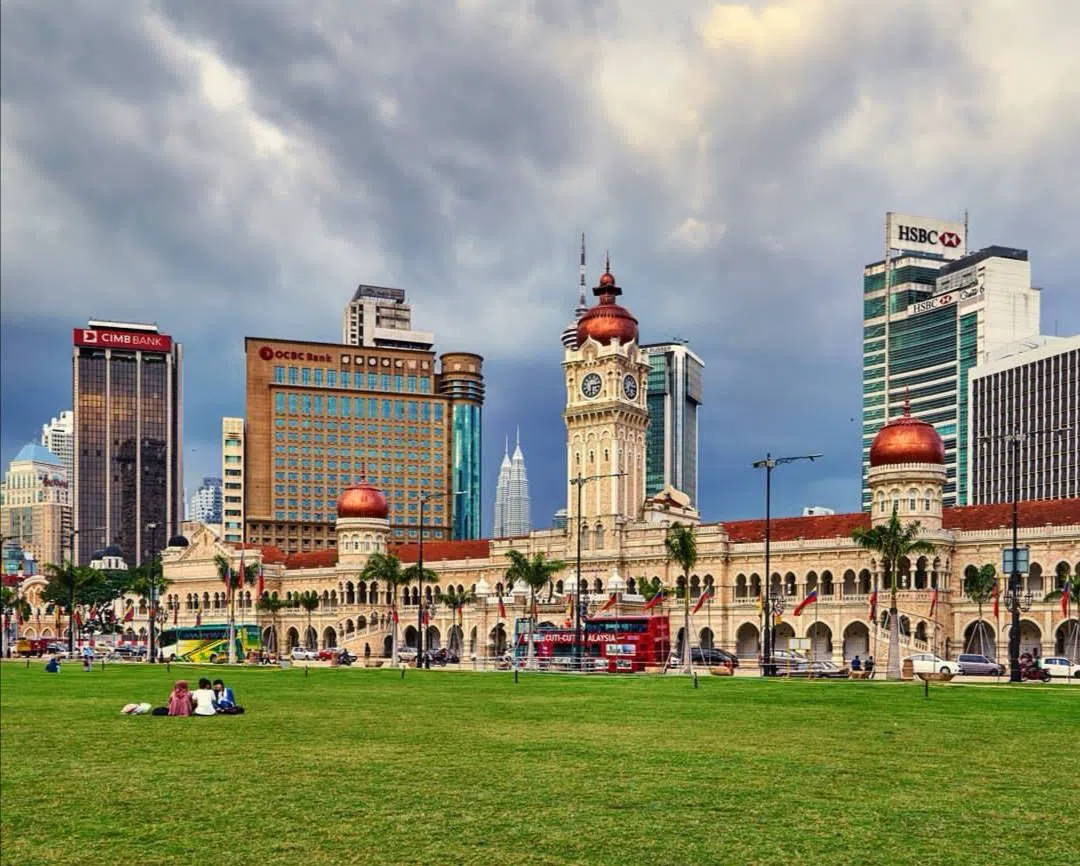
The padang at the centre of Merdeka Square is, on paper, nothing more than a rectangle of clipped grass. But stand on it at seven in the morning — before the heat settles and the tour coaches swing in — and the significance arrives on its own. This is where the Union flag came down and the flag of an independent Malaya went up at midnight on 31 August 1957, in front of a crowd that had waited generations for the moment. Ringed around that green is the finest unbroken run of colonial-era architecture in the country: Moorish domes, brick arcades, and a clock tower that has kept the city's time since the 1890s. And for the first time in most visitors' memory, in 2026, you can finally step inside the building that defines the view.
I walk this quarter often, and I've learned to be blunt about it: a few of these landmarks are genuinely worth your time and a couple are photo stops that guides oversell as "attractions." What follows is the honest version — what to enter, what to admire from the grass, and how to sequence it so you're not melting by mid-morning.
Start early on the padang
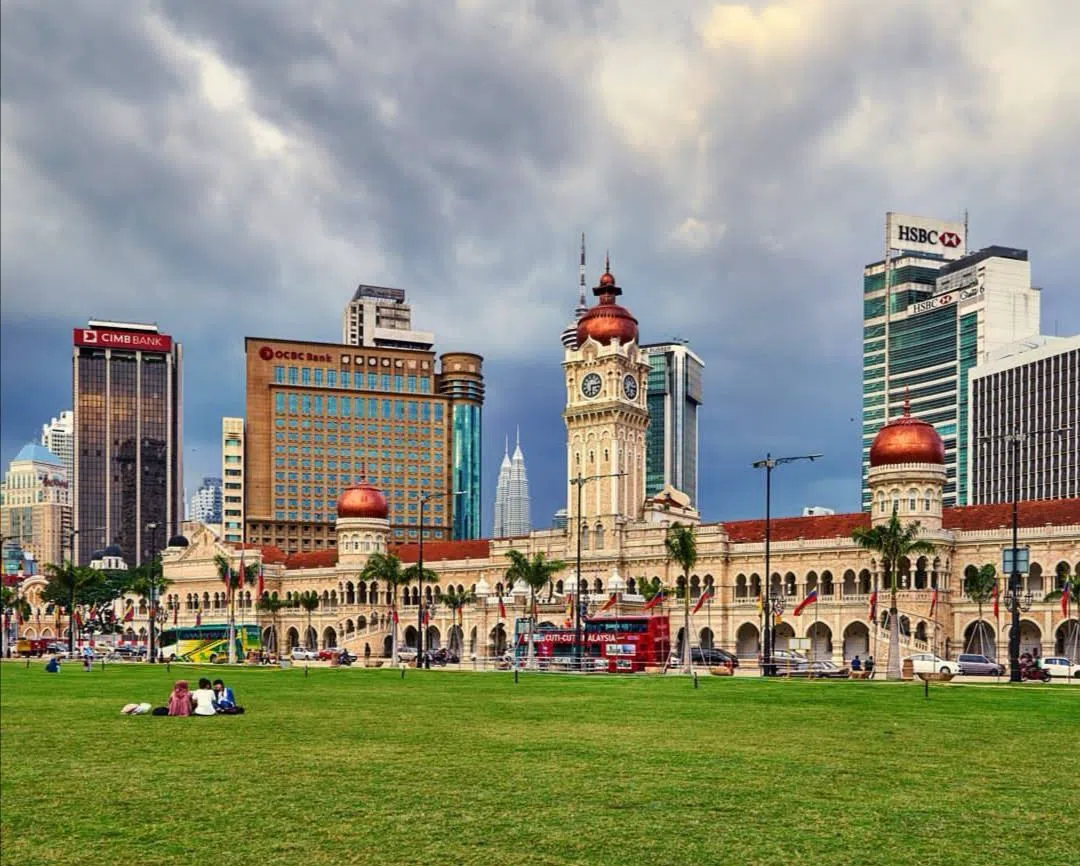
Begin at Dataran Merdeka (Independence Square), the open green that anchors the whole colonial quarter. It's a fully public space with no ticket and no gate, which makes it the natural meeting point for a group or the start of a self-guided loop — walking tours habitually rendezvous here. There is genuinely nothing to "do" beyond stand, read the plaques, and take in the ring of buildings, and that is exactly the point: the square is a place to orient yourself before the walking begins. Come early. By ten the sun is unforgiving and the grass fills with coach groups; at seven or eight it's cool, quiet, and the light on the surrounding facades is at its best. Entry is free, always.
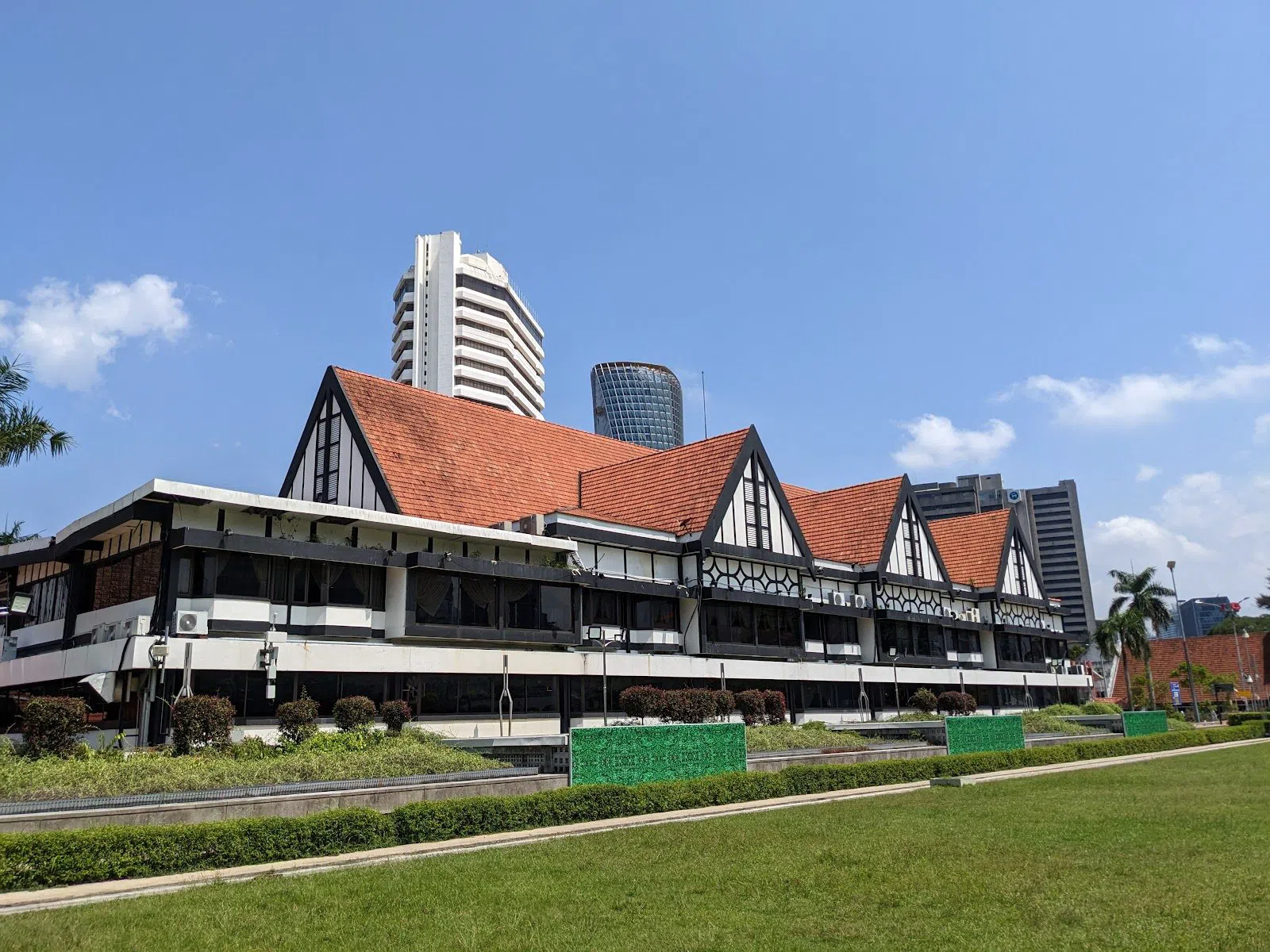
On the padang's western edge sits the mock-Tudor sprawl of the Royal Selangor Club, the colonial-era members' club founded in 1884 as the social hub of British Kuala Lumpur. Here I'll save you a wasted attempt: it remains members-only, and walk-ins are not admitted. Unless you happen to be the guest of a member, you enjoy it precisely as generations of outsiders have — as a handsome black-and-white facade across the green. Pitch it to your group as a photo stop and a piece of the story, not as somewhere you'll get through the door. Admiring it from the padang costs nothing and is, frankly, the only way in for the rest of us.
Plan your Kuala Lumpur trip
Live prices from our booking partners.
Free cancellation on many rooms. We may earn a commission when you book.
The building everyone photographs
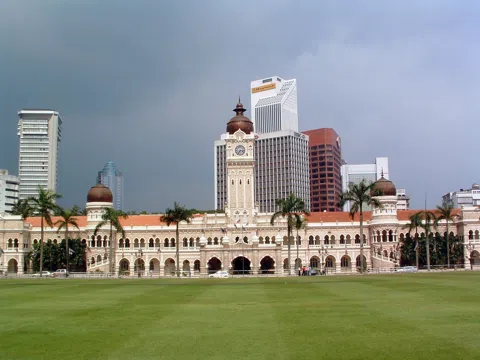
The showpiece of the square — the one on every postcard — is the Sultan Abdul Samad Building, the long Indo-Saracenic block of copper domes and a 41-metre clock tower directly across Jalan Raja from the padang. For years it was a look-but-don't-enter landmark. That changed in February 2026, when it reopened after an eleven-month restoration, and this is the single biggest reason to make the trip now. For the first time you can go inside: it houses a city gallery, the Royal Selangor Gallery, and — the reason to prioritise it — a guided ascent to the clock-tower balcony.
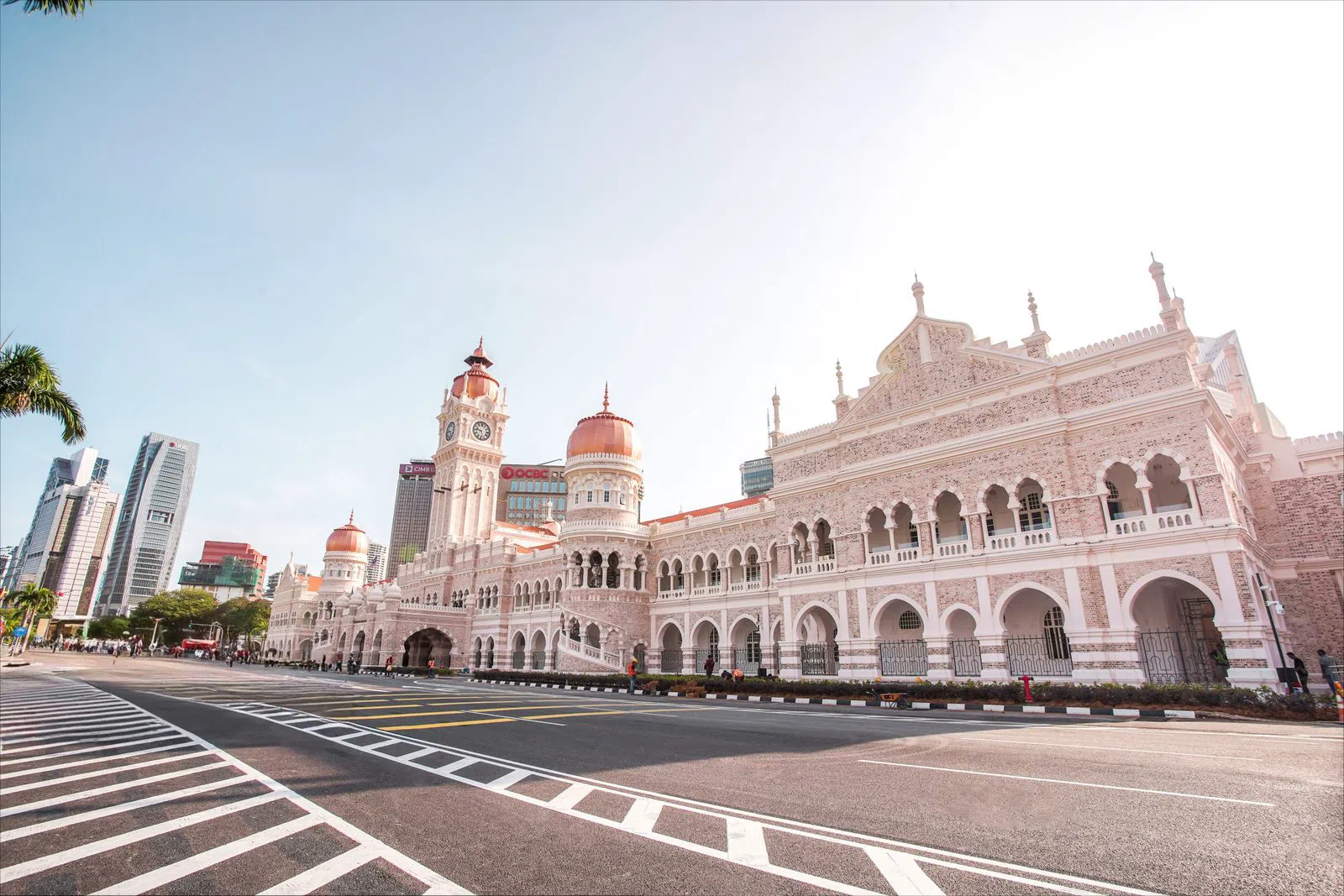
The building is open daily, roughly 9am to 6pm. General entry is free; there's a small fee for the gallery. The 30-minute guided tour up to the balcony runs through the day and delivers a 360-degree view over the River of Life confluence and the padang below — the vantage that was closed to the public for over a century. It handles groups well, and the timed, guided format means it rarely feels like a scrum. If you do one paid, ticketed thing in the colonial core, make it this. Go reasonably early: the balcony is more comfortable before midday heat, and tour slots can fill on weekends.
Three museums on the western side
Just off the square, within a two-minute walk of each other, sit three museums that between them make a well-paced, air-conditioned middle to the morning. Take them in whatever order suits, but I'd frame them by budget and appetite.
The standout — and the most overlooked — is the National Textile Museum (Muzium Tekstil Negara), housed in a Hubback-designed heritage block right on the square. It's open daily, roughly 9am to 5 or 6pm, with generous, spacious galleries of songket and batik, and it costs a token RM5 for a foreign adult. That is close to the cheapest ticket in the quarter for one of its most rewarding interiors, and the building's own facade is among the finest to photograph anywhere along Jalan Raja. Groups fit comfortably here; so do couples wanting a slower, quieter half-hour.
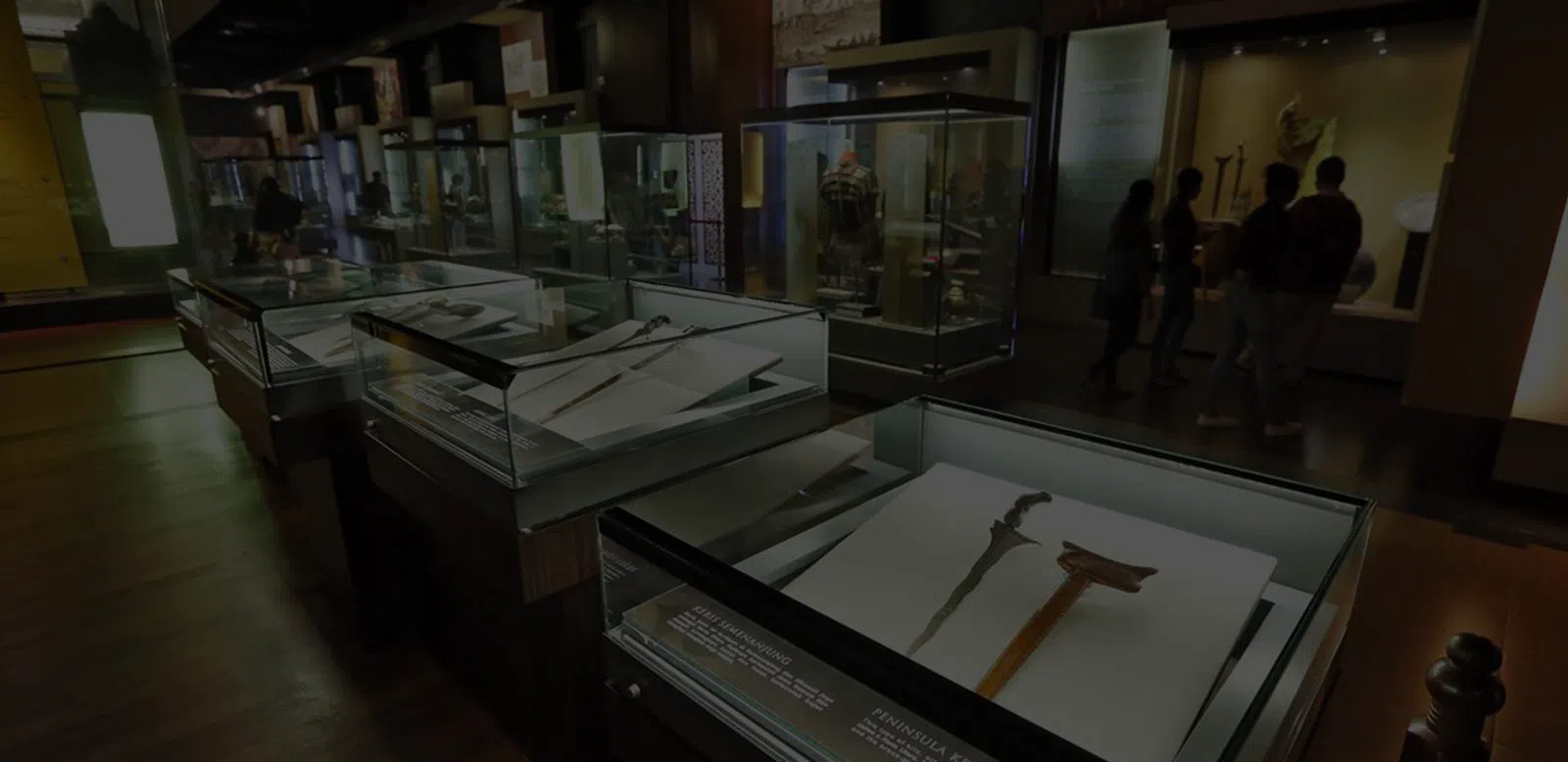
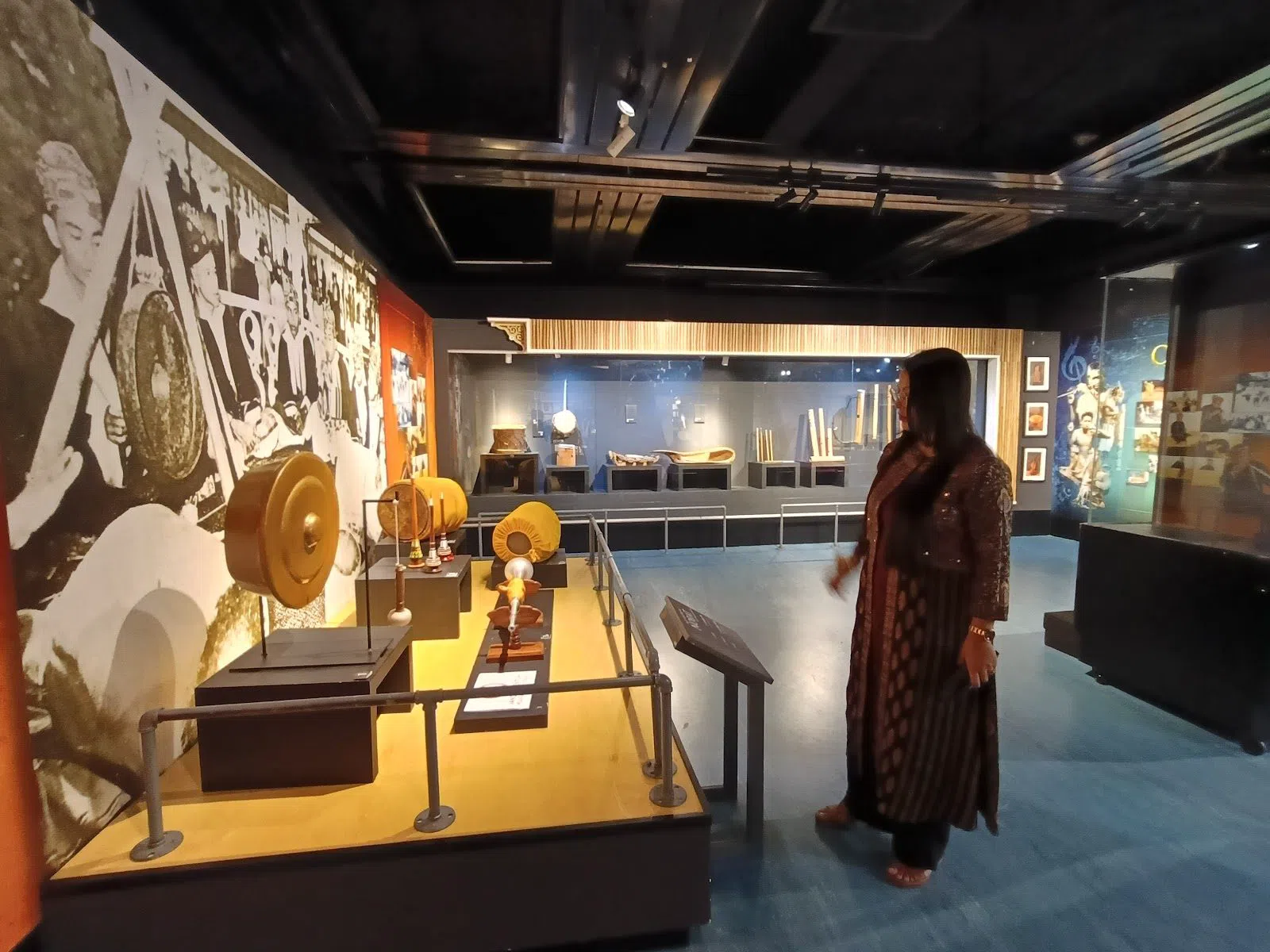
A few steps on is the Music Museum (Muzium Muzik), set in one of the oldest structures on the square. It's a compact, free museum of Malaysian instruments — open daily to around 6pm — and its value is exactly its low commitment: air-conditioned, no cost, and quick. For a mixed group where not everyone wants to pay into every gallery, this is the easy "everyone in" stop. Don't expect to lose an hour here; twenty focused minutes is the honest measure of it.
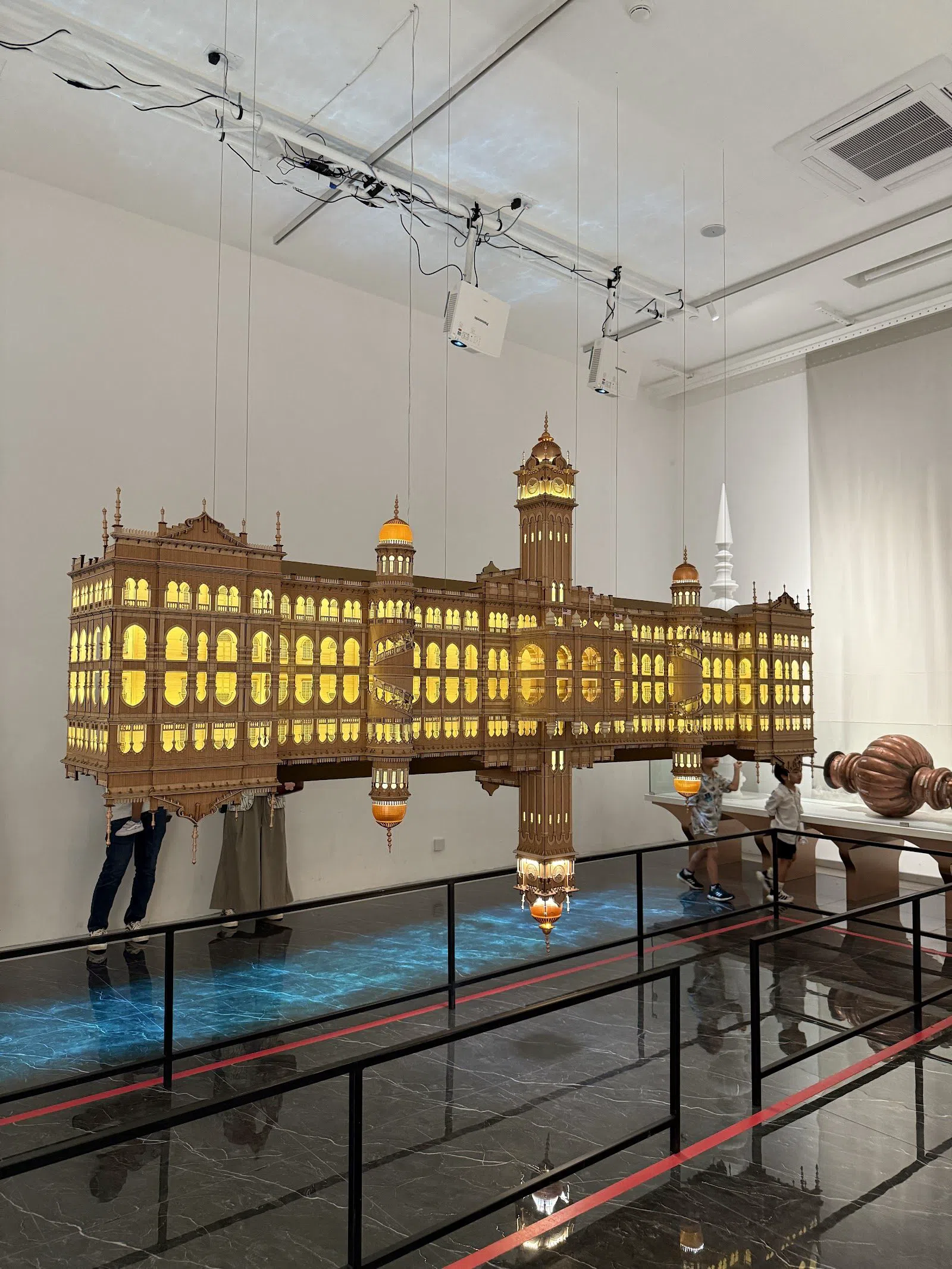
The most photographed of the three is the Kuala Lumpur City Gallery, on the south side of the square and instantly recognisable by the giant I♥KL sign outside — the group photo of the whole quarter, if there is one. Inside, the miniature-city model with its light-and-sound show is a reliable crowd-pleaser, particularly for families and larger parties. Entry runs to about RM20, though a portion is redeemable against purchases in the on-site craft and gift shop, which softens the sting. It's open daily until 6.30pm. I'll be straight with you: as a museum it's lighter than the Textile Museum, and it leans commercial. If your group loves a set-piece and a souvenir stop, it delivers; if you're chasing substance, spend your ringgit on the Sultan Abdul Samad tour and the textiles instead.
Facades and faith
Not everything here is a ticketed interior, and part of reading this quarter well is knowing which buildings are meant to be seen from the outside.
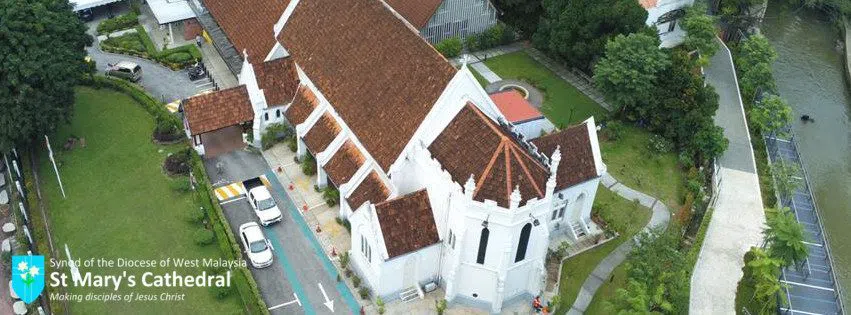
Set slightly apart from the padang's noise is St. Mary's Cathedral, the oldest Anglican church in the city, consecrated in 1895. It's a genuine working church that welcomes visitors and runs guided tours through the week, with groups fine outside of service times. After a run of museums it's a quiet, cool, unhurried contrast — and it's free, though a donation is appreciated. One firm practicality: this is a place of worship, so cover your shoulders and knees. No shorts, no sleeveless tops. If your group is dressed for the heat, factor that in before you arrive rather than being turned back at the door.
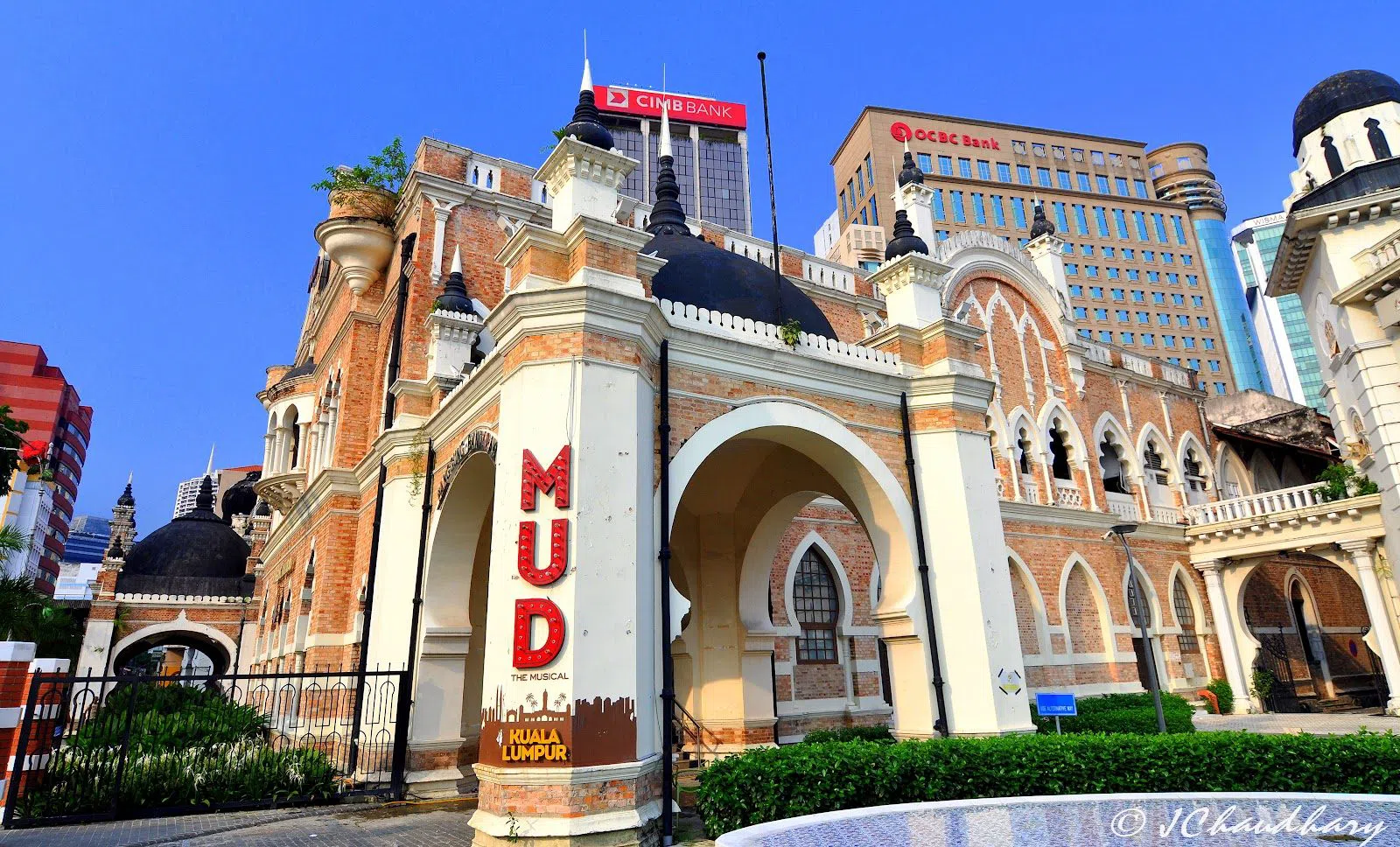
Back along the ceremonial run, the Panggung Bandaraya (City Theatre / Old City Hall) is a Hubback design built between 1896 and 1904, and it remains a live venue staging plays and musicals. You can view and photograph the exterior at any time for free. Getting inside, though, means holding a ticket to a performance — so if your group genuinely wants past the doors rather than just the roofline, check the DBKL programme in advance and book around a show. For most walkers it stays a facade; that's fine, but know it before you build expectations.
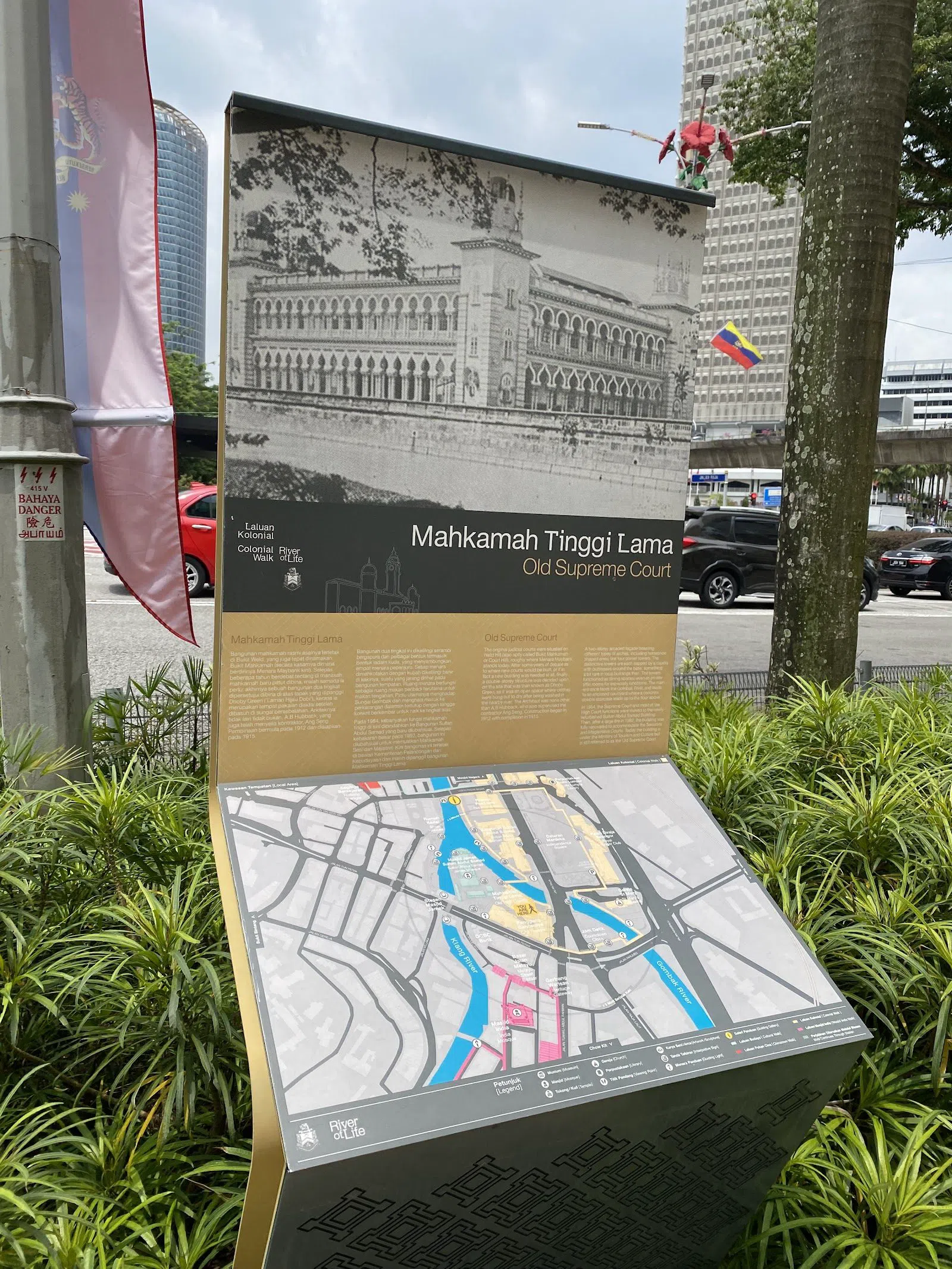
Rounding out the white-and-Moorish stretch is the Old High Court Building, a 1915 Hubback courthouse whose courts long ago moved out to Jalan Duta. It is exterior-only — there's no visitor interior — so treat it as a facade stop that completes the architectural line along the street. Photograph it, place it in the story, and move on; anyone promising you a tour inside is selling something the building doesn't offer.
Two stops just off the square
When the square itself is done, two nearby landmarks extend the walk without derailing it.
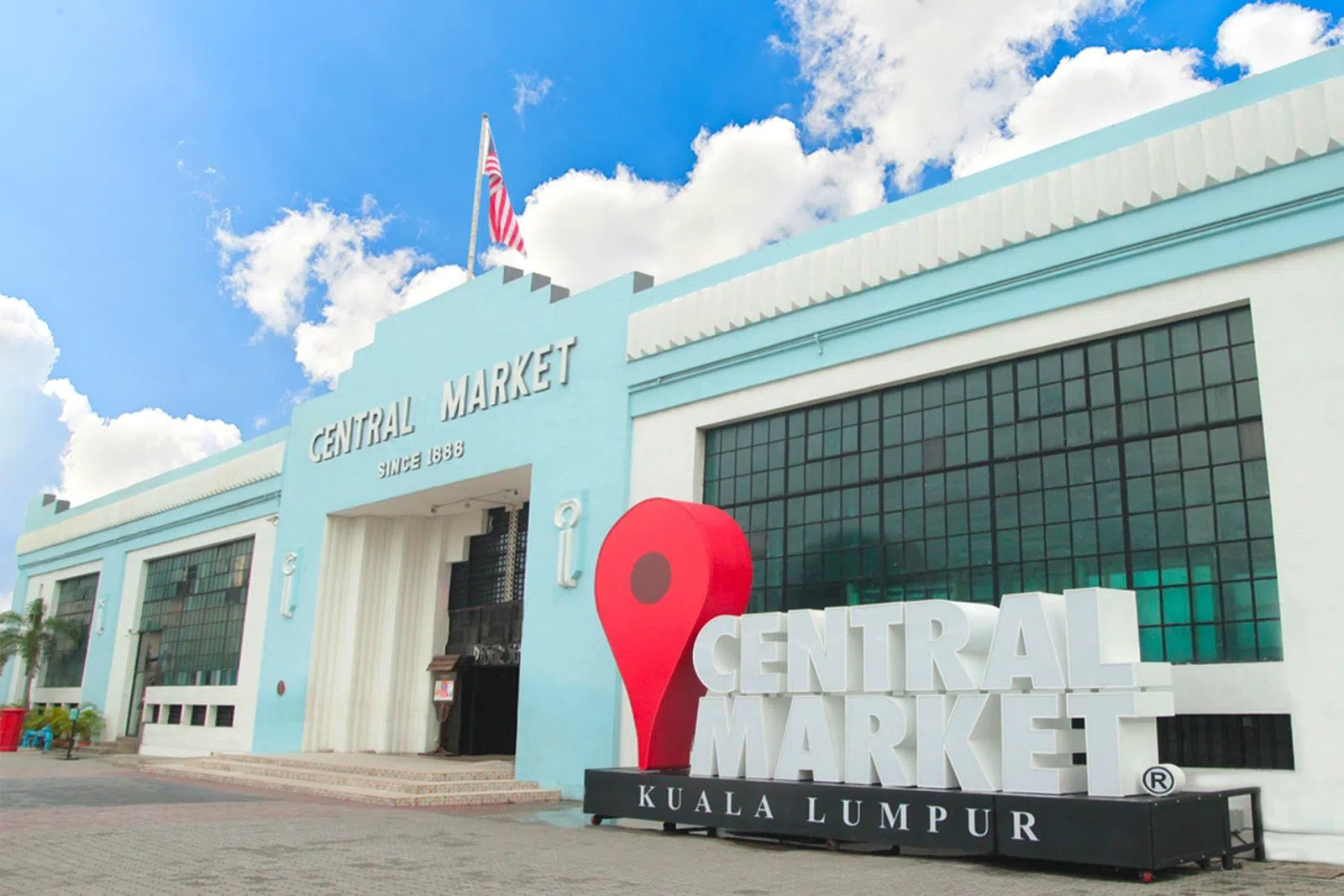
Five minutes southwest is Central Market (Pasar Seni), a wet market with roots back to 1888, now a heritage-listed craft bazaar. Open daily from 10am to 9.30pm, it's air-conditioned and has a food court, which makes it the single best break on the route — somewhere to cool down, eat, and shop for handicrafts. Entry is free; you pay per stall. For groups flagging in the heat, I route them here deliberately as the mid-walk reset. Prices are negotiable and the quality is mixed, so browse before you buy, but as a comfortable, all-tastes stop it earns its place.
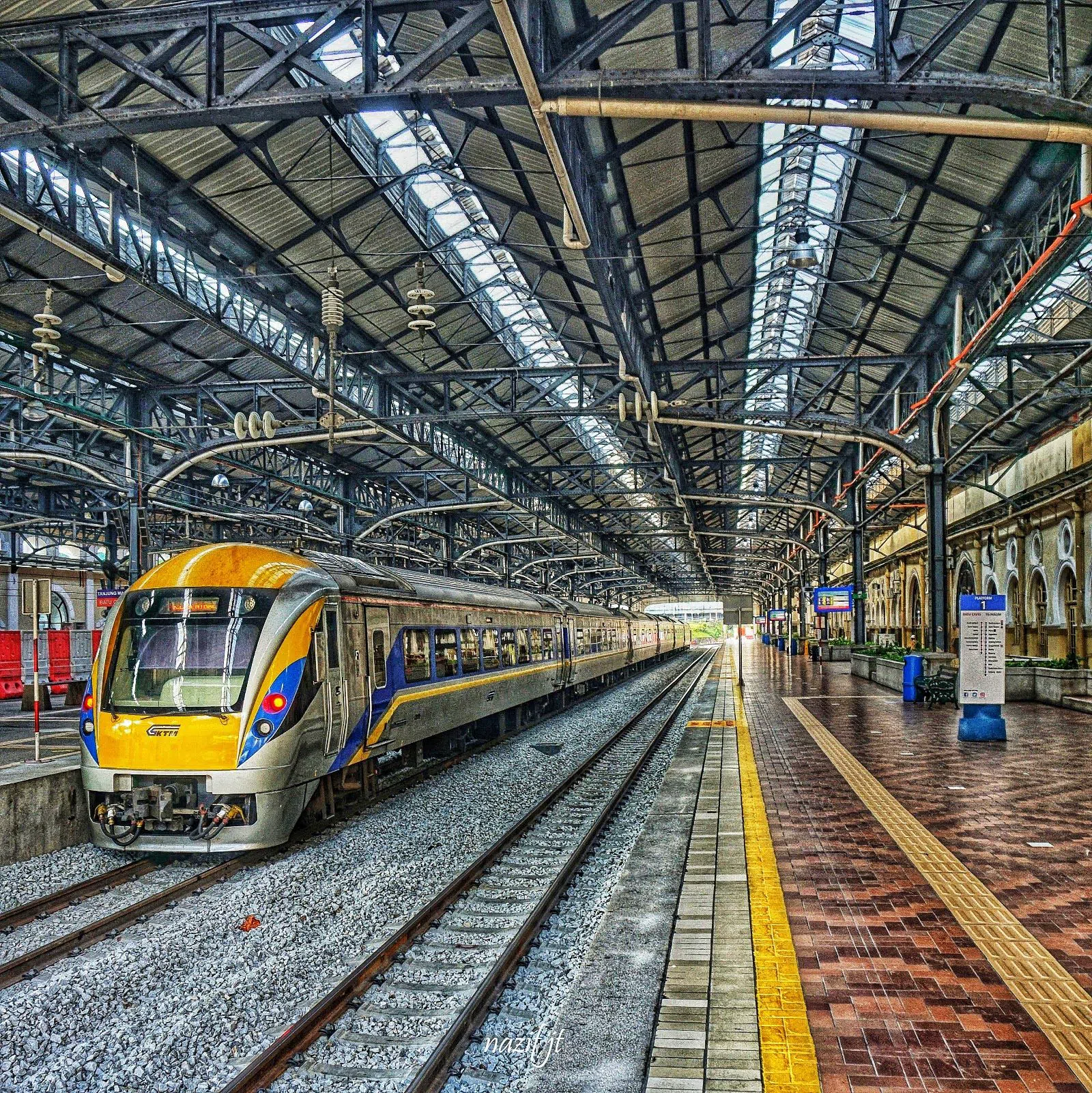
About a kilometre south stands the Old Kuala Lumpur Railway Station, a fantastical white confection of domes and arches that is still a working station — KTM Komuter and ETS trains genuinely stop here. Facade conservation has been running since 2025, so expect some scaffolding, but the silhouette remains the most photogenic in the whole colonial core. It's free to visit and groups are welcome. Whether you fold it in depends on your appetite for the extra walk in the heat; if architecture is the reason you came, it's worth the kilometre, and the fact that it's still a live station rather than a museum-piece is part of its charm.
Planning notes: transport, cash and timing
Getting there. The colonial core is compact and best done on foot once you arrive. The nearest rail is Masjid Jamek station (served by the LRT lines), a short walk northeast of the square; Pasar Seni station sits right by Central Market at the southern end, which makes a neat entry-or-exit point. The whole loop I've described — square, Sultan Abdul Samad, the three museums, cathedral, theatre, courthouse, market, and on to the old station — is walkable in a morning, roughly two kilometres end to end, but it's flat, hot, and largely shadeless in the open sections.
Timing. Start at 7.30–8am. The light is best, the padang is empty, and you'll clear the outdoor photography before the midday heat. Aim to be inside an air-conditioned museum or the Sultan Abdul Samad galleries during the hottest stretch, roughly noon to 2pm. Watch closing times: most museums shut around 5–6pm, the City Gallery a touch later at 6.30pm, while Central Market stays open until 9.30pm and works well as a late, cool finish.
Cash and budget. Bring some ringgit in small notes. This quarter is remarkably cheap: the National Textile Museum is about RM5, the Music Museum and the Sultan Abdul Samad general entry are free, and the Kuala Lumpur City Gallery is around RM20 with part of it redeemable in its shop. You could see the essentials of the square for under RM30 a head. Central Market stalls and food are cash-friendly, and small notes make bargaining and hawker meals far easier.
Dress and groups. Cover shoulders and knees for St. Mary's Cathedral, carry water, and accept that a few landmarks — the Royal Selangor Club, the Old High Court, the Panggung Bandaraya's interior — are look-only unless you're a member, a ticket-holder, or a guest. Sequenced right, the honest attractions here easily fill a half-day.
For where to base yourself within easy reach of all this, browse the Kuala Lumpur hotel search; for the wider city beyond the colonial quarter, the full Kuala Lumpur guide picks up where this walk leaves off.
Before you go
Can you go inside the Sultan Abdul Samad Building in 2026?
Yes. It reopened in February 2026 after an eleven-month restoration and is now open to the public daily, roughly 9am to 6pm. General entry is free, with a small gallery fee, and a 30-minute guided tour takes you up to the clock-tower balcony for a 360-degree view over the padang and the River of Life.
How much does it cost to visit Merdeka Square?
The square itself (Dataran Merdeka) is free, as is the Music Museum and general entry to the Sultan Abdul Samad Building. The National Textile Museum is about RM5 for a foreign adult, and the Kuala Lumpur City Gallery is around RM20 with part redeemable in its shop. You can cover the essentials for under RM30 per person.
What's the best time of day to visit Merdeka Square?
Start around 7.30–8am. The morning light on the colonial facades is best, the padang is quiet before the coach groups arrive, and you'll finish the outdoor photography before the midday heat. Save the air-conditioned museums and the Sultan Abdul Samad galleries for the hottest hours, roughly noon to 2pm.
Can visitors enter the Royal Selangor Club?
No. Founded in 1884, it remains a members-only club and walk-ins are not admitted. Unless you are hosted by a member, you view it as a facade across the padang — treat it as a photo stop and a piece of the square's history, not a place you'll get inside.
How do you get to Merdeka Square by public transport?
The nearest rail is Masjid Jamek LRT station, a short walk northeast of the square. Pasar Seni station sits at the southern end beside Central Market, making a tidy entry or exit point. The whole colonial-core loop is flat and walkable in a morning, about two kilometres end to end.