The Kuala Lumpur issue
The Hawker Centre Pilgrimage: Kuala Lumpur's Three Kitchens, One Table
A calm, honest route through Kuala Lumpur's Malay, Chinese and Indian hawker traditions — which halls to trust, which mornings to set your alarm for, and where a group actually fits.

By Lena BrandtThe city between the towers
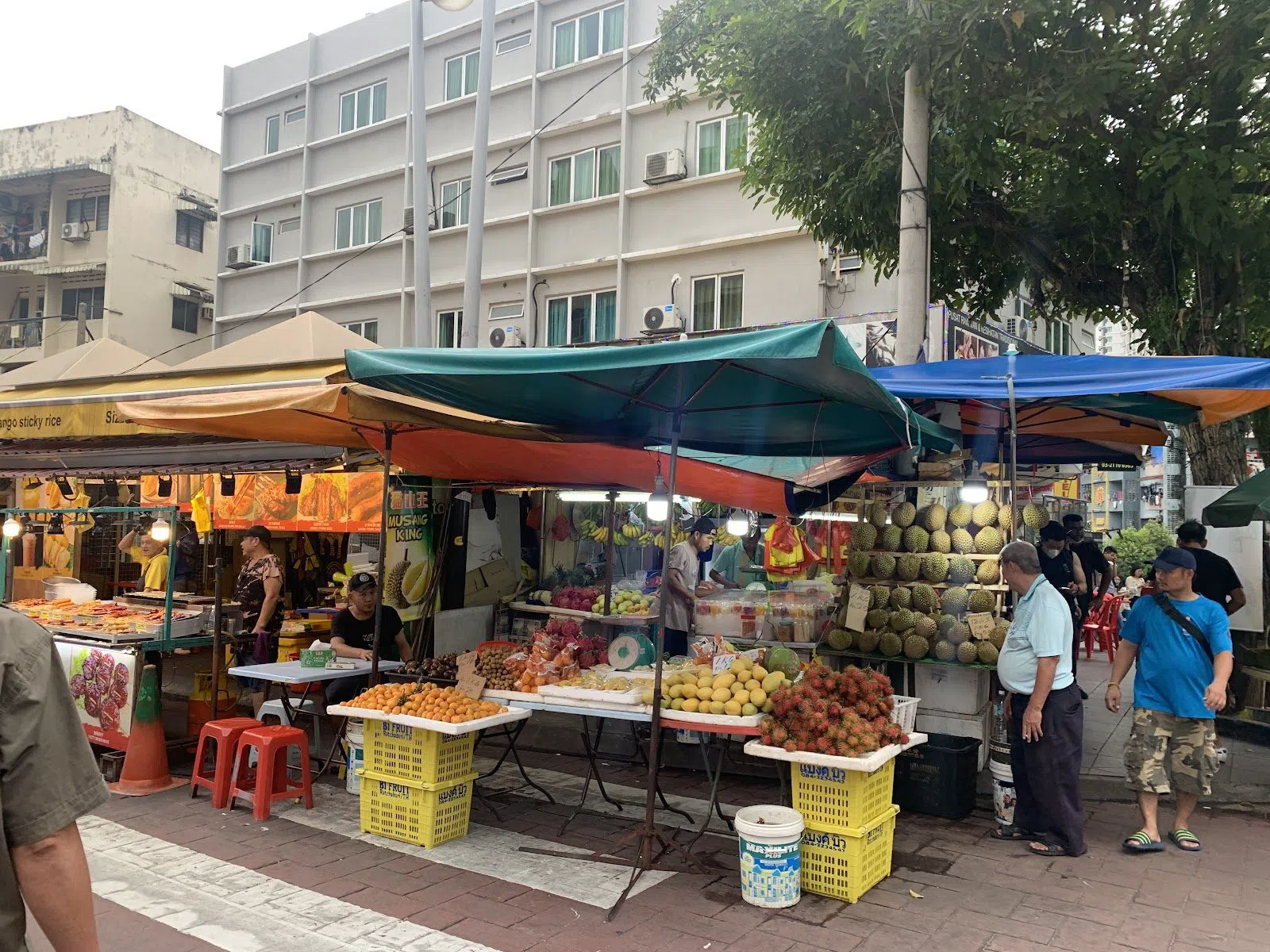
Kuala Lumpur never merged its kitchens; it set them side by side. The Malay, Chinese and Indian communities that built this city each kept their own pans and their own hours, and the great pleasure of eating here is that you can taste all three in a single day without ever leaving the pavement. Think of it as a pilgrimage with three shrines and one shared table — you just have to know when each one opens its doors.
I've walked this circuit more times than I can count, and the thing I'd tell you first is that timing beats everything. KL's hawker food is not a menu you order from at will; it's a schedule. Some of the best stalls are asleep by two in the afternoon. Others don't wake until the sun drops behind the towers. Get the rhythm right and the city feeds you effortlessly. Get it wrong and you'll stand in front of a shuttered lane wondering where everyone went. So this guide is built the way I actually eat: start easy, chase the mornings, then let the night markets carry you home.
Start easy: the halls that hold every kitchen
If it's your first day, or you're travelling with people who wilt in the heat, begin under a roof. The curated halls give you the whole spectrum — Malay, Chinese, Indian, and the modern in-between — without the guesswork.
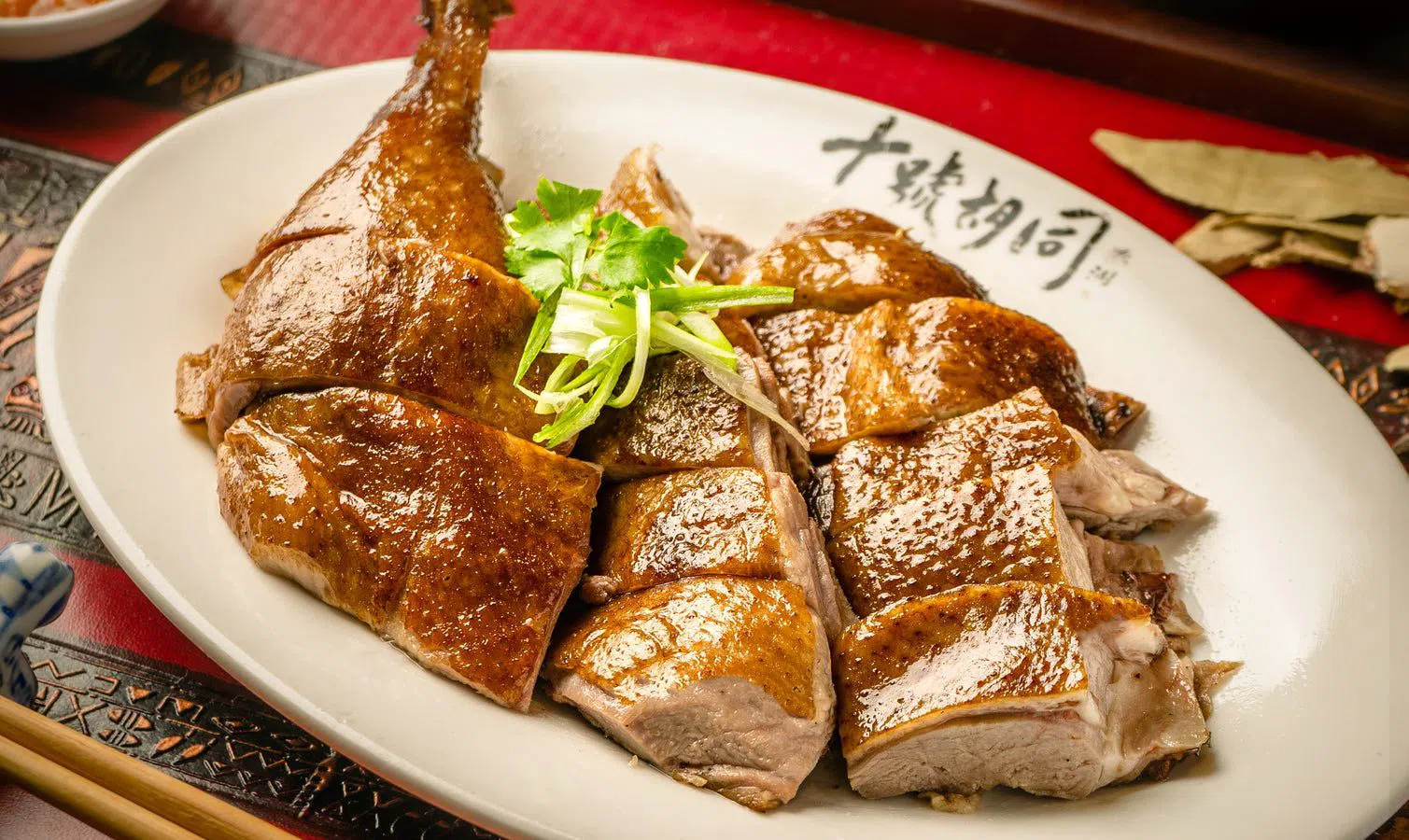
The cleanest introduction is Lot 10 Hutong (Bukit Bintang), a basement food court beneath a shopping mall that sounds unpromising and absolutely isn't. The owners went out and recruited legacy hawkers — Hokkien mee, old-guard KL Hokkien, char siew and roast pork — and put them under one air-conditioned roof with communal tables. You order and pay at each stall, which means a group can scatter, queue in parallel, and reconvene at a shared table with six different plates. Budget RM12–30 a head. It is not gritty and it doesn't pretend to be; it's the easiest, most reliable first taste of KL hawker cooking, and I send nervous first-timers here without apology.
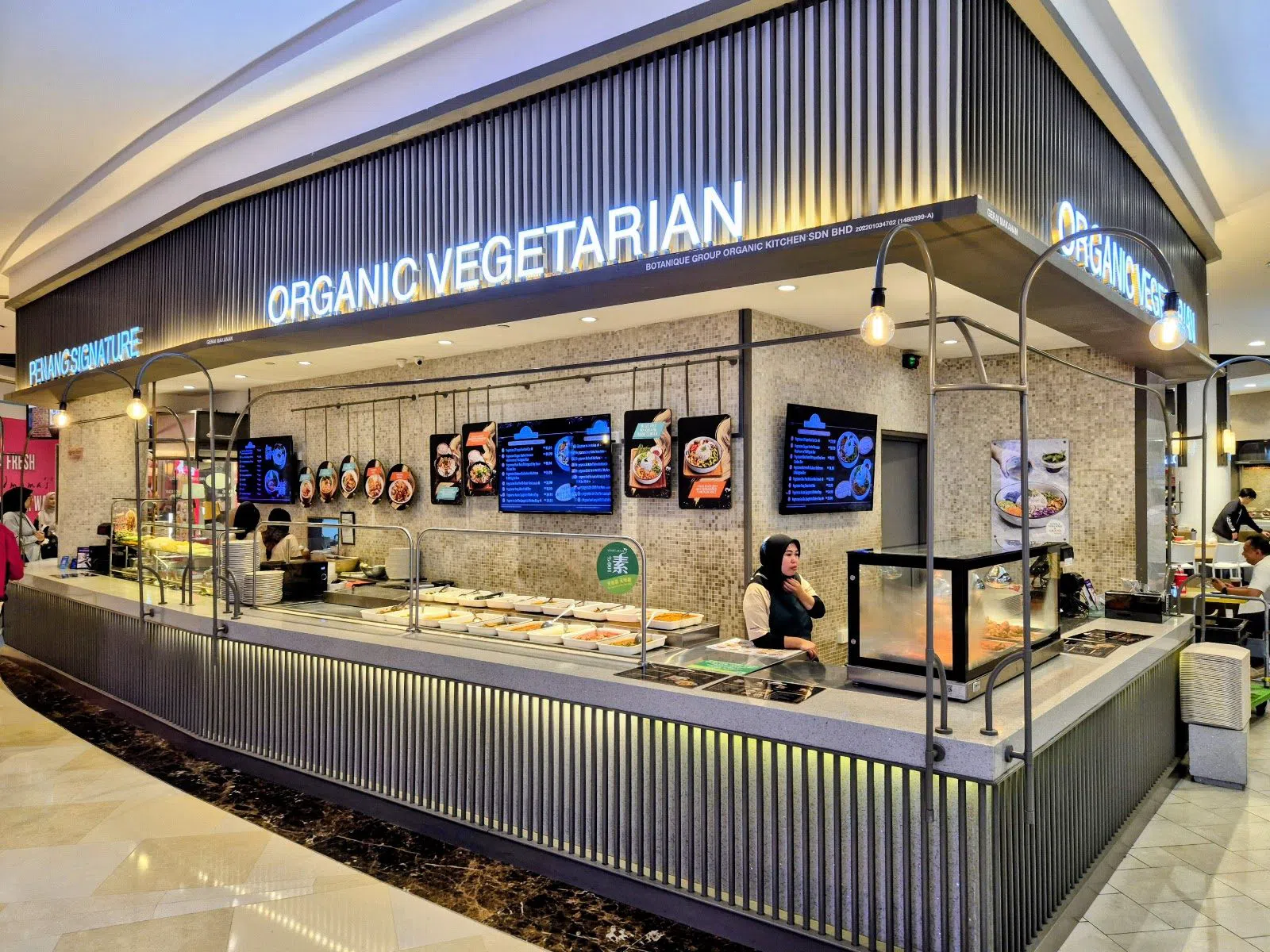
In the same district, Food Republic @ Pavilion KL (Bukit Bintang) is the sensible fallback for mixed groups and for the kind of afternoon when the sky opens without warning — which, in KL, it does. Huge seating, cashless payment cards, and enough cuisines that a fussy eater, a vegetarian and a child are all covered under the same roof. Expect RM15–35 per person. Nobody will tell you this is the soul of the city, and it isn't, but on a big-group day or a downpour it earns its place.
For something with more atmosphere, REXKL (Chinatown) has turned a former cinema into a design-led food hall — high ceilings, live music some nights, a younger crowd nursing cocktails alongside local plates, pizza and ice cream. It's the loosest fit with the word "hawker," but it's genuinely social and works for a long, boozy sit-down when your group wants to linger rather than graze and go. RM15–40 a head. Treat it as the after-party, not the pilgrimage itself.
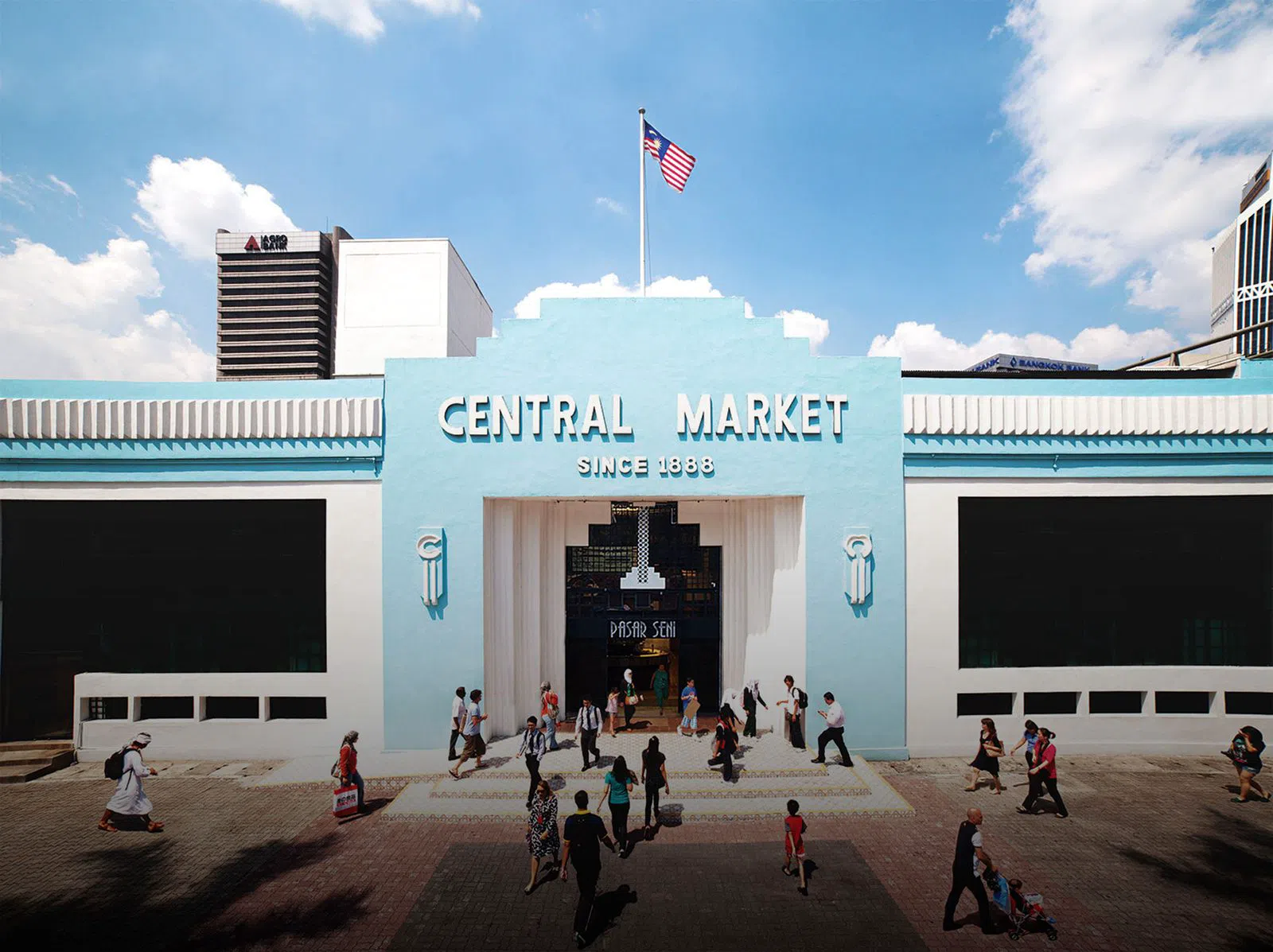
And if you're already in the tourist orbit around the old town, Central Market / Kasturi Walk (Pasar Seni) is a convenient one-stop: an air-conditioned heritage building plus a covered outdoor food lane serving cendol, satay and Nyonya snacks, right on top of the Pasar Seni LRT and MRT interchange. It's polished and squarely aimed at visitors — more souvenir than street-grit — but it's central, family-easy, and a safe pick when you need to feed everyone quickly between sights. RM10–30 per person.
Plan your Kuala Lumpur trip
Live prices from our booking partners.
Free cancellation on many rooms. We may earn a commission when you book.
The Chinese kitchen: alleys, markets and the night strip
This is the tradition with the widest range of hours and the deepest rewards for early risers and night owls alike. It also has the most tourist traps to sidestep, so read the door carefully.
Start your morning down a lane that's easy to miss: Madras Lane Hawker Stalls (Chinatown), tucked behind the Petaling Street wet market. This is a local favourite for curry laksa, yong tau foo and chee cheong fun, and it runs morning to early afternoon only — miss the window and it's gone. Be honest with yourself about numbers: the seating is cramped, and it's best for two to four people. A group of eight will spend the meal apart, hunting for adjacent stools. RM7–18 a head, and worth setting an alarm for.
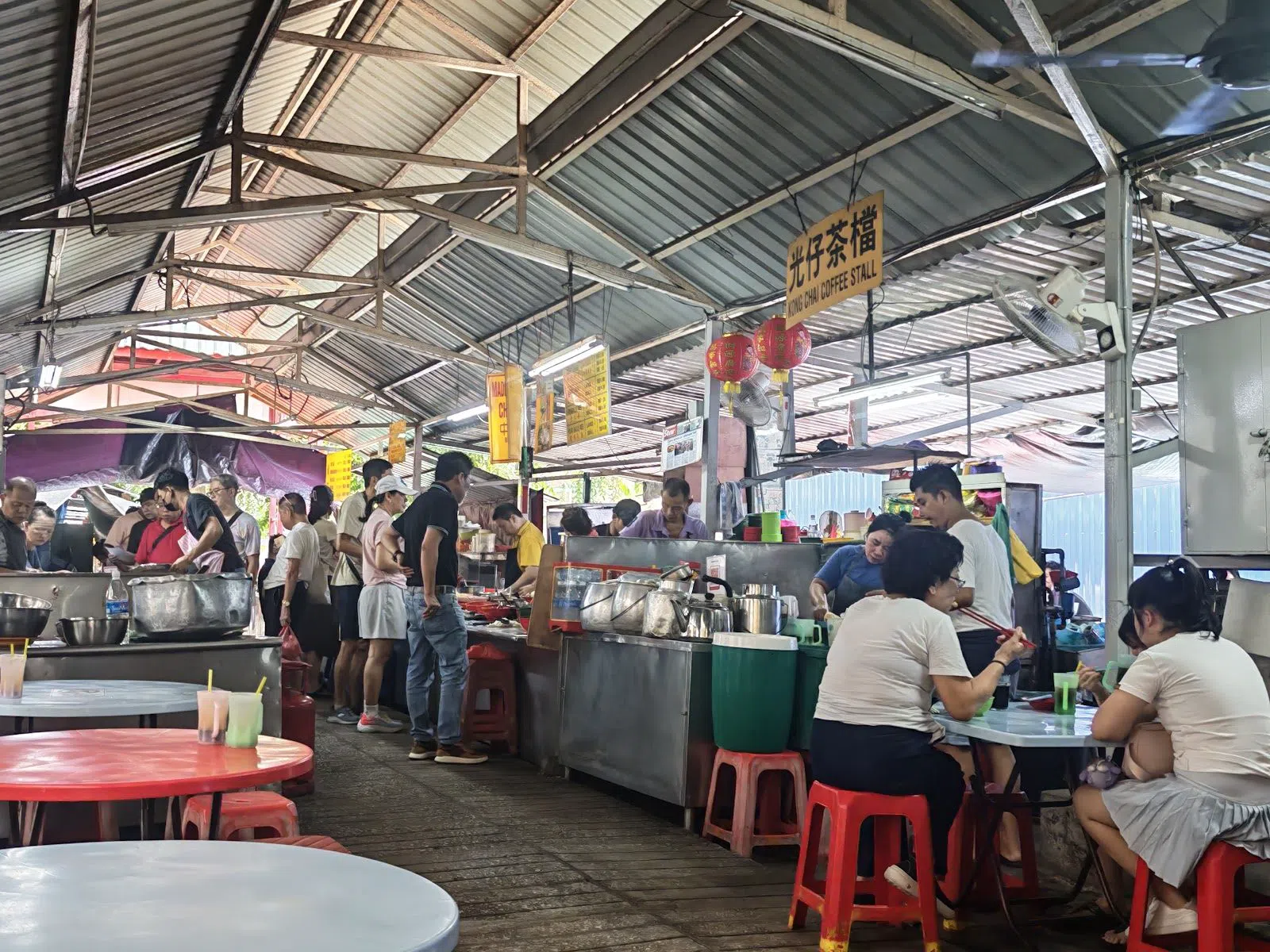
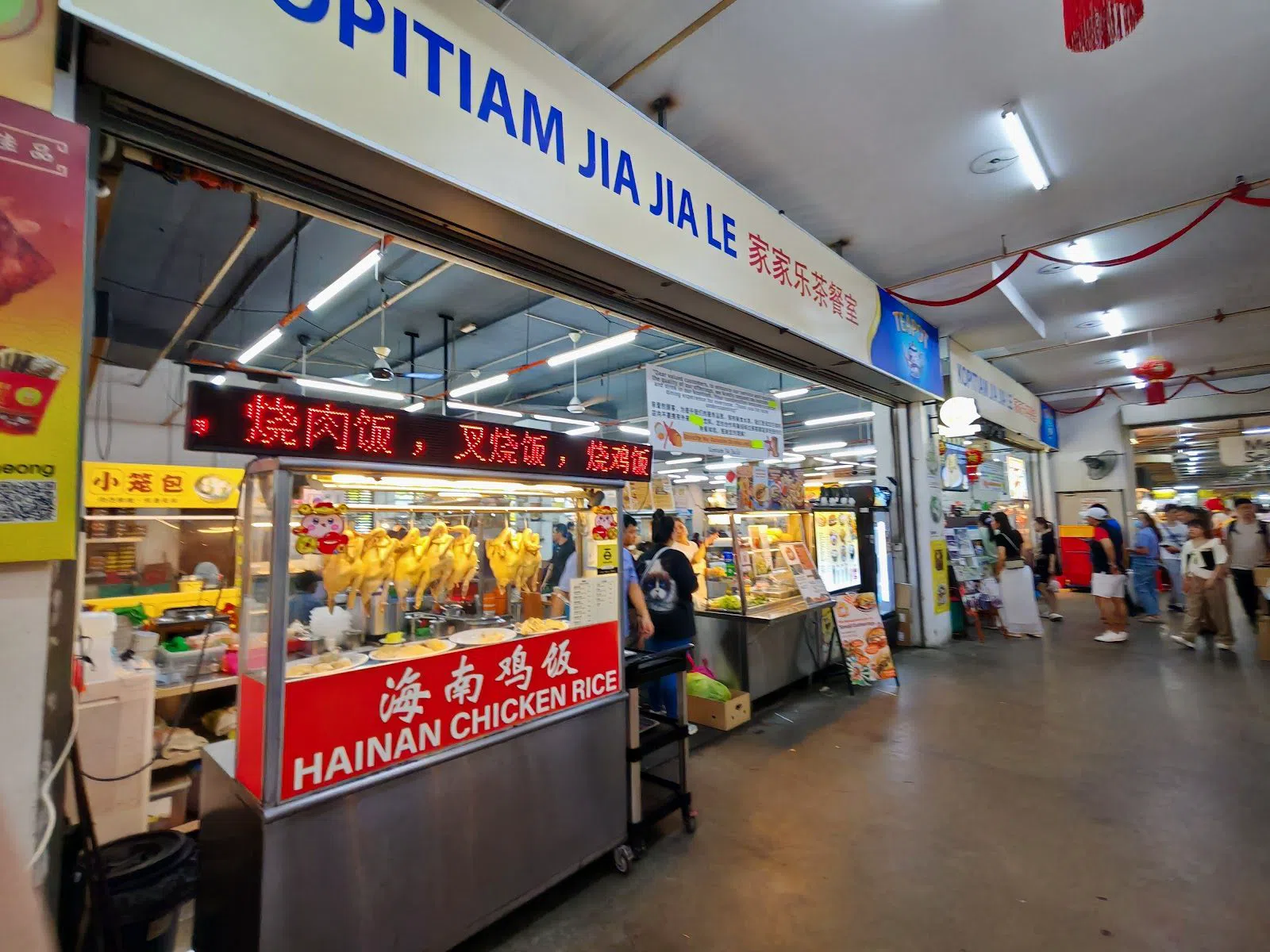
The other great morning ritual is ICC Pudu (Pudu), the relocated heart of the beloved old Imbi Market. Decades-old stalls turn out curry yong tau foo, popiah and wanton noodles, and the regulars have followed them here. But note the terms: it trades roughly 6am to 2pm, it's closed on Mondays, and it's a breakfast-and-lunch place, not a lingering one. The aisles are tight, so go early and go briskly. RM6–20 per person. A group can work it, but at pace, not at leisure.
When the sun finally drops, the Chinese-dominated night strip takes over, and the most famous stretch in the whole city is Jalan Alor (Bukit Bintang). Restaurant-fronts spill plastic tables onto the road, and the move is to grab a cluster of them and order from multiple stalls to one shared table — no reservations, you simply turn up after dark. It is loud, it is touristy, and the touts can be mildly pushy. My one firm rule: agree the price of any seafood before it hits the grill, because that's where the surprises live. RM10–35 a head. It's iconic for a reason, and it's still a genuinely good night out if you keep your wits about the bill.
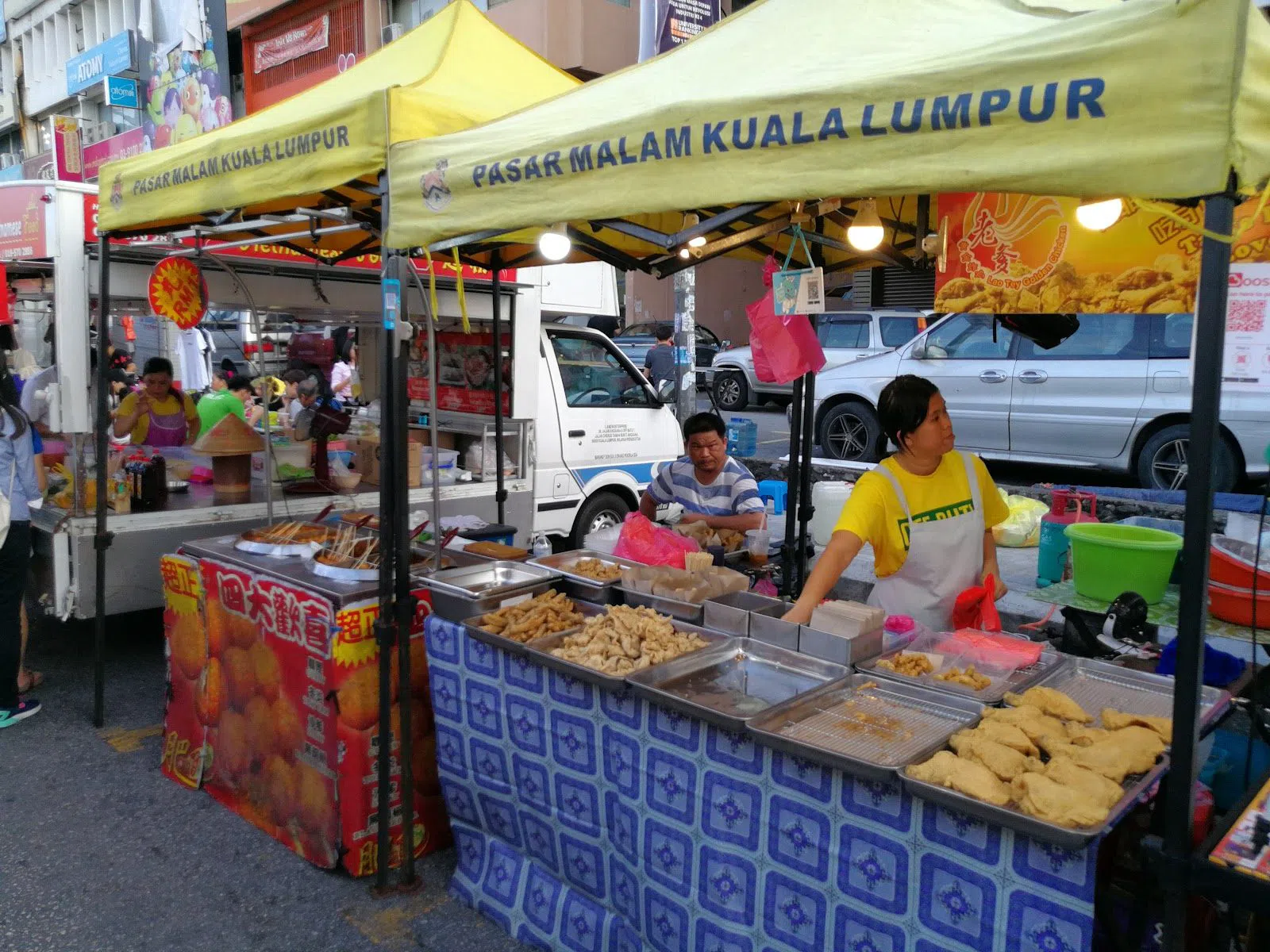
For the biggest spectacle of all, plan your week around Taman Connaught Night Market (Cheras), KL's largest pasar malam and a Wednesday-evening-only affair, running roughly 5pm to 1am. More than 700 stalls of handheld street food stretch on and on; take the MRT out to Bandar Tun Razak and surface into the crowd. It's built for a group to roam, but it gets shoulder-to-shoulder, so pick a landmark meeting point before you dive in. RM5–25 per person, all of it eaten on your feet.
The Malay kitchen: mornings and one Saturday night
Malay hawker food is the quietest of the three to find and, to my mind, the most underrated by visitors. Two of its best expressions are morning institutions; the third is a single glorious night.
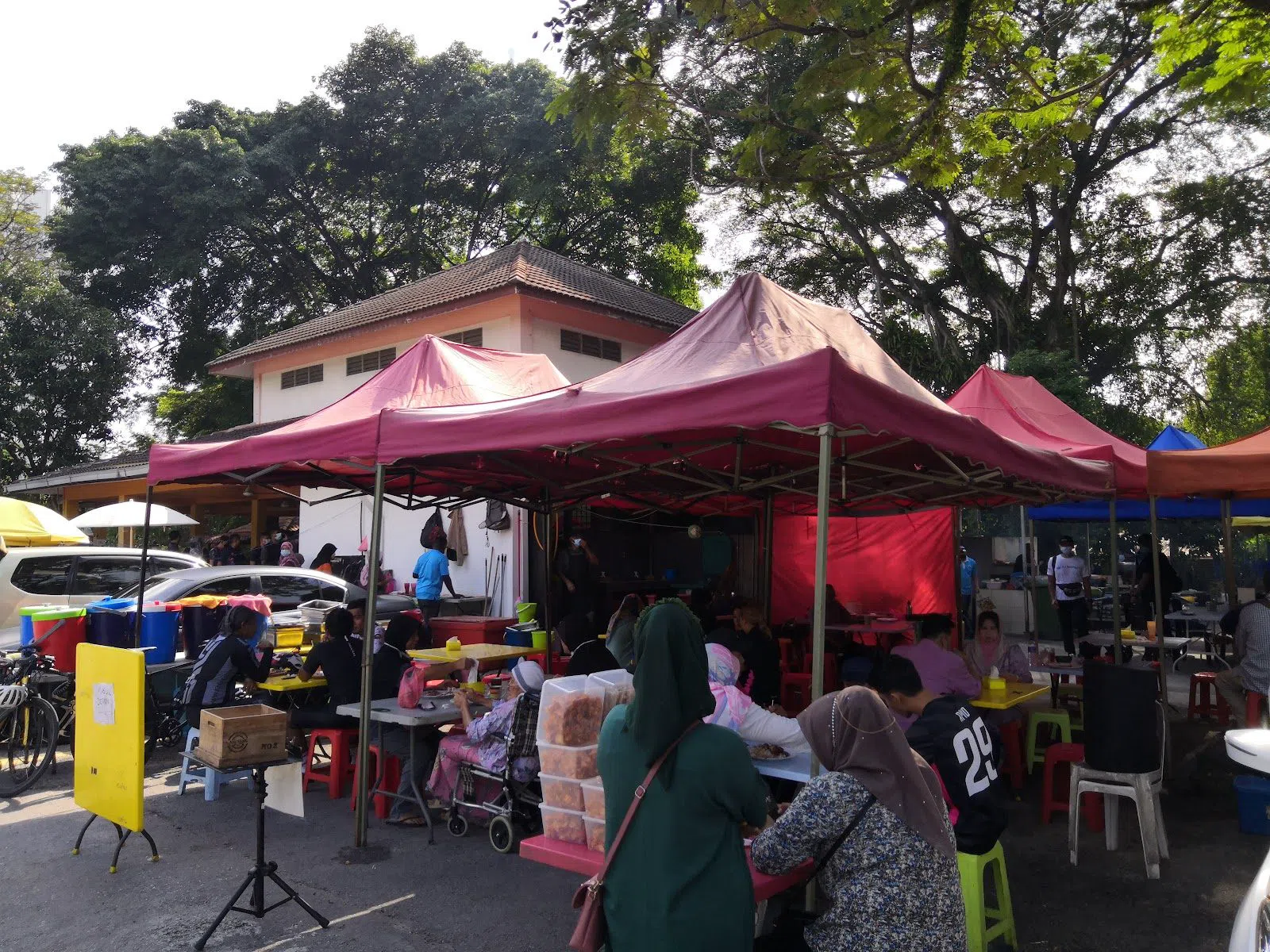
Set your alarm for Kompleks Makan Tanglin (Tanglin), a low-key Malay hawker complex in a leafy pocket away from the tourist crush. This is the home of Nasi Lemak Tanglin, cooking since 1948, surrounded by a cluster of old-school stalls that open early and wind down by early afternoon. It's relaxed, it's authentic, and a group can settle in comfortably over breakfast. RM6–18 a head. Come here on a morning when you want the real, unhurried version of the city.
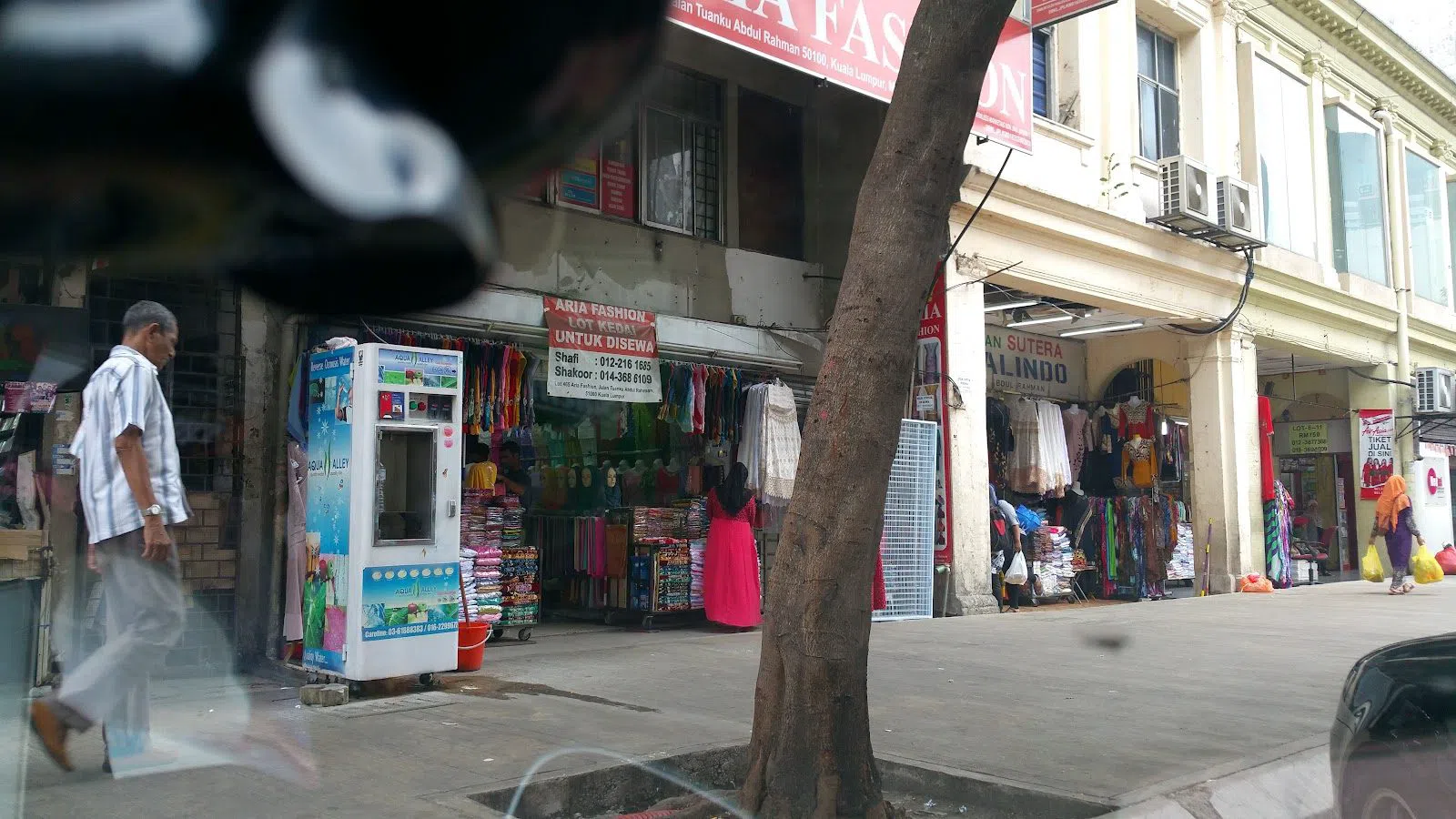
For the braver eater, Bazaar Baru Chow Kit (Chow Kit) is KL's largest wet market with a gritty local food corner threaded through the working stalls. This is a sensory experience as much as a meal — the eating area is modest and hemmed in by the market, so it suits adventurous small groups who've come for the atmosphere as well as the plate. RM5–15 per person. It's the non-touristy underbelly of the city, and it's all the better for it.
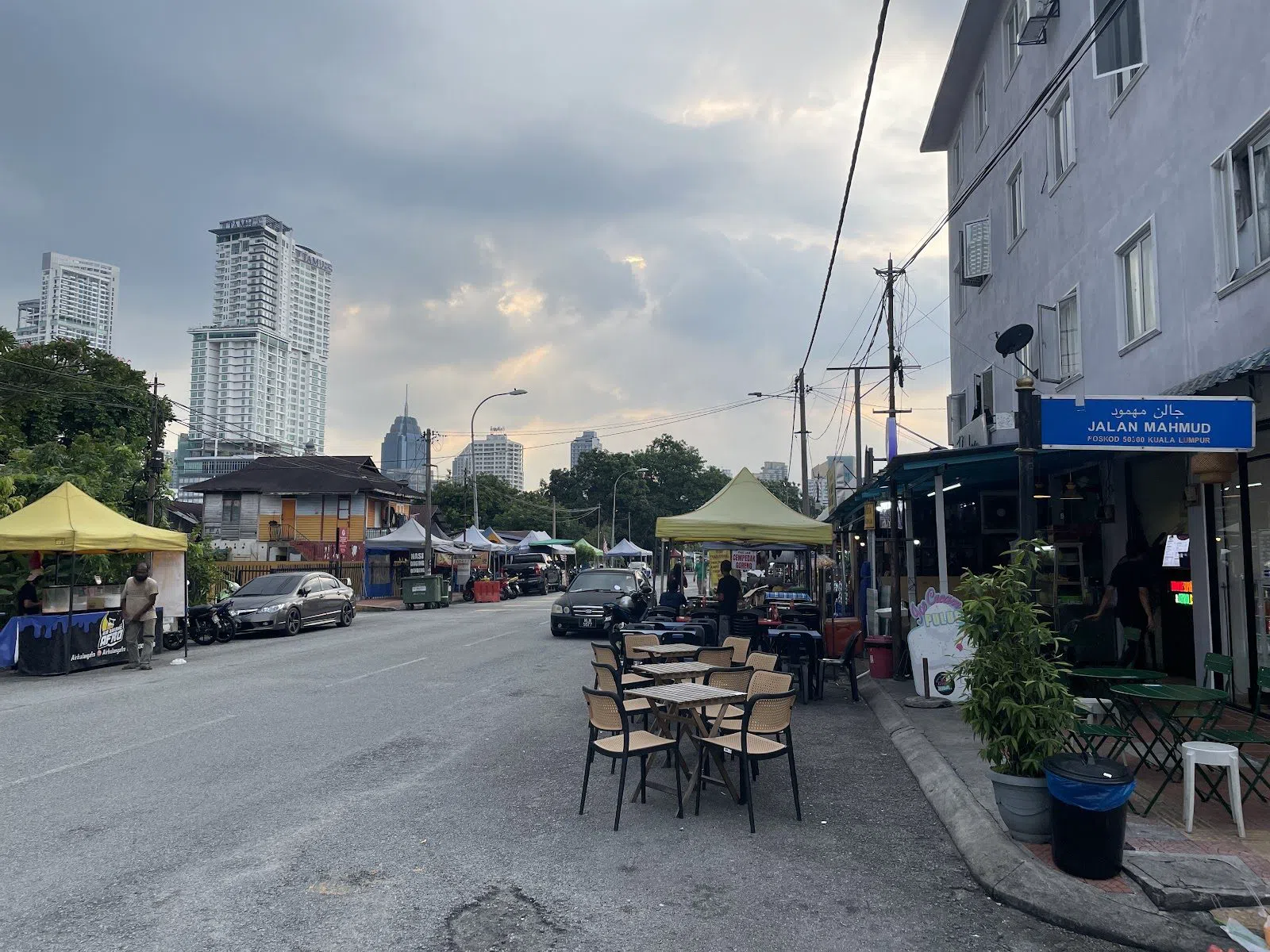
The one Malay night to plan around is confusingly named. The Kampung Baru Sunday Market — Pasar Minggu — actually runs Saturday evening into Sunday, so go on a Saturday night. It's the best concentrated Malay street food in the city: satay smoking over coals, nasi lemak, trays of jewel-coloured kuih. It's a walk-and-graze market with no seating pressure, which makes it easy for a group — buy handheld and eat as you wander through the old wooden-house neighbourhood. RM5–20 a head. Of all the markets in this guide, it's the one I'd least want a visitor to miss.
The Indian kitchen: banana leaf in Brickfields
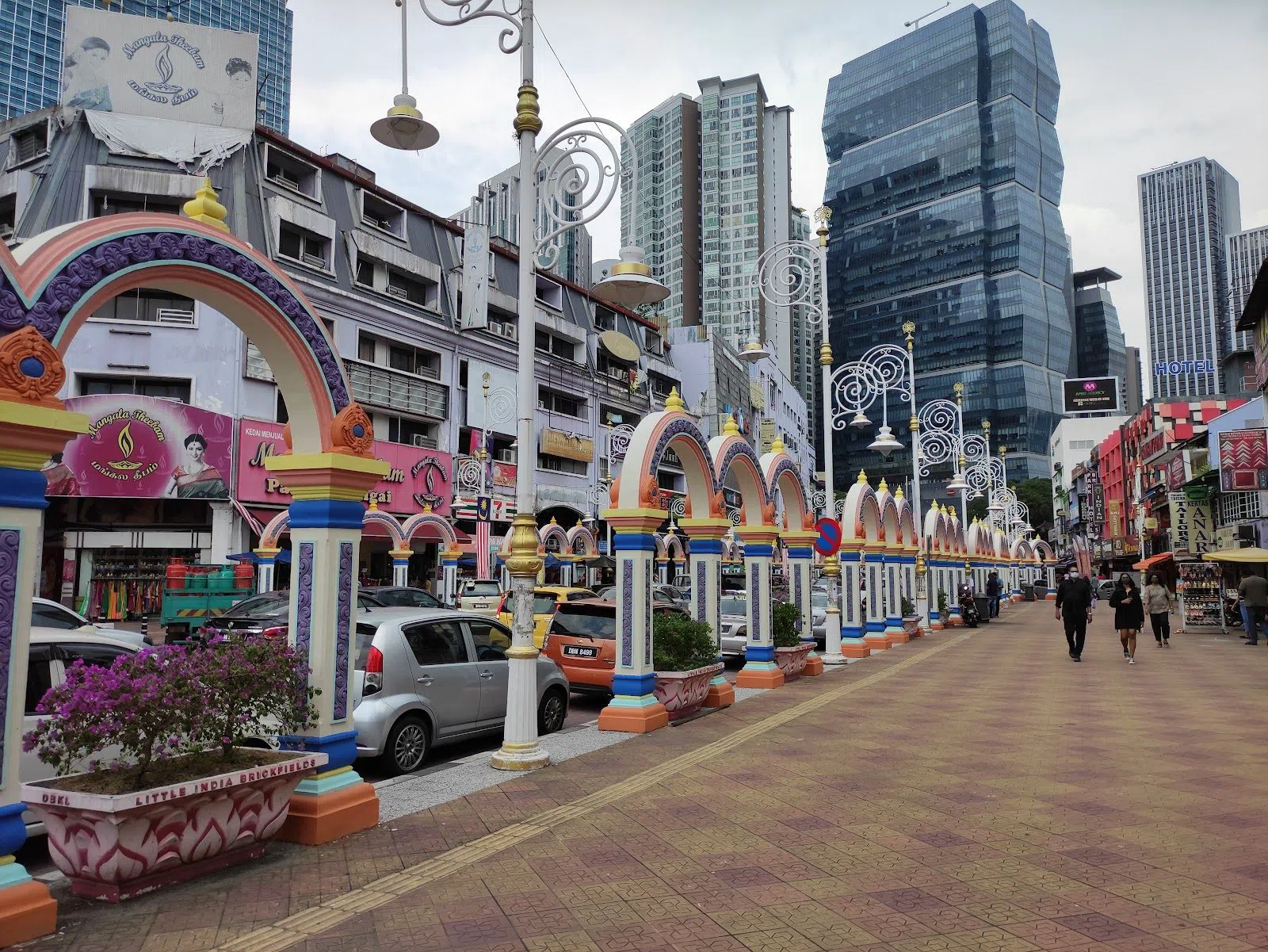
The third shrine sits a short walk from the main railway station. Little India Brickfields (Brickfields) is the city's South Indian food quarter, walkable from KL Sentral, where banana-leaf rice, crisp dosa and frothy teh tarik define the flavour. The banana-leaf halls are made for groups: a big table is the norm, you order communal thali-style, and you eat with your right hand while the servers circle with refills of rice, sambar and vegetables. RM8–25 per person. It's a distinct thread in KL's food weave and, for me, the most convivial way to end the pilgrimage — everyone at one long table, leaves spread, hands busy.
Groups versus couples: reading the door
The honest truth is that not every hawker spot suits every party, and pretending otherwise ruins meals. If you're a couple or a pair, the cramped, atmospheric places reward you: Madras Lane and Bazaar Baru Chow Kit are intimate by necessity and frustrating in numbers. If you're a larger group, lean on the halls and the roaming markets — Lot 10 Hutong, Food Republic @ Pavilion KL and REXKL all have the seating and the order-per-stall setup that lets a group fan out; Kampung Baru, Jalan Alor and Taman Connaught are open-air and built to be walked. ICC Pudu and Kompleks Makan Tanglin work for groups but only in their morning windows and at an unhurried-but-not-lingering pace. None of these places take reservations in any meaningful sense — you turn up, you find your table, you order. The only door policy that matters is the clock.
Before you build your days, it's worth pinning down where you'll sleep, because this circuit rewards a central base — start your Kuala Lumpur hotel search around Bukit Bintang, Chinatown or KL Sentral and most of these kitchens are a short train ride apart. For the wider picture of the city beyond its hawker stalls, the Kuala Lumpur guide fills in the rest.
Practical notes for 2026
Getting there. KL's rail network — the LRT, MRT and monorail — reaches almost everything in this guide. Central Market sits on Pasar Seni station; Brickfields is a walk from KL Sentral; Taman Connaught means the MRT to Bandar Tun Razak. Bukit Bintang's monorail and MRT stops put Jalan Alor, Lot 10 Hutong and Pavilion within a few minutes' walk of each other. For the market mornings and anything after the trains stop (they wind down around midnight), e-hailing is cheap, ubiquitous and the sane way to move a group.
Cash. Carry small ringgit notes. The mall halls like Food Republic and REXKL take cards and e-wallets, but the alleys, wet markets and night stalls are cash-first, and nobody wants to break a RM100 note for a RM6 bowl of noodles. An ATM run before a market morning saves a lot of friction.
Timing. This is the whole game. Mornings (roughly 6am–2pm) belong to ICC Pudu, Madras Lane, Kompleks Makan Tanglin and Bazaar Baru Chow Kit — and remember ICC Pudu is closed Mondays. Nights belong to Jalan Alor and Kampung Baru, the latter Saturday evening only. Taman Connaught is Wednesday only. Sketch your week around those fixed points and slot the all-day halls into the gaps.
Budget. Hawker eating here is gloriously cheap: RM5–20 per person covers most markets, RM12–35 the curated halls, and even a generous multi-stall blowout rarely tops RM40 a head. The one place to stay alert is Jalan Alor, where unpriced seafood is the classic way a modest meal balloons — agree the number before it cooks, and you'll eat like royalty for the price of a coffee back home.
Eat all three kitchens in a day if you can — a Malay nasi lemak at dawn, a Chinese curry laksa at noon, banana-leaf rice at dusk — and you'll understand this city better than any tower or viewpoint could teach you. Kuala Lumpur put its three kitchens at one table and left the seats open. Pull one out.
Before you go
Which Kuala Lumpur hawker centre is best for a first-time visitor?
Lot 10 Hutong in Bukit Bintang is the easiest start — air-conditioned, communal tables, and legacy hawkers (Hokkien mee, roast pork) under one roof with order-and-pay-per-stall, so you get a broad first taste without the guesswork. Budget RM12–30 per person.
Which KL hawker spots are morning-only?
ICC Pudu (roughly 6am–2pm, closed Mondays), Madras Lane in Chinatown, Kompleks Makan Tanglin and the food corner at Bazaar Baru Chow Kit all trade breakfast to early afternoon and shut by mid-afternoon. Set an alarm — miss the window and they're gone.
When is the Kampung Baru Sunday Market actually on?
Despite the name, Pasar Minggu runs Saturday evening into Sunday, so you should go on a Saturday night. It's the city's best concentrated Malay street food — satay, nasi lemak and kuih — eaten as you wander, with no seating pressure.
How do I avoid being overcharged on Jalan Alor?
Jalan Alor is iconic but touristy, and the surprises live in unpriced seafood. Agree the price of any seafood dish before it goes on the grill. Stick to clearly priced plates and you'll eat very well for RM10–35 a head.
Do Kuala Lumpur hawker centres take card payments?
The curated mall halls like Food Republic @ Pavilion KL and REXKL take cards and e-wallets, but the alleys, wet markets and night stalls are cash-first. Carry small ringgit notes and do an ATM run before any market morning.