The Kuala Lumpur issue
Hunting Old Malaya in Kuala Lumpur's Pasar Seni Before Noon
A Saturday treasure hunt through Kuala Lumpur's antique trade, from a 4am thieves' market to the last crockery shop of the kopitiam era, and it is all over by lunch.
By Suresh ManiamBanana leaf before noon
At ten past four on a Saturday morning the ground beside the Lee Lam Thye site is already laid with blue tarpaulin, and one trader has a brass carbide lamp, a dead Nokia, a bundle of cassettes and a single shoe arranged on the same square metre of tarmac. Six hours later and a few hundred metres north, under the fluorescent tubes of the antique lots inside Central Market, a dealer turns a porcelain lid over in both hands to show me where the enamel was retouched, and names RM480 in the tone of a man who is expecting RM300. Everything worth finding in this city's second-hand trade happens between those two moments, and it is finished by lunch.
Start at four in the morning or not at all
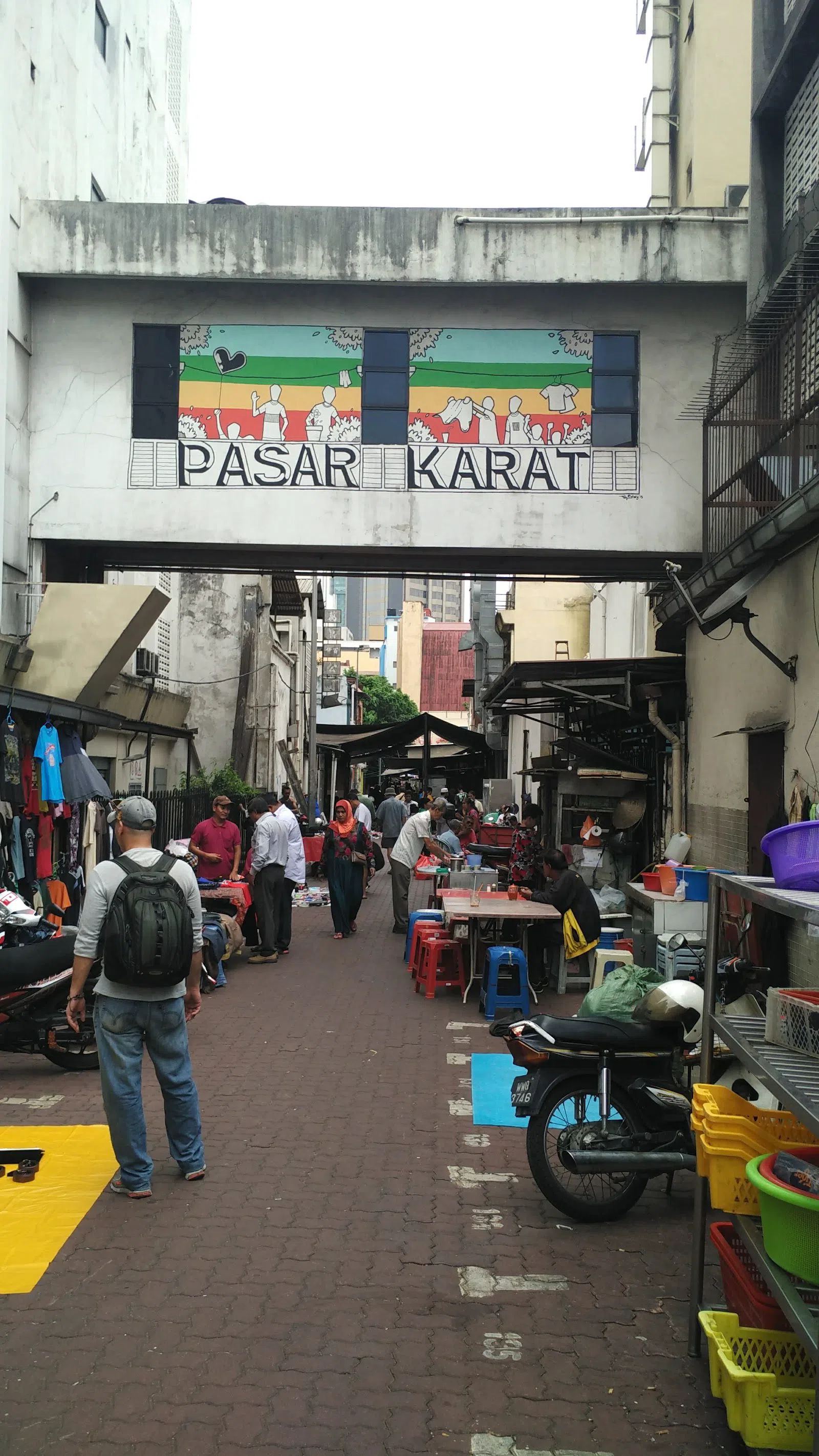
Pasar Karat (Chinatown, on the Lee Lam Thye ground since 2024) is the reason to set an alarm you will resent. The thieves' market moved off Lorong Petaling in April 2024 and still runs roughly 3am to 9am, which means the true Saturday morning rush is over before Central Market has unlocked its doors. Nothing is displayed, exactly; goods go straight onto sheets on the ground, and you crouch, you sort, you hand things back. Most of it sits between RM2 and RM100: spanners, spectacle frames, cheap Seiko copies, keys to nothing, old coins loose in an ice-cream tub, the occasional very good enamel tray that somebody's grandmother's kitchen gave up.
Be honest with yourself about what this is. It is a working traders' market operating in the dark, not an attraction, and the courtesies are different: keep your group to four or six people, keep your bag in front of you rather than on your back, ask before you pick something up, and do not photograph faces. Bring RM1 and RM5 notes, because nobody at 4am wants to break a fifty, and bring a torch, since phone light works but ties up a hand you need.
Provenance here is a fiction and everybody knows it. You will be told the watch belonged to a rubber planter. Buy the object, not the story: if the brass feels right in the hand at RM40, it is worth RM40 whoever owned it.
Plan your Kuala Lumpur trip
Live prices from our booking partners.
Free cancellation on many rooms. We may earn a commission when you book.
The antique hall inside Central Market
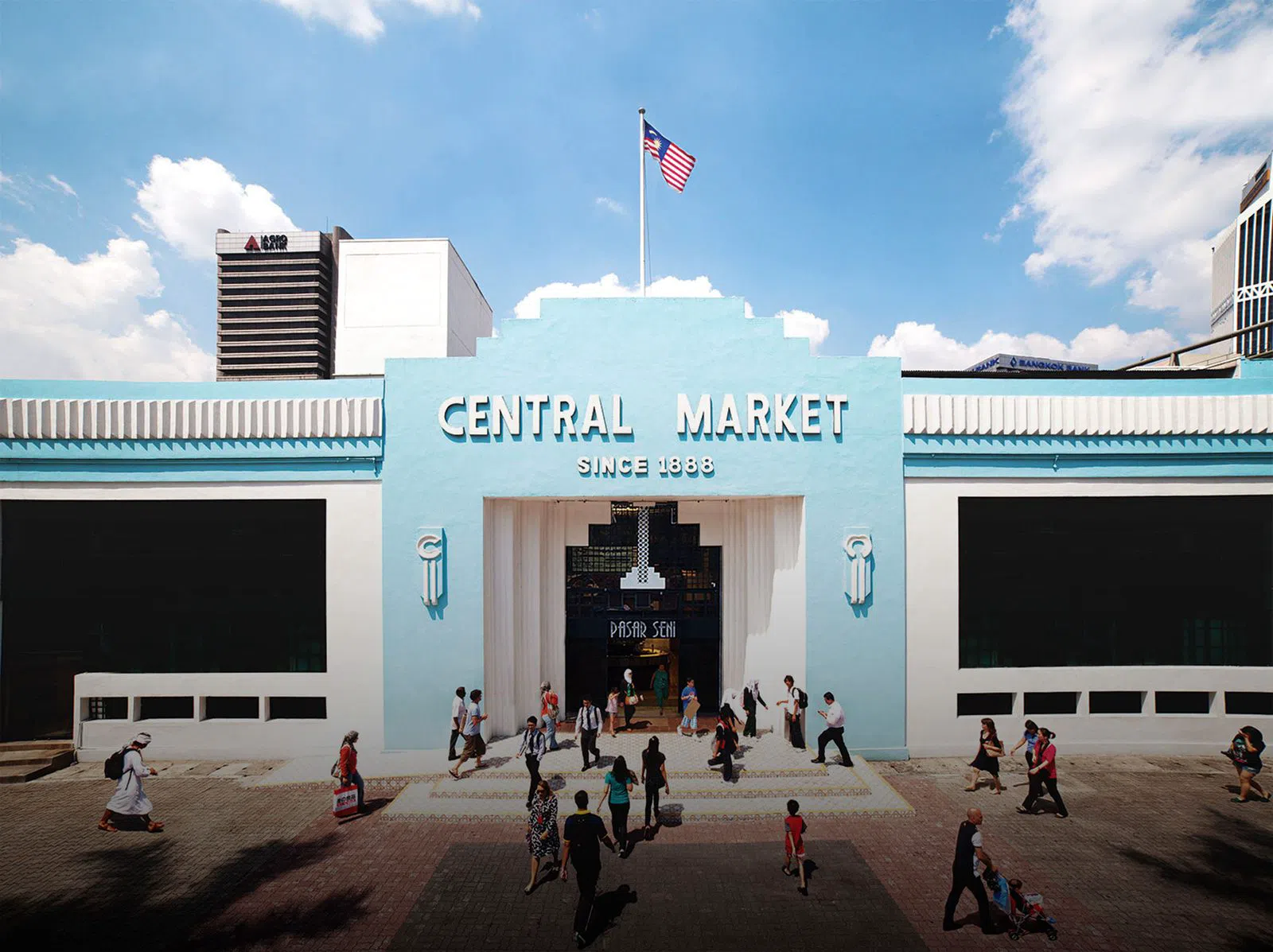
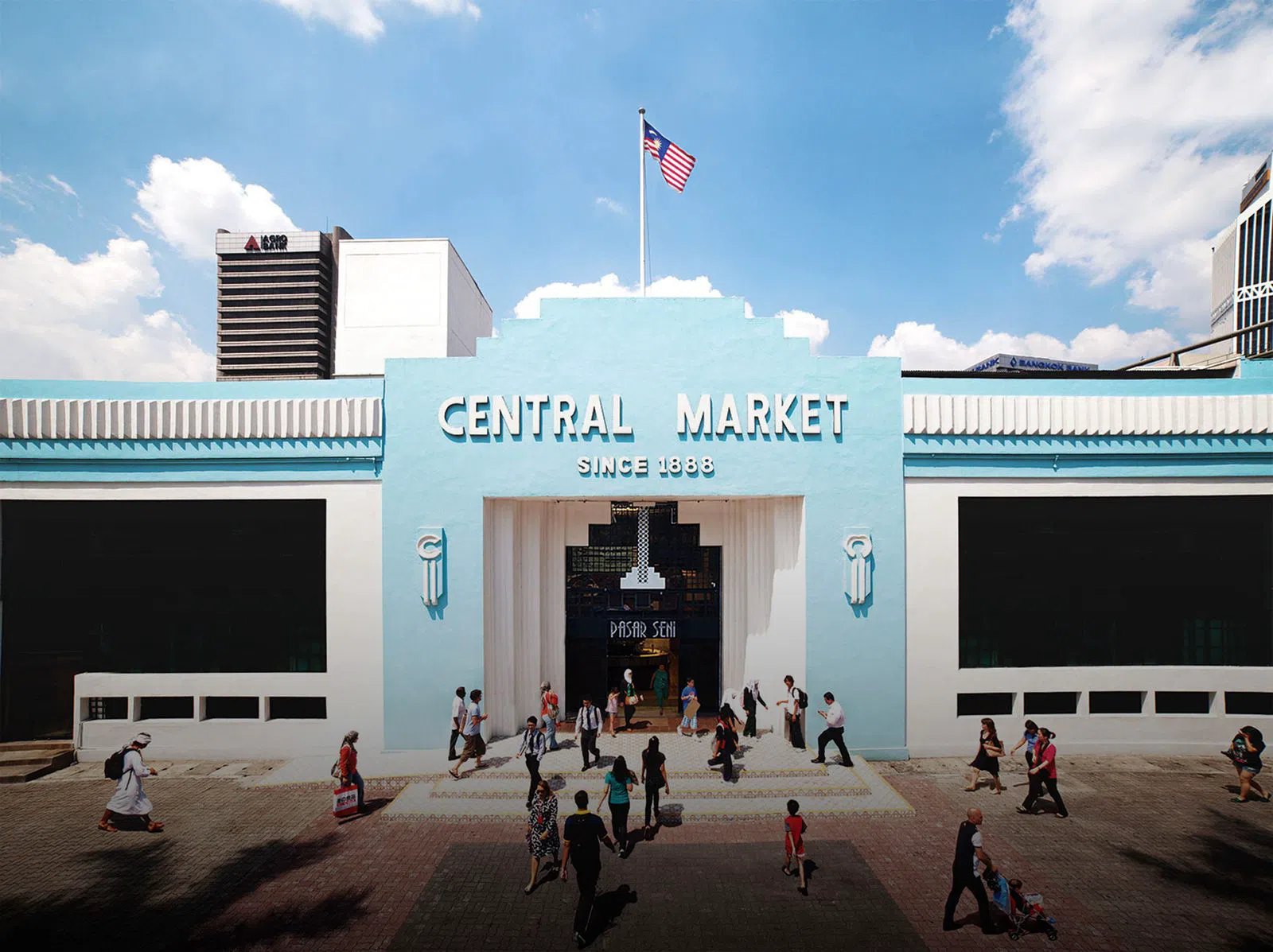
Central Market (Pasar Seni) (Chinatown, the pale art-deco block by the river) is the anchor of the whole morning and the only place in the city where a dozen independent antique dealers trade under one roof. Entry is free, the hall opens at 10am and runs to 8pm (some of the outer shops to 10pm), and the pricing spread across the antique lots is enormous, RM10 for a loose token up to RM5,000 and beyond for a serious piece. Dealers expect you to bargain rather than merely allow it: open below what you will pay, stay friendly, and be ready to walk once.
The timing matters more than anything else in this article. Be inside before noon. The central aisle is wide enough to take a guided group without anyone getting shoved, but by mid-afternoon on a Saturday the coaches own it, the dealers are busy with volume trade, and the long conversation that gets you the real price and the real age of a piece is not available. Individual antique lots take three or four browsers at a time and no more. If you are moving as a group, rotate through and let the person actually buying stand at the counter alone.
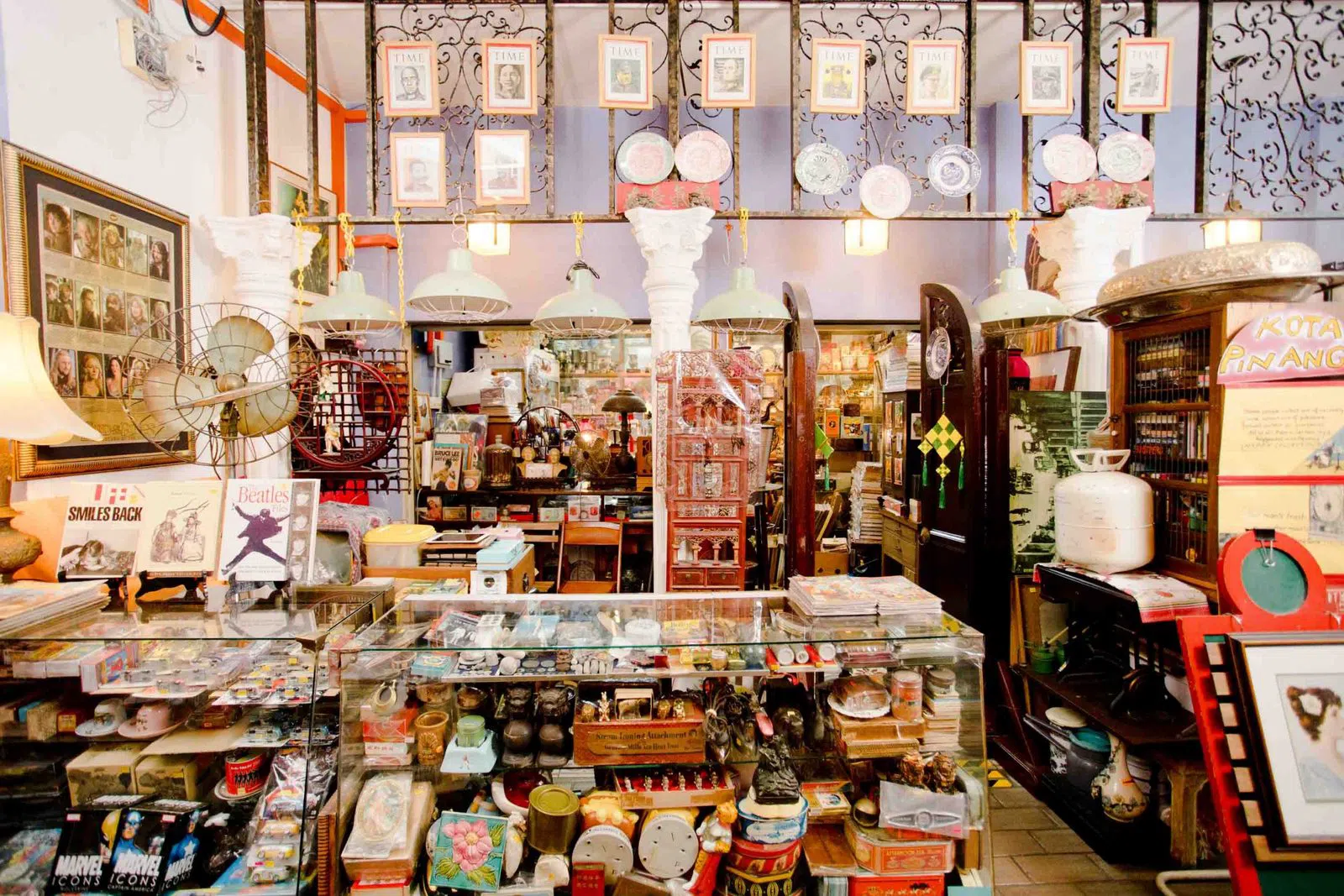
Kota Pinang Enterprise (ground floor, Central Market) is the easiest place to start and the most consistently well-stocked of the ground-floor lots. Prices run around RM15 to RM800, and what you are looking at is small, portable and properly old rather than reproduction souvenir, the sort of object that fits in hand luggage and does not need a customs conversation. If you have never bought an antique in your life, buy your first one here, cheaply, and get the feel of the negotiation before you spend properly elsewhere.
Grand-Father's Collection (Central Market, listed on the market's own Antique & Collectibles directory) is the Straits-Chinese and porcelain end of the hall, roughly RM50 to RM3,000. It is a small lot, best for a pair or a trio of people, and the dealer will walk you through age markers (foot rims, glaze pooling, the crudeness or otherwise of a painted line) if you show real interest rather than idle interest. That is worth an hour by itself even if you buy nothing.
House of Heritage (Central Market, same directory) is where the hall stops defaulting to Chinese material and gets serious about peninsular Malay culture, at RM30 to RM2,000. The frontage is narrow enough that three or four people fill it, but it is the strongest stall in the building for that material, and if what draws you is old Malaya rather than old China, start here and work backwards.
What five ringgit buys you across the counter
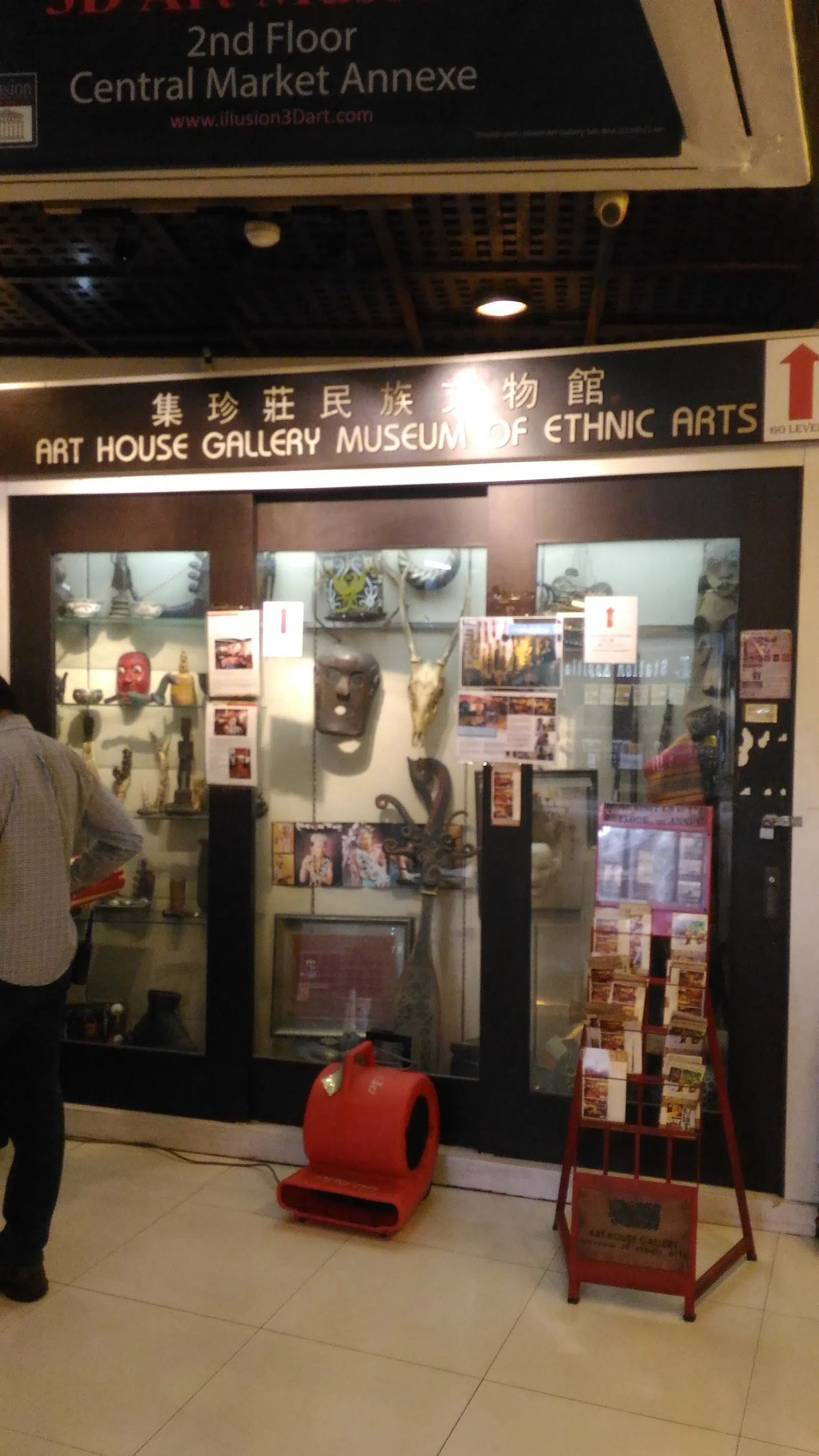
Art House Gallery Museum of Ethnic Arts (central KL, a short taxi hop from the market) is a private antiquities museum and dealer rolled into one, and admission is RM5, the best-value ticket in this entire piece. Leonard Yiu has been assembling the collection for twenty years, and the Sarawak and Kalimantan material is museum-grade in a way nothing in the market hall is: carved figures, tribal textiles, ritual objects, the real thing rather than the airport version.
Understand the arrangement before you go in. The Borneo pieces are not for sale, no matter how the conversation goes; everything else is, from about RM100 up into five figures. That makes it the ideal place to educate your eye for the price of a coffee, which is exactly what you want before you spend RM800 on something in a crowded aisle. The cabinets sit close together, so six to ten people is comfortable and a larger group should call ahead rather than turn up en masse.
The shops that will not be here much longer
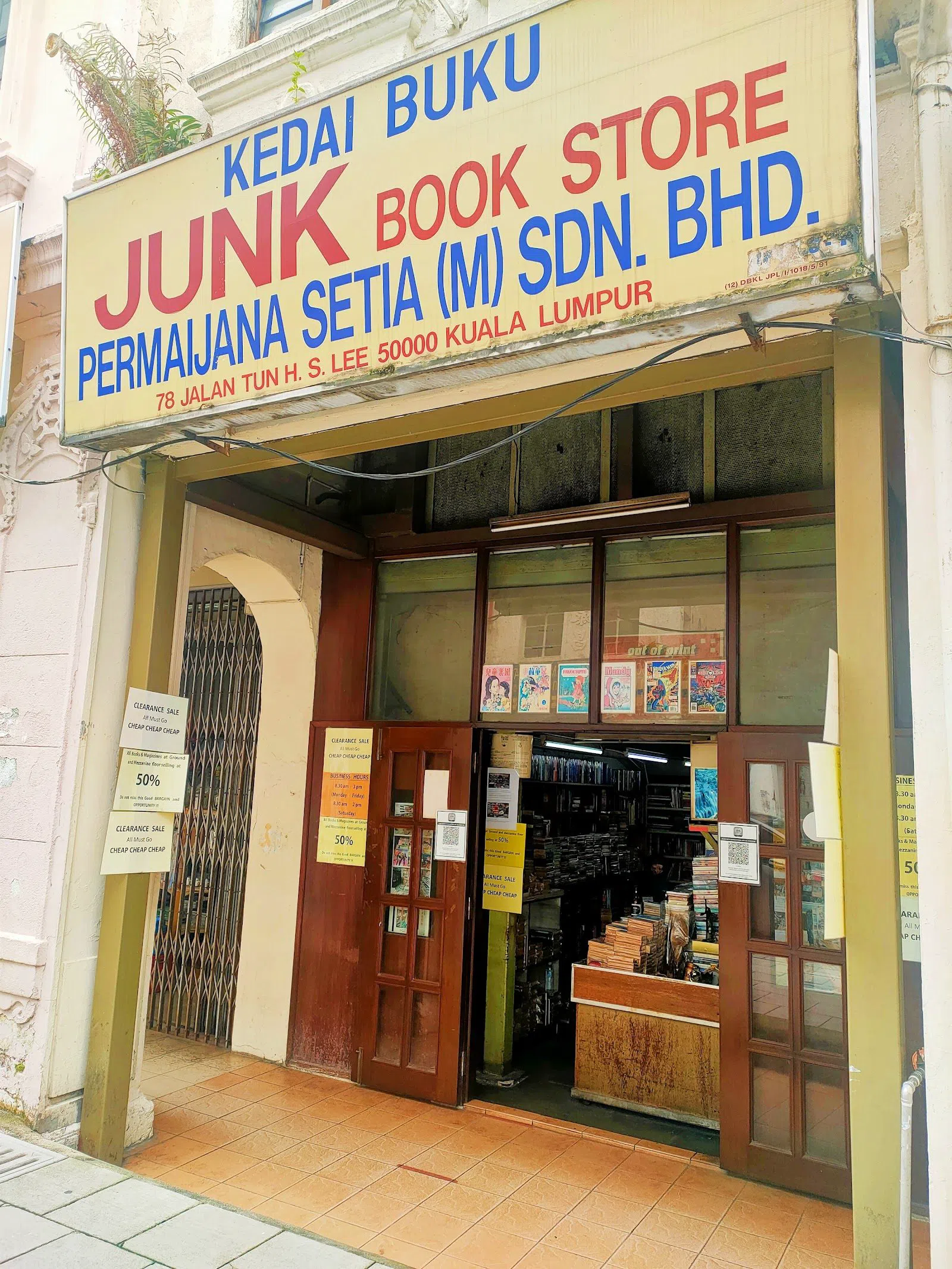
Junk Book Store (Chinatown, a short walk from the market) is recorded by the Malaysia Book of Records as the country's second-largest second-hand bookstore, and it physically cannot take a group: the aisles are single-file, so send two or three people in and let the rest wait outside with a drink. Most books are RM5 to RM50, rarities considerably more. The reason to come is the paper you cannot buy anywhere else: old Malayan maps, RTM-era photo books, 1960s Straits paperbacks with the spines gone soft. It closes at 4pm on Saturday and does not open on Sunday, so it is a real morning stop, not a maybe-later one.
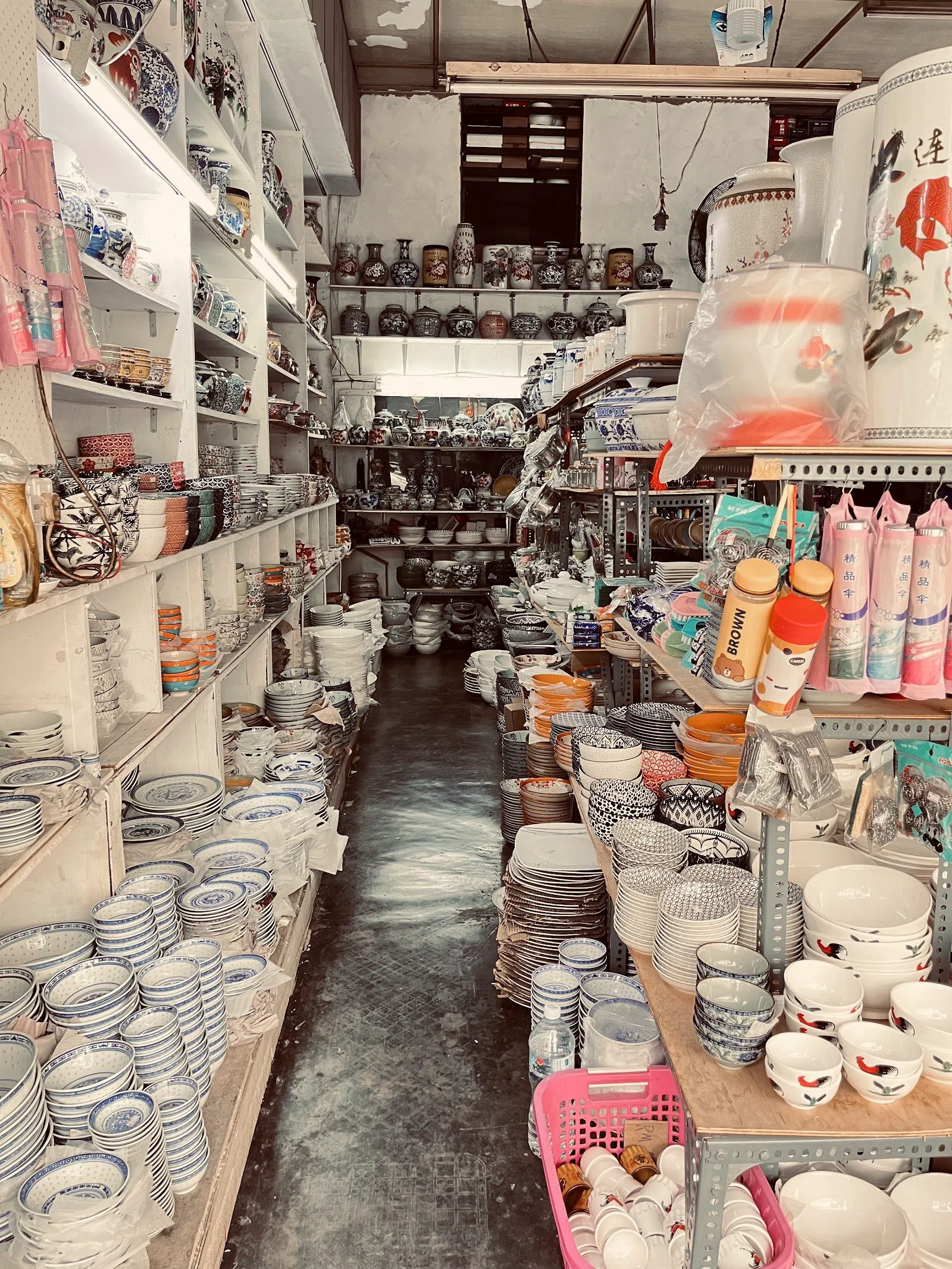
Syarikat Tai Fatt Heng (Chinatown) is not an antique shop at all, which is precisely why it belongs on this route. It is a surviving working supplier of the exact crockery the old kopitiams used (the thick-walled cups, the saucers you pour the coffee into, the plates with the green rim), and pieces run RM3 to RM80. It is the cheapest honest way to take a piece of old Kuala Lumpur home, and everything is new stock in an old pattern, so nothing you buy is being stripped out of somebody's shophouse.
Go now rather than next year. Kwong Yik Seng, a crockery house that traded for sixty-nine years, has already closed. This trade is not being priced out slowly; it is ending. Inside, stock is stacked in tall unstable columns, so keep the group small and keep hands in; you break it, you have bought it, and rightly so.
A record shop and a cinema nobody knocked down
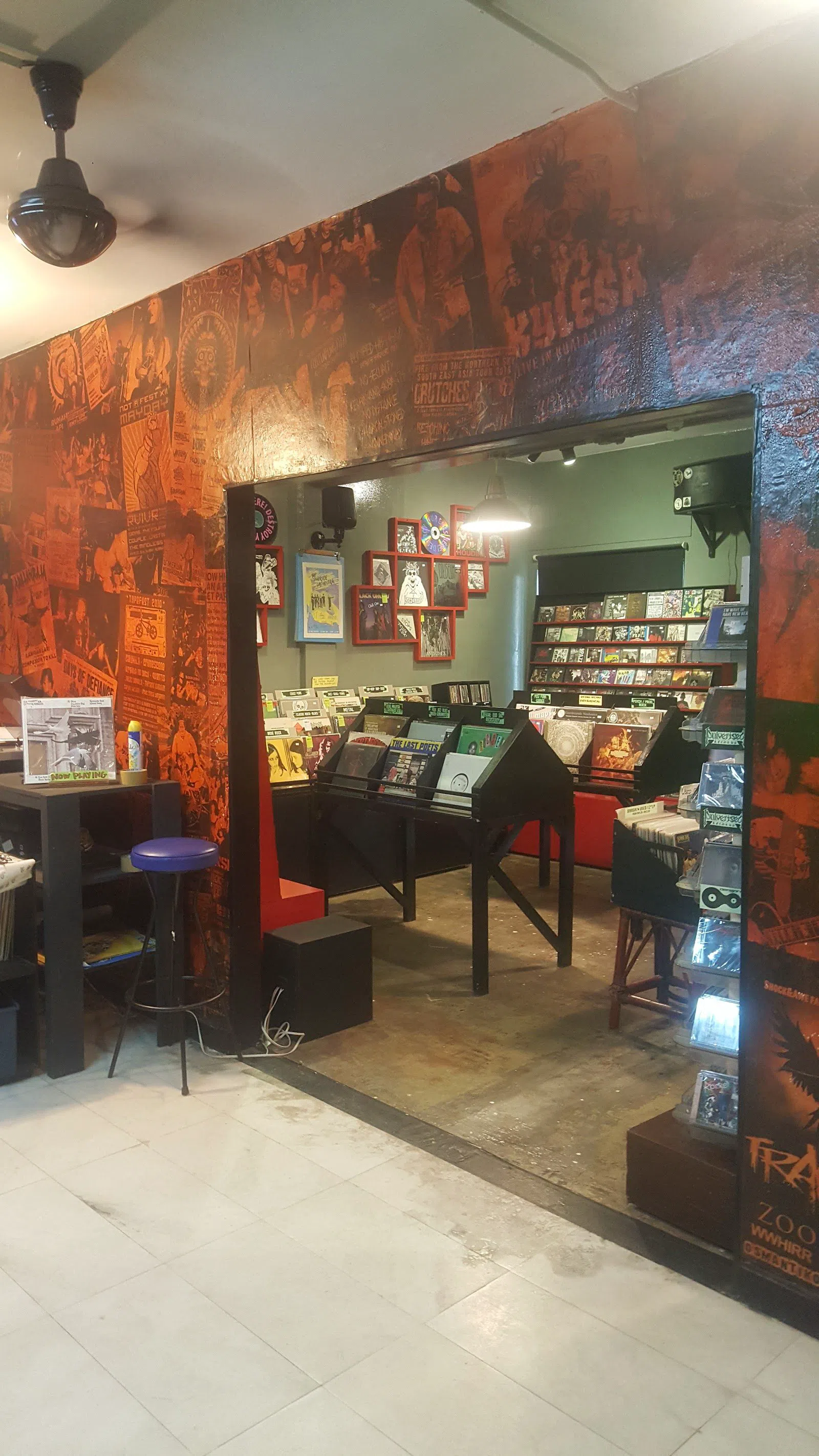
Tandang Records Store (Kampung Attap) is a tiny room where four people constitute a crowd, open Tuesday to Sunday from 1pm to 9pm and closed Mondays, so it is the coda to your morning rather than part of it. Records run RM25 to RM250. Hardcore, punk and metal come first, but the racks also carry jazz, dub and Malay indie, and it is the living end of the city's second-hand music trade rather than a nostalgia display.
BookXcess at REXKL (Chinatown, two minutes from Petaling Street) is where the morning should end, in air conditioning, with your bags at your feet. It occupies a converted cinema, it is free to walk into, books start around RM10, and on Friday and Saturday it stays open to midnight. It is also the strongest architectural argument in the district that old Kuala Lumpur can be kept and reused rather than flattened, which is, after four hours of buying up the fragments of a city that mostly was flattened, a slightly complicated feeling to sit with. The space is large and easy for a group, with no limits on numbers.

The dealers who need a phone call first
Koleksi Malaya (by appointment only; message ahead and the address comes with the reply) holds the best-restored collection of everyday old-Malaya objects in the city, and it is exactly the fading material culture this piece is about. Pieces run RM50 to RM5,000 and the owner also rents them out for shoots. A booked group of eight to ten is fine and you will be walked round properly. It is not a drop-in. Turning up unannounced gets you a locked door, so do the messaging on Friday.
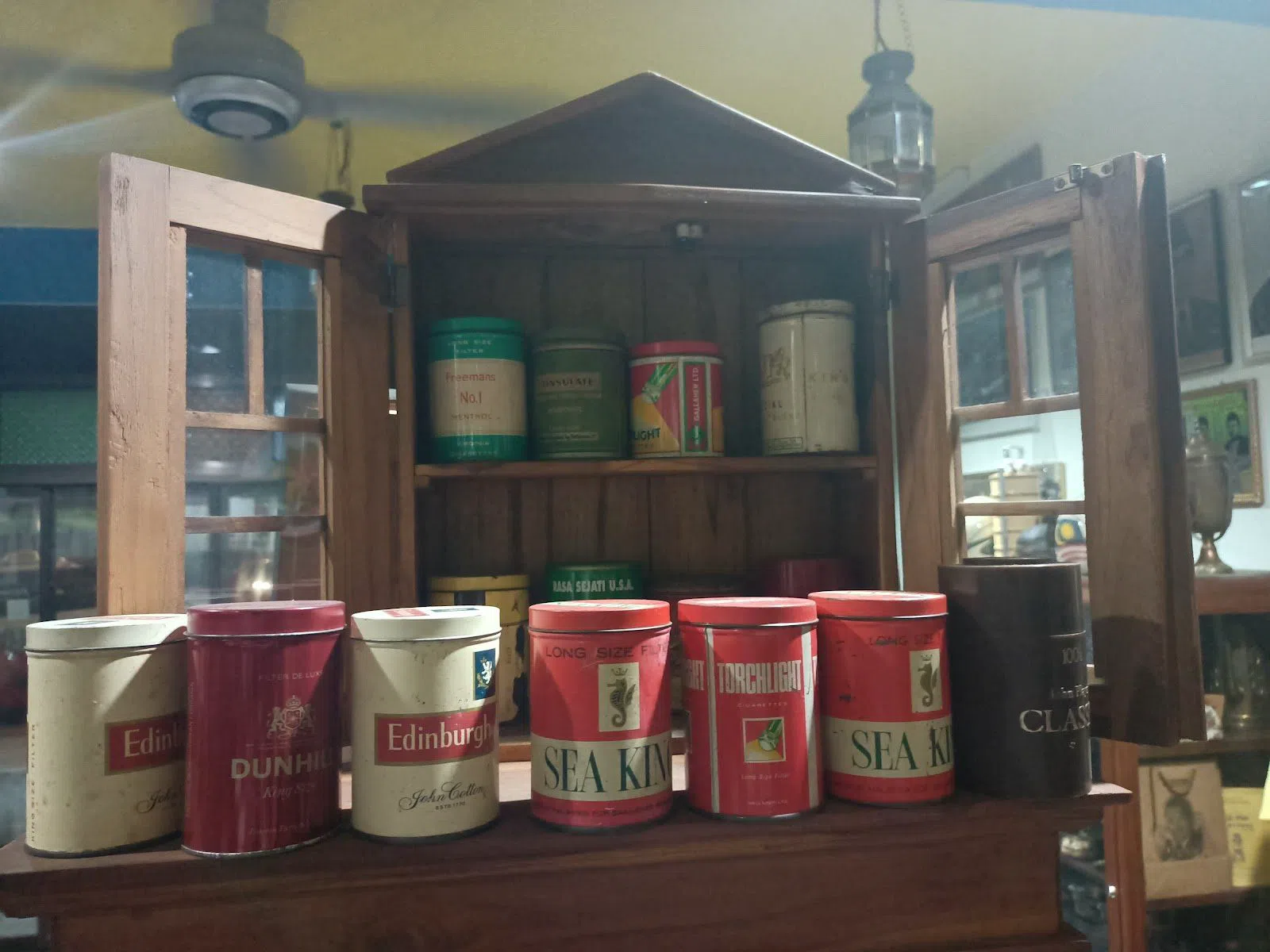
The Curiosity Shop (Sungai Besi, a drive from Chinatown) is the serious end of the trade: Danny Ho has been at this since 2005 and does his own restoration and reupholstery, with furniture from RM100 to RM10,000-plus and small curios from about RM30. It is open daily 10am to 10pm and there is real floor space for a group, but confirm by phone before making the trip out, because a wasted forty-minute ride each way is a bad way to spend a Saturday.
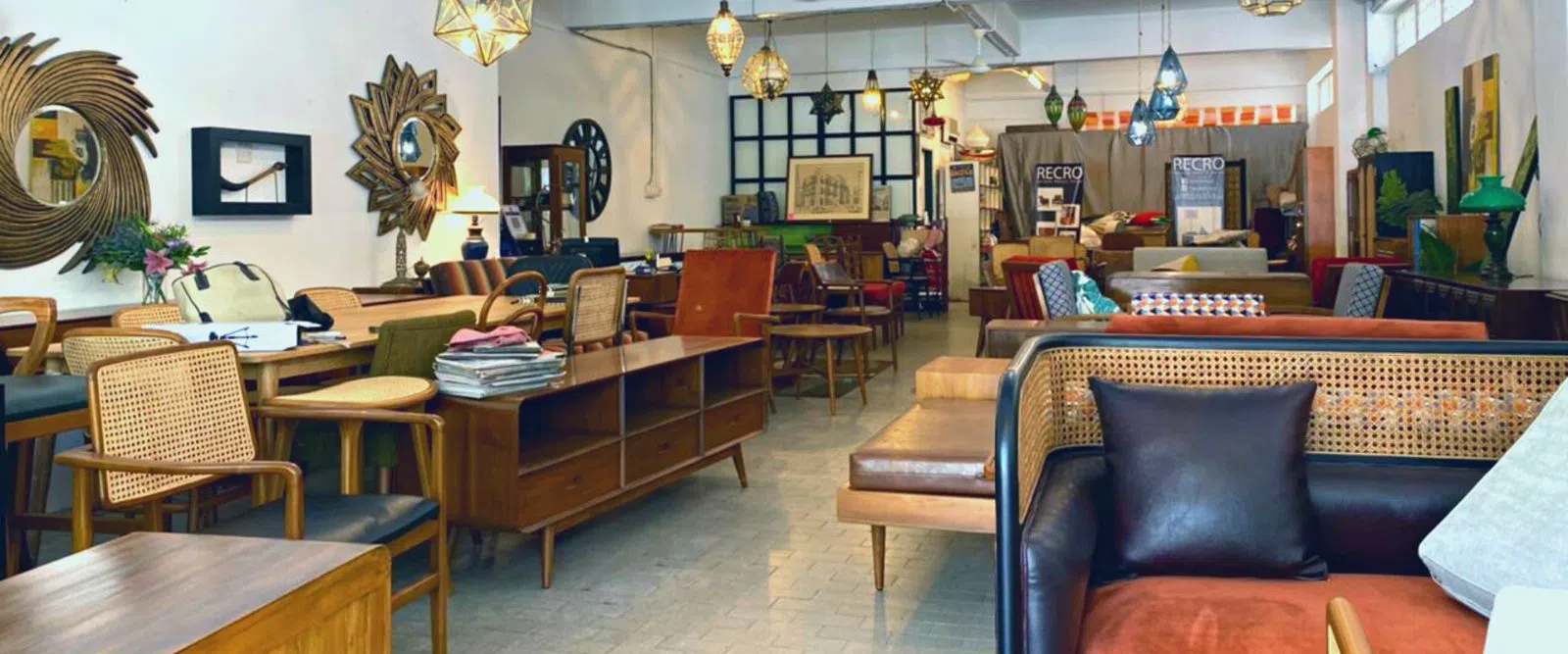
Recro Furniture (a showroom out of the centre; take the address when you book) is open Tuesday to Sunday, 11.30am to 6pm, with evenings by appointment, and takes a group of six to eight easily. Formerly Second Charm and now run by Aisha Shaharuddin, it deals in mid-century Malaysian furniture at RM300 to RM8,000 with in-house restoration. This is the one entry on the list where pieces are repaired to last another fifty years rather than sold as decor, and the rooms they came out of are the ones the towers replaced.
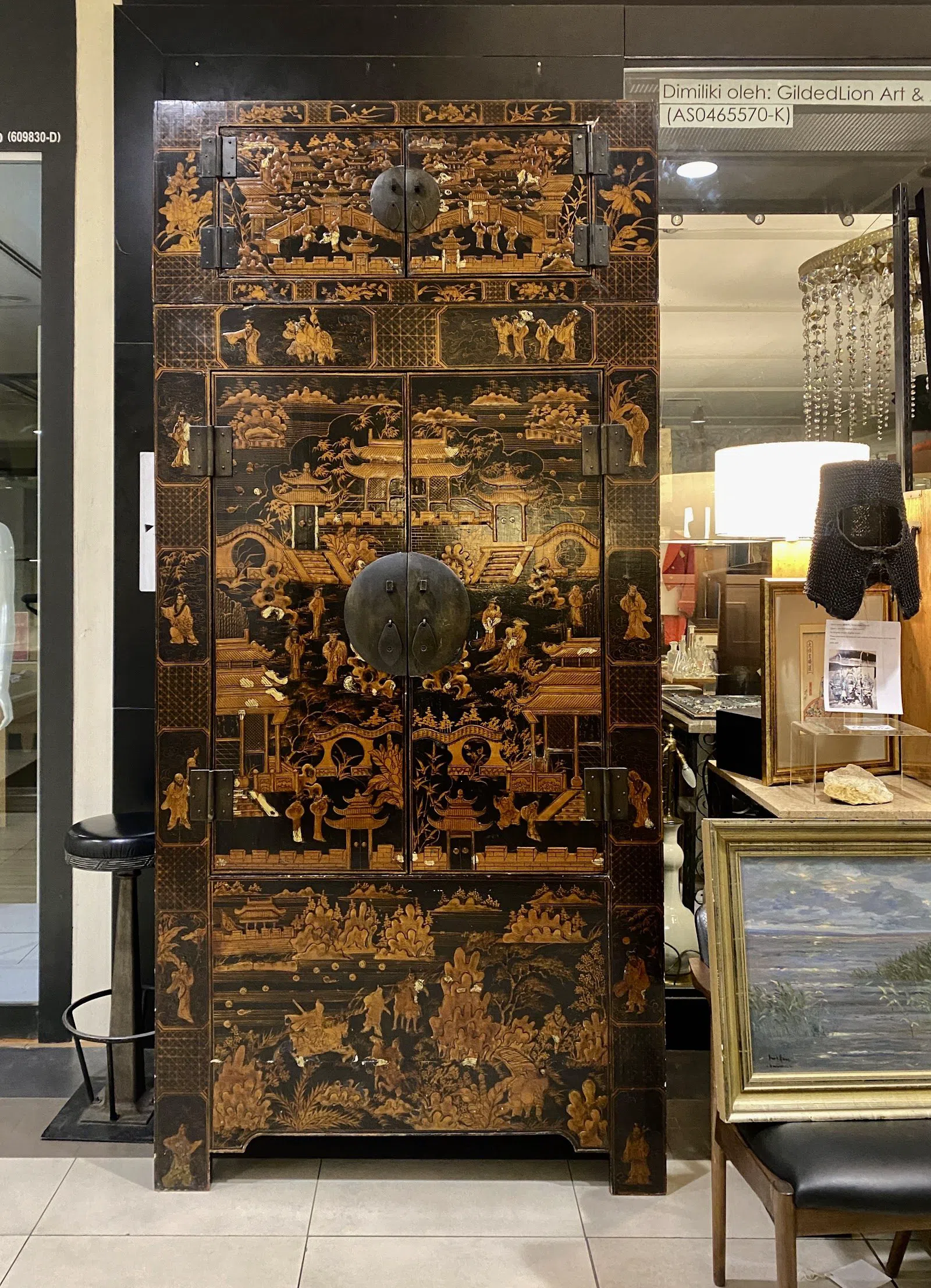
The Gilded Lion Antiques & Art Gallery (an air-conditioned mall gallery in the shopping belt, not Chinatown) is the curated counterpoint to the market scrum, open 10am to 10pm daily, comfortable for four to six people and crowded beyond that. Prices start around RM200 and run past RM20,000. Its practical use on this route is valuation: if you found something in the market hall that you suspect is better than what you paid, this is one of the few dealers in town openly handling European and African material alongside Asian, and the comparison teaches you fast.
Where the collectors go when the hall gets busy
Amcorp Mall Flea Market (Petaling Jaya, over the boundary from Kuala Lumpur proper, a short walk from Taman Jaya LRT) is the Klang Valley's main collectors' market, running Saturdays and Sundays from roughly 10am. Entry is free and tables run RM5 to RM2,000. It is indoors, entirely walk-in and by a distance the easiest venue here for a large group.
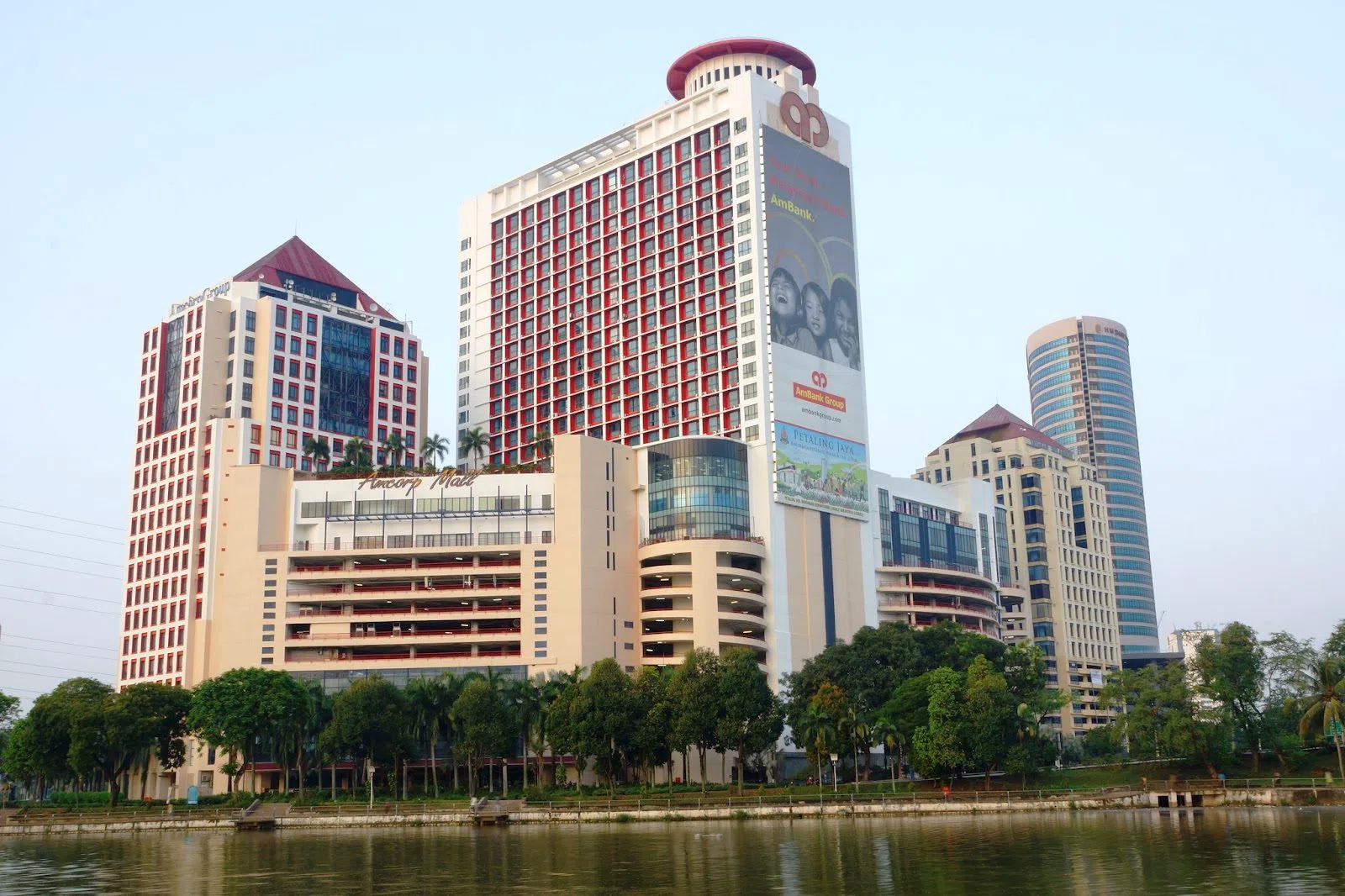
It is also where the specialists actually are: numismatists, vinyl diggers and camera people all turn up in the same building on the same morning, which happens nowhere else on this list. It is not in the city proper, though, and if your Saturday is short, the antique lots inside Central Market are the better use of it. Come here on the Sunday instead.
Getting around, paying and timing your Saturday
The route is a walking one. Pasar Seni is on both the LRT and MRT, which puts Central Market, Junk Book Store, Syarikat Tai Fatt Heng and REXKL within roughly ten minutes of each other on foot; Amcorp is a straightforward ride to Taman Jaya on the LRT; Sungai Besi and the appointment-only dealers want an e-hailing car, RM15 to RM30 each way depending on traffic and time. Pasar Karat at 4am means a car in both directions, because there is no train.
Bring cash and bring it small. Market stalls and the flea markets are cash trades and bargaining collapses the moment you produce a card; the galleries and the furniture dealers will take cards for anything substantial. A realistic morning budget is RM100 to RM300 for someone buying small objects and books, RM800 upward if you have come for one proper piece. Add RM5 for the Art House ticket and about RM20 for coffee and a plate of something between stops.
The schedule that works: Pasar Karat from 4am, breakfast at six, Junk Book Store and the crockery shop when they open, the Central Market antique lots from 10am until noon, Art House after that, and REXKL or Tandang to finish. Wear closed shoes, take the smallest bag you can manage, and treat the first hour as reconnaissance rather than shopping, because the piece you regret is almost always the one you bought in the first twenty minutes. If you are building a longer weekend around it, the Kuala Lumpur guide has the rest of the city, and staying within walking distance of Pasar Seni station makes the 4am start survivable; compare rates on Kuala Lumpur hotel search before you commit to somewhere that needs a car at dawn.
Before you go
What time should I arrive at Central Market's antique stalls on a Saturday?
Be inside before noon. The hall opens at 10am and runs to 8pm, but by mid-afternoon on a Saturday the tour coaches fill the central aisle, the dealers switch to volume trade, and you lose the unhurried conversation that gets you a real price and a real answer on a piece's age.
Is Pasar Karat, the Chinatown thieves' market, safe to visit at 4am?
It is safe enough if you treat it as the working traders' market it is rather than an attraction. It relocated to the Lee Lam Thye site in April 2024 and runs roughly 3am to 9am. Keep your group to four to six people, carry your bag in front of you, ask before handling goods, and take a torch plus small RM1 and RM5 notes.
Which places on this route can take a large group?
BookXcess at REXKL and Amcorp Mall Flea Market handle any number. The Curiosity Shop and Recro Furniture take six to eight comfortably. Junk Book Store's aisles are single-file, so send two or three in at a time, and individual antique lots inside Central Market fit three or four browsers, so rotate through them.
How much should I budget for a morning of antique hunting in Kuala Lumpur?
RM100 to RM300 covers someone buying books, crockery and small objects; RM800 and up if you are hunting one proper piece. Add RM5 for Art House Gallery Museum of Ethnic Arts admission and about RM20 for coffee and a plate between stops. Carry cash in small notes, because bargaining stops the moment you produce a card.
Do I need to book anything in advance?
Koleksi Malaya is appointment-only, so message on Friday. Phone The Curiosity Shop in Sungai Besi before making the trip out, and book Recro Furniture if you want an evening slot. Everything else (Central Market, Pasar Karat, Junk Book Store, Amcorp, REXKL) is walk-in, though a group of more than ten should call Art House ahead.