The Kuala Lumpur issue
Eleven Stops Along the Kuala Lumpur Monorail
Eight and a half kilometres at rooftop height, from Brickfields banana leaf to the Titiwangsa lakeshore: how to ride Kuala Lumpur's monorail, and which stops are worth getting off for.

By Lena BrandtThe city between the towers

The train arrives on a single concrete beam four storeys above the traffic, two cars long, and pulls away past the backs of shophouses close enough to read the air-conditioner brands. For less than the price of a bottled coffee you get eight and a half kilometres of Kuala Lumpur at roof height (tin roofs, temple gopurams, a wet market, half-finished towers), about twenty-five minutes end to end. I have ridden this line more times than I can count, and it is still the most honest introduction to the city I know.
What the line actually is

The KL Monorail (Rapid KL Line 8) runs 8.6 km from KL Sentral in Brickfields to Titiwangsa at the northern edge of the centre, eleven stations, roughly 25 minutes if you never get off. The monorail part matters. Because the beam sits at shophouse-roof height rather than in a tunnel, you spend the whole ride looking into third-floor windows, down into service lanes and across rooftops that no map makes legible. Single fares are RM1.20 to RM2.50. That makes it the cheapest elevated city tour in Southeast Asia by a wide margin.
Buy a Touch 'n Go card at any station counter and tap through the gates. A group of ten can clear them in under a minute, which is emphatically not true of the ticket machines. If you are riding hard for a few days, the 1-day or 3-day Rapid Kota Pass covers unlimited journeys; if you are staying a month, the MY50 pass at RM50 pays for itself in a fortnight. There is no booking, no reservation and no group limit; you walk on.
Avoid 07:30 to 09:00 and 17:30 to 19:30, and I would not bend that one. The trains are two cars only and they jam solid with commuters. You will spend the ride pressed against a door with your view of the city blocked by someone's backpack, which defeats the entire point.
Ride it northbound. Start at KL Sentral, work up the line, and let the city change character under you: commercial, then colonial, then neon, then jungle, then village. Do not try to compress it into one day. Two of the best moments on this line, sunset from a helipad and dusk on the Titiwangsa lakeshore, happen at exactly the same hour, so split the line across two afternoons and take both properly.
Plan your Kuala Lumpur trip
Live prices from our booking partners.
Free cancellation on many rooms. We may earn a commission when you book.
Brickfields, where the ride begins
Tun Sambanthan is the second station and the first one worth leaving. This is Brickfields, the district everyone calls Little India, and it earns the name because it is still a working South Indian quarter rather than a themed street.
Two minutes' walk from the platform is Sri Kandaswamy Kovil (Brickfields), a functioning Murugan temple and not a museum piece. Entry is free with a donation box at the side, groups are welcome any day, and the only requirements are shoulders and knees covered and shoes off at the gate. Time it for morning or evening prayers, when the bells go and the camphor smoke hangs in the hall. That is the whole experience. If you are arriving with a large party, come outside the main puja hours so the sanctum stays walkable; a dozen visitors during prayers is genuinely in the way.

A short walk on is Vishal Food & Catering (Brickfields), the most-cited banana leaf rice in the city and a proper local canteen. Unlimited rice, three vegetables and rasam for the price of a coffee, RM6 to RM15 a head. It is walk-in only, there are no reservations, and the room is tiny. If there are six or more of you, arrive before 12:00 or after 14:30 or you will stand outside on the pavement. Turnover is quick, so waits rarely run past fifteen minutes. It is cramped and loud at peak lunch, which is simply what the place is, and if you want a quiet lunch you are in the wrong postcode.

Old Kuala Lumpur from Maharajalela
Maharajalela is the station that gives the most per minute of walking, and I would give it a full half-day. Four completely different things sit within ten minutes of the platform.
Uphill from the station is Stadium Merdeka (Maharajalela), where Malaysian independence was declared in 1957 and now a UNESCO Asia-Pacific heritage conservation award winner. It is free to walk in, open daily 09:00 to 18:00, and guided heritage tours can be arranged for groups. Hours shift for events and public holidays, so confirm before you bring fifteen people across town. Stand on the terracing and look back: the old concrete bowl framed against the supertall tower behind it is the single best photograph of the two Kuala Lumpurs in one frame, and it costs nothing.


Five minutes away is Chan She Shu Yuen Clan Ancestral Hall (Chinatown), built between 1899 and 1906 with craftsmen and materials shipped in from Guangdong. It is the most intact piece of old Chinatown still standing, free, open to the public, groups fine, modest dress, and no flash near the altars. Come early morning when it is quiet. After the noise of the Bukit Bintang end of the line, the ceramic friezes and the cool dark of the hall are a genuine relief.
A couple of minutes off Petaling Street, Kwai Chai Hong (Chinatown) is a restored laneway of murals with QR-triggered soundscapes for each scene, free and open-air from 09:00 to midnight. Go after dark, when the lanterns are lit and the day-trippers have gone. The lane is genuinely narrow, so a party of ten-plus should split in two and go through in waves, otherwise you are photographing each other's backs.

Ten minutes on foot from the same station, REXKL (Chinatown) occupies a twice-burnt cinema turned into 60,000 square feet of indie films, exhibitions, a bookstore and a rooftop bar. Entry is free, the space was rebuilt for events so it swallows large groups without effort, and food runs RM10 to RM30. Screenings and workshops ticket separately at RM15 to RM25 and do sell out, so check the schedule before you plan an evening around it. It is the best adaptive reuse in the city and the one place on this list where I would happily lose three hours.

The Bukit Bintang stretch
Three stations in a row serve the commercial heart, and they are not interchangeable.
Hang Tuah is the only stop on the line where you step off the platform straight into the destination. Mitsui Shopping Park LaLaport Bukit Bintang City Centre (Bukit Bintang City Centre) connects under cover to both the monorail and the LRT, so nobody in your group gets rained on. Three hundred-plus stores, 10:00 to 22:00 daily, free to enter, meals RM15 to RM60. I would not send anyone to a mall for its own sake, but the Mitsui Outlet Park floor and the Japanese food halls are worth the stop, and given how reliably KL storms in the afternoon it is the sensible wet-season fallback.

Imbi is the family stop. Berjaya Times Square Theme Park (Imbi) is Malaysia's largest indoor theme park, wedged inside the mall the station effectively leans against, a two-minute walk from the platform. Admission is RM40 to RM70, hours are 11:00 to 20:00 on weekdays and 10:00 to 20:00 at weekends, there is no door policy and group tickets are available. Check the website first: individual rides close for maintenance without notice, and finding that out at the turnstile with children in tow is a bad afternoon.

Bukit Bintang station puts you five minutes downhill from Jalan Alor (Bukit Bintang), the city's signature open-air hawker street and the loudest, most photogenic stop on the whole line. No bookings, no door policy, and stalls will push tables together for a group of any size. Best between 19:00 and midnight, when the grilled chicken wings, char kway teow and Thai stalls are all running at once. Touts will physically grab your arm to steer you to their tables, so pick a stall that is already busy with locals and ignore the rest, and confirm the price of anything seafood before it is cooked. Budget RM10 to RM40 a head and it is one of the best-value evenings in the city.

Rooftops and rainforest in the middle of the line
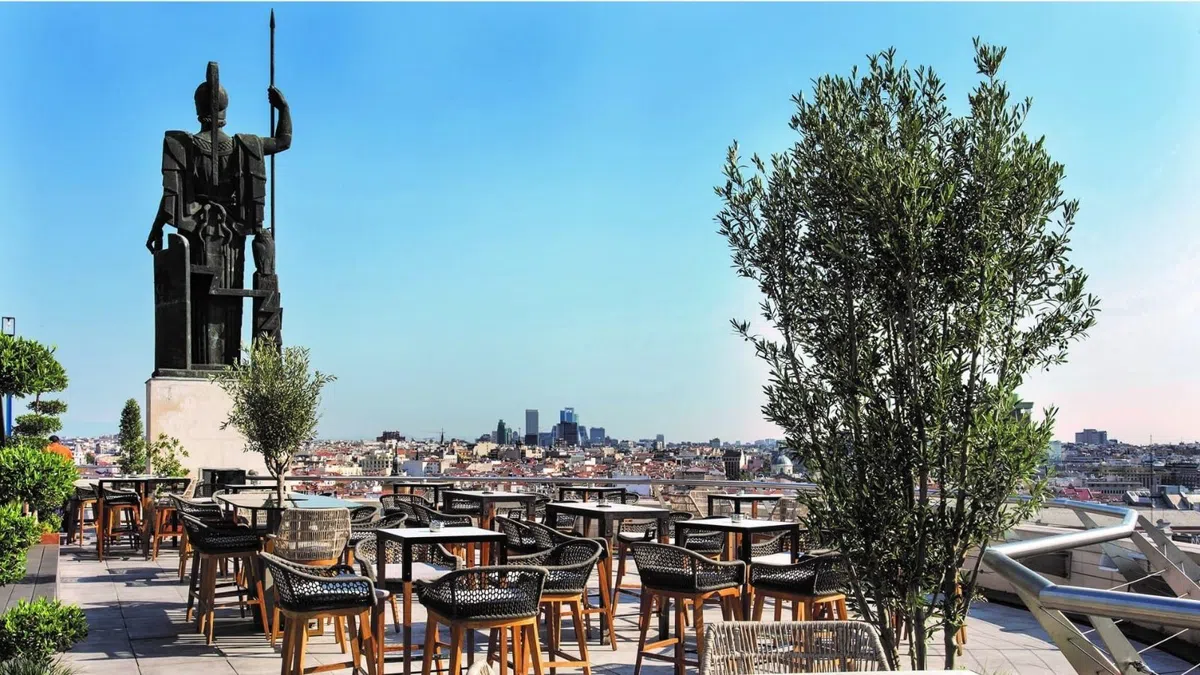
Raja Chulan is three minutes' walk from Heli Lounge Bar (Raja Chulan), an actual working helipad that becomes a bar at dusk. Entry is RM100 per person and includes two drinks, a cash cover, so a group pays per head at the door with no negotiating. It is closed Sundays, smart-casual, and no children on the pad. Reserve if you want sunset, or you will not get an outer-rim seat, and arrive an hour before the sun goes. The 360-degree view sits exactly between the city's two icons, which is why it beats every enclosed sky bar in town. There is no barrier at the edge of the pad. If anyone in your party is uneasy with heights, believe them and go somewhere else.


Bukit Nanas is the stop I recommend hardest, because two separate things share one hill. Menara Kuala Lumpur (KL Tower) (Bukit Nanas) is a signposted uphill walk or a shuttle ride from the station, open daily 09:00 to 22:00 with last admission around 21:30. Non-Malaysian tickets run from RM33 for the Observation Deck to RM78 for the Sky Deck and Sky Box. It is cheaper and far less booked out than the skybridge at the Twin Towers, and the Observation Deck ticket includes a free guided forest walk next door. The Sky Box takes one group at a time for photographs, so a large party should budget extra queueing.

That forest is KL Forest Eco Park (Bukit Nanas Forest Reserve) (Bukit Nanas), the oldest gazetted forest reserve in Malaysia, gazetted in 1906 and now ringed by skyscrapers. Five minutes from the station you are under genuine canopy. It opens 08:00 to 17:30, closes on Fridays and in bad weather, and costs RM10 on a MyKad or RM40 for non-Malaysians, free with a KL Tower Observation Deck ticket. It has a different operator, a different gate and a different closing day from the tower, so read that twice. The canopy walkway is single-file with a person limit per span, so groups move slowly, and the trails are steep and slick after rain. Wear proper shoes.
North to Chow Kit and Kampung Baru
Past Medan Tuanku, which has nothing to detain a visitor and I would rather say so than invent something, the line reaches Chow Kit, a district that is not dressed up for anyone.
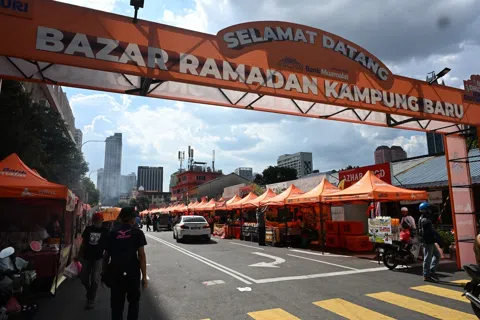
Right beside the station, Bazaar Baru Chow Kit (Chow Kit) is the biggest wet market in Kuala Lumpur and completely unvarnished. Free, daily, no door policy, produce and cooked food at RM5 to RM20. Go before 09:00 for the produce and the atmosphere both. The aisles are tight and wet, so a group needs to move single-file and accept that this is a workplace, not an attraction. DBKL's plan to move some Lorong Haji Hussein traders to the Raja Bot complex was deferred as of February 2026 while that redevelopment finishes, so the market is trading as normal, though its edges may shift.

Fifteen minutes' walk east lands you in Kampung Baru, wooden Malay village houses sitting under the KLCC skyline, which is the contrast this whole ride is built on. Nasi Lemak Wanjo Kampung Baru (Kampung Baru) has been trading since 1967 and is open 06:30 to 12:00 and again 15:00 to 01:00 daily. RM7 to RM20 a head, no reservations, cash preferred, and unusually for the area there is a large dining hall, so groups are actually easy here. I send people to Wanjo rather than the more famous Nasi Lemak Antarabangsa because that one's Kampung Baru original has closed, and I would rather you ate well than chased a name.

Titiwangsa and the last frame
The northern terminus delivers the payoff. Titiwangsa Lake Gardens (Taman Tasik Titiwangsa) (Titiwangsa) is five minutes from the station, free, open roughly 07:00 to 21:00, with big lawns and a lakeside loop that make it the easiest meet-up or picnic point on the entire line. The classic postcard reflection of the Twin Towers is taken from this lakeshore. Come at dusk, when the towers light up and the water goes still, and the whole 8.6 km ride resolves into a single frame. There is no ticket, no queue and no group restriction; just get there before the light goes.

Practical notes for the ride
Buy a Touch 'n Go card on arrival at any station counter and top it up with cash; it works across the monorail, LRT and MRT, and it saves the queue every single time. Fares on Line 8 are RM1.20 to RM2.50, so a full day of hopping on and off costs less than one taxi ride. Consider the 1-day or 3-day Rapid Kota Pass only if you genuinely plan more than six or seven journeys a day.
Carry cash. Wanjo prefers it, Heli Lounge takes its cover per head at the door, hawker stalls on Jalan Alor and the market at Chow Kit are cash-first, and small notes matter more than card acceptance here.
For timing: markets and temples in the morning, heritage and forest in the middle of the day, rooftops at sunset, hawker streets after 19:00. Stay off the trains during both rush hours. Afternoon storms are routine, so keep LaLaport or REXKL as your indoor plan.
On budget, a full day riding the line with banana leaf lunch, two heritage stops, forest entry and dinner on Jalan Alor lands around RM90 to RM120 per person. Add the helipad and it roughly doubles. For where to base yourself, anywhere within walking distance of a monorail station changes the shape of a trip here, so start with a Kuala Lumpur hotel search and check the walk to the nearest platform before you book. For everything off this line, the wider Kuala Lumpur guide covers the districts the beam does not reach.
Before you go
How much does the KL Monorail cost and do I need a card?
Single fares are RM1.20 to RM2.50 depending on distance. You do not need a card, but a Touch 'n Go bought at any station counter is faster than the machines: a group of ten can tap through the gates in under a minute. If you are riding a lot there is a 1-day or 3-day Rapid Kota Pass with unlimited journeys, and a MY50 monthly pass at RM50 if you are staying long term.
When should I avoid riding the monorail?
Between 07:30 and 09:00 and again between 17:30 and 19:30. The trains are only two cars long and they fill completely with commuters, so you will stand pressed against a door with no view of the city, which is the main reason to ride this line at all. Mid-morning through mid-afternoon and after 20:00 are comfortable.
Which monorail stop is the best single one to get off at?
Maharajalela, by some distance. Within a ten-minute walk you have Stadium Merdeka for independence history, the Guangdong-built Chan She Shu Yuen Clan Ancestral Hall, the street art in the Kwai Chai Hong laneway, and REXKL, an adaptive-reuse cultural hub. All are free to enter except the ticketed screenings at REXKL.
Can I see the Petronas Twin Towers from the monorail line?
Not properly from the train, but the line gets you to the two best views. Heli Lounge Bar at Raja Chulan is a working helipad three minutes from the station with a 360-degree view, RM100 per person including two drinks. For the classic reflection shot, ride to the Titiwangsa terminus and walk five minutes to the lakeshore at dusk. That one is free.
Does anything along the line need booking in advance?
Very little. The monorail, the temples, Kwai Chai Hong, Stadium Merdeka, Chow Kit market and Titiwangsa Lake Gardens are all walk-in. Reserve at Heli Lounge Bar if you want an outer-rim seat at sunset, buy KL Tower tickets online for combo pricing, and check the Berjaya Times Square Theme Park site before travelling since rides close for maintenance without notice.